Most warehouse teams start asking about mezzanine floor cost at the same point in a project. The building is full, pallets are stacking into the aisles, and someone asks whether a mezzanine could add usable floor area without moving to a bigger site. The next question is always the same: what will it cost?
The honest answer is that mezzanine floor cost depends on far more than floor area. Deck load rating, steel grade, column spacing, staircase count, fire protection, freight, and installation all move the final number. Two quotations for the same 500 m² area can differ by 50% or more, and both can be reasonable, because they describe different systems.
This guide gives reference price ranges for the main mezzanine types, explains where the money goes, and shows how to compare quotations on a like-for-like basis. All figures are indicative reference ranges based on public B2B pricing and typical project structures. They are not fixed quotes, and they will move with steel prices, freight rates, and exchange rates.
What Is a Mezzanine Floor
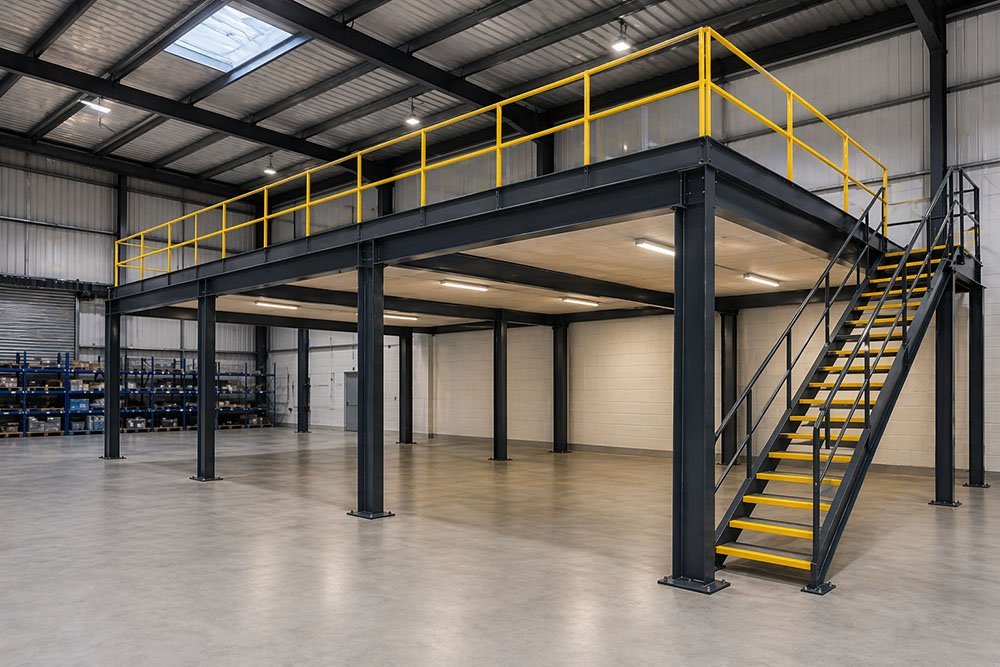
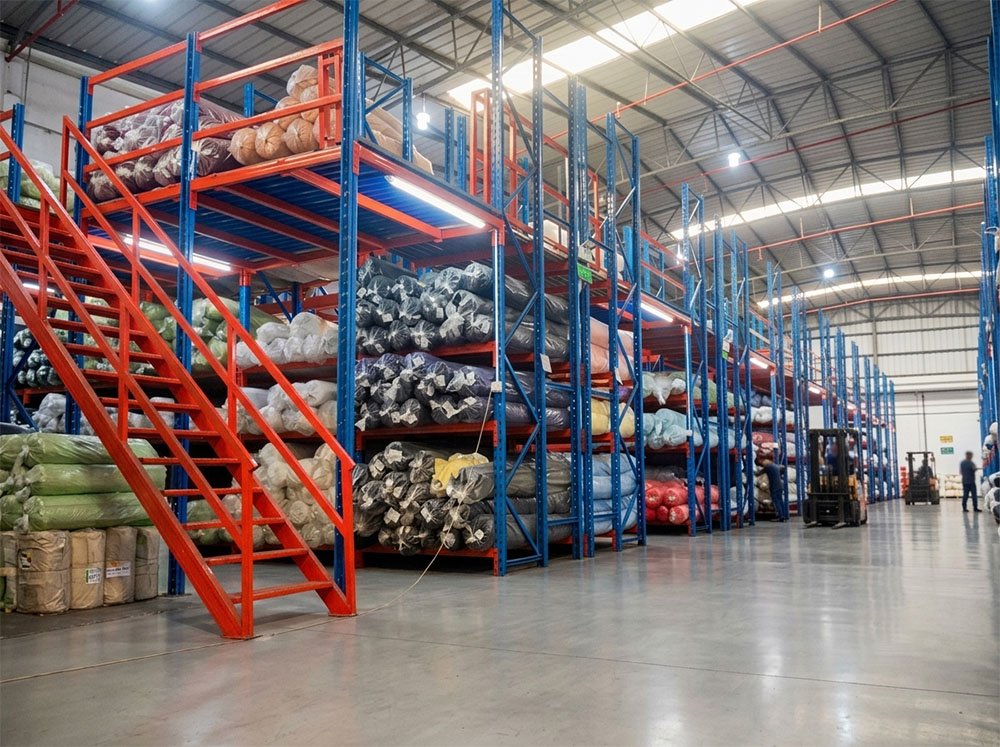
A mezzanine floor is an elevated platform built inside an existing building, creating extra usable floor area above the ground-level operation. It is typically supported by steel columns or by the uprights of a racking system, and it can hold storage, pick modules, packing stations, or offices.
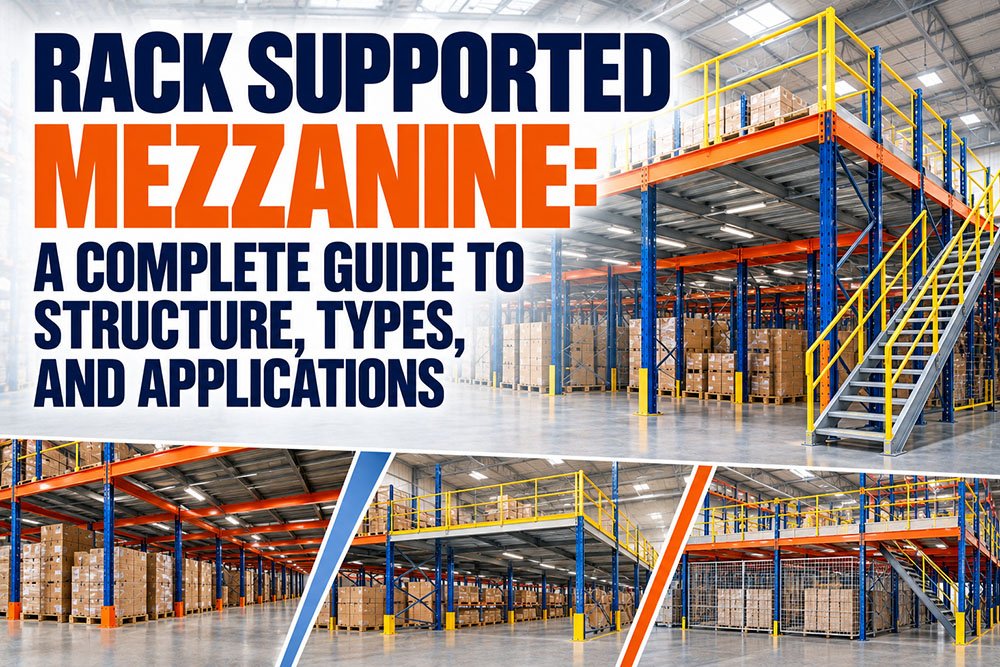
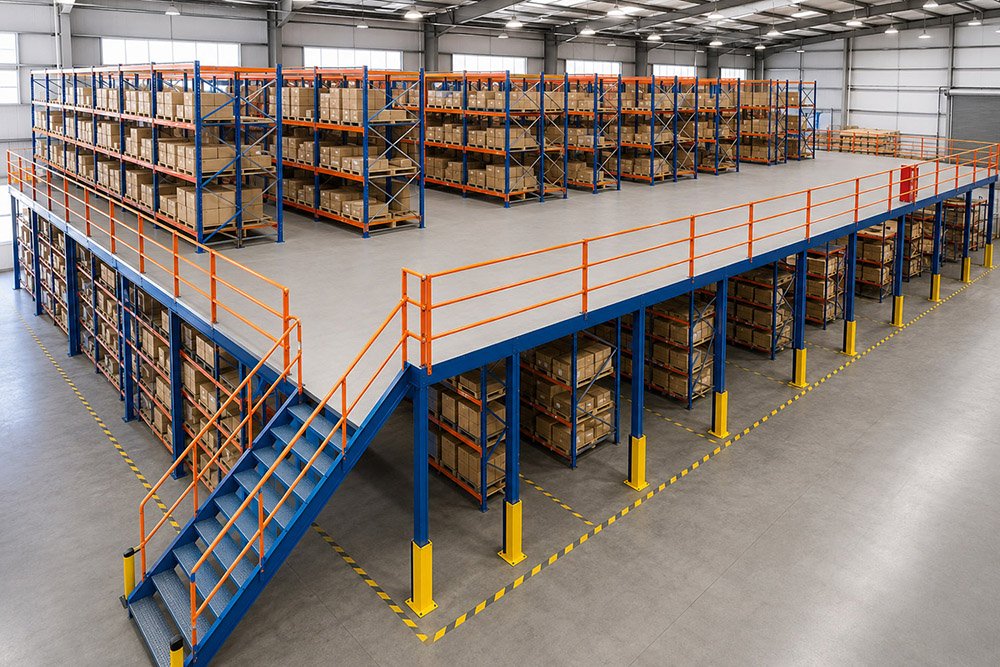
Mezzanines come in two main structural forms. A freestanding steel structure mezzanine has its own columns and foundations. A rack supported mezzanine uses the racking uprights as its load-bearing frame. Both forms can add 30% to 60% more usable area inside the same building footprint, but their cost profiles differ.
What Drives Mezzanine Floor Cost
Six variables account for most of the difference between one quotation and another. Understanding them makes it easier to see why a number is high or low.
- Deck load rating. A deck built for 300 kg/m² uses lighter joists than one built for 800 kg/m². Higher ratings need heavier steel and more columns.
- Structural steel grade. Q235B is the common standard grade. Q345 is a stronger steel that can carry more weight before bending, and it costs more per ton.
- Column spacing and span. Wider spans require deeper beams. Tighter column grids use more steel but smaller sections.
- Deck material. Steel checker plate costs more than steel plank or grating. Plywood with steel topping is the lowest-cost option, but it is not suitable for every use.
- Access and safety components. Staircases, handrails, guardrails, and pallet gates add cost per unit, and most buildings need several of each.
- Fire protection and permits. Sprinkler extensions, smoke detection, and plan review fees depend on the deck area and the building’s occupancy class.
Reference Price Ranges by Mezzanine Type
The table below shows indicative FOB China price ranges for common mezzanine configurations. Prices are per square meter of deck area and cover the main structure and deck only, unless noted.
| Mezzanine Type | Load Rating | Reference Range (FOB China) | Typical Use |
|---|---|---|---|
| Rack supported, light | 300–500 kg/m² | USD 90–140 per m² | Light storage, pick modules |
| Rack supported, medium | 500–800 kg/m² | USD 120–180 per m² | Bulk storage, packing |
| Rack supported, heavy | 800–1,000 kg/m² | USD 160–220 per m² | Heavy storage, workstations |
| Rack supported, multi-tier | Varies | USD 180–280 per m² | High-bay, multiple decks |
| Steel structure, light | 300–500 kg/m² | USD 130–190 per m² | Offices, light storage |
| Steel structure, heavy | 800–1,500 kg/m² | USD 200–320 per m² | Heavy industrial use |
Steel structure mezzanines generally cost more per square meter than rack supported designs at the same load rating. The difference comes from separate columns, independent foundations, and longer fabrication time. Rack supported designs are cheaper, but they lock the layout to the racking below.
These ranges do not include freight, duty, installation, or permits. Those costs are covered in the sections below.
Cost Breakdown: Where the Money Goes
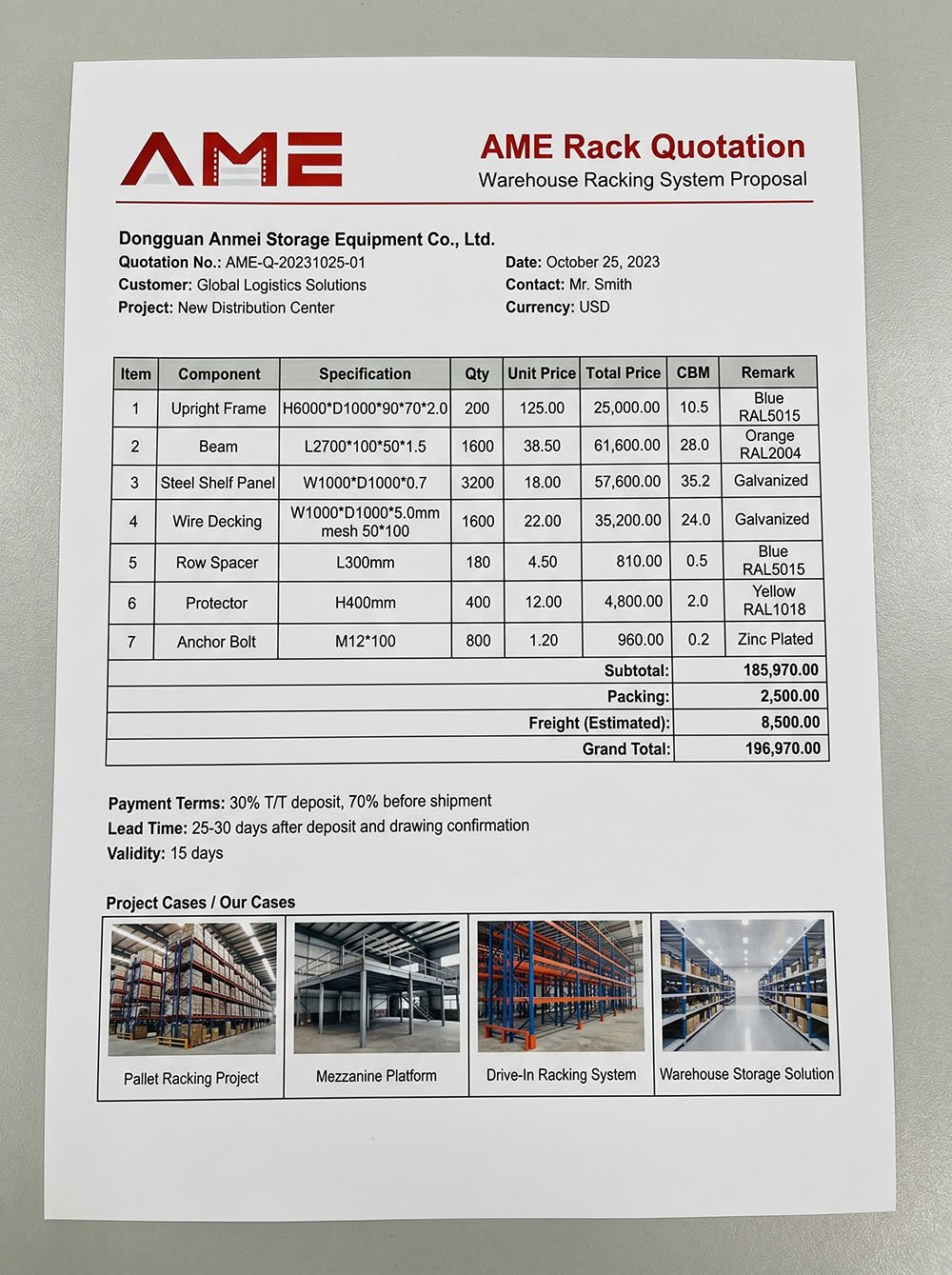
A mezzanine quotation usually includes several categories. Buyers who ask for the breakdown can see which items drive the total and where they might negotiate.
| Cost Component | Typical Share of Total | Notes |
|---|---|---|
| Structural steel (columns, beams, joists) | 40–55% | Largest single cost, moves with steel prices |
| Decking | 10–20% | Depends on deck material and thickness |
| Staircases and handrails | 5–10% | Fixed cost per staircase |
| Guardrails and pallet gates | 5–10% | Scales with deck perimeter |
| Bolts, connectors, and hardware | 3–6% | Often underestimated in early quotes |
| Surface coating | 3–8% | Powder coating standard, galvanizing adds more |
| Design and engineering | 3–7% | Includes structural calculation report |
The structural steel line is where most of the real money sits. A quotation that looks low often has lighter steel or fewer columns than the load requirement suggests. Asking for the steel weight per square meter is a fast way to check this.
Why Mezzanine Floor Prices Fluctuate
Reference ranges move over time, and buyers should expect this. Four factors drive most of the change.
Steel prices. Structural steel is the largest cost component. Steel prices can move 15% to 25% within six months, and a quotation received in one market may not hold in the next.
Freight rates. Ocean freight from China to overseas ports has swung sharply in recent years. Mezzanine components are bulky, so freight can represent 15% to 40% of the FOB price, and that share changes with container rates.
Exchange rates. Quotations in RMB or USD shift with currency movements. A 5% exchange rate change within a year is common.
Seasonal demand. Production capacity is tighter from September to December. Lead times can grow by 30% to 50%, and some suppliers adjust pricing during peak months.
For these reasons, any quotation should be treated as valid for 30 to 60 days. Long-term projects benefit from contracts that include a steel price adjustment clause tied to a published index.
Hidden Costs Buyers Often Miss
Many mezzanine budgets look reasonable until the project moves from quotation to installation. The following costs are common and easy to overlook.
- Freight and customs. Adding ocean freight, insurance, import duty, and port handling often increases the landed cost by 40% to 90% over FOB price, depending on destination.
- Permits and plan review. Most local authorities require a building permit and structural review for any new elevated floor. Review fees and consultant time are rarely included in the supplier quotation.
- Fire protection changes. Adding a mezzanine can require sprinkler extensions and additional detection under the deck. The cost depends on building layout and local fire code.
- Floor slab assessment. Column base plates transfer concentrated loads into the slab. Weak floors may need thicker base plates, load-spreading pads, or reinforcement. Each of these adds cost.
- Installation labor. Installation can run 10 to 30 days for a typical project. Local labor rates vary widely, and some buyers budget for installation at 8% to 20% of the landed cost.
The OSHA guidance on walking and working surfaces at osha.gov is a useful reference for guardrail and stair requirements, which affect both design and cost.
How to Compare Mezzanine Quotations
Comparing two quotations is only useful when both describe the same system. A short checklist helps buyers see whether the numbers are truly comparable.
Confirm the load rating. Both quotes should state the deck load in kg/m² and the design standard used. A lower price with a lower load rating is a different product.
Check the steel specification. Ask for steel grade, column section size, joist section, and wall thickness. Compare steel weight per square meter, which is a good proxy for material content.
Count the accessories. Verify the number of staircases, guardrail meters, pallet gates, and column protectors. Missing accessories often appear as extras after contract signing.
Compare the deck material. Steel plank, checker plate, grating, and plywood cost very different amounts and carry different fire and cleaning properties.
Clarify Incoterms. An FOB quote and a delivered quote describe different scopes. Compare them on the same delivered basis before deciding.
Ask for the structural report. A quotation without a structural calculation report should prompt questions. A proper report confirms that the design holds the stated load under the expected combination of dead, live, and impact loads.
Ways to Manage Cost Without Compromising Safety
Lowering mezzanine cost is possible, but only in areas that do not affect structural safety. The table below separates common savings from risky cuts.
| Cost Measure | Generally Safe | Creates Risk |
|---|---|---|
| Choosing a rack supported design when layout is stable | ✓ | |
| Using steel plank instead of checker plate for light loads | ✓ | |
| Ordering full container loads | ✓ | |
| Planning production outside peak season | ✓ | |
| Reducing the load rating below the actual use | ✗ | |
| Using thinner steel than the design requires | ✗ | |
| Skipping the structural calculation report | ✗ | |
| Omitting guardrails or stair handrails | ✗ |
The guiding rule is simple. Savings that change the load rating, steel section, or safety features are not savings. Savings that change finish, packaging, or deck material for a light-duty use can be reasonable.
How to Buy an Affordable Warehouse Mezzanine Floor
Lower cost usually comes from better buying decisions, not from weaker structures. The steps below apply to domestic and imported projects. They matter even more when the mezzanine is sourced from China, where pricing, trade terms, and quality checks can differ widely between suppliers.
Define the Specification Before Asking for Quotes
Vague requests produce vague quotes. Start with the deck load rating in kg/m², the deck area, the layout of storage and work zones, the number of staircases, and the clear height under the deck. A complete brief lets every supplier price the same product.
Ask for an Itemized Quotation
A lump-sum price hides where the money goes. Ask for a line-by-line quote covering steel, decking, stairs, guardrails, bolts, coating, design, and packing. With an itemized quote, buyers can remove or substitute single items instead of rejecting the whole offer.
Compare Several Suppliers on the Same Specification
Send the same drawing and load requirement to three to five suppliers. Ask each one to confirm steel grade, joist size, and deck material in writing. Once the specifications match, price differences are easier to judge, and unusually low quotes can be questioned.
Choose Between Factory Direct and Trading Companies
Buying direct from a factory usually removes one layer of margin, but it requires more checking. A trading company can simplify communication and sourcing, and it may suit buyers placing their first import order. In either case, ask who fabricates the steel and who performs the welding. Request production photos or a factory video before committing.
Understand Trade Terms
Trade terms decide which costs the buyer pays. For a China import, the four options below are the most common.
| Term | Seller Covers | Buyer Covers | Suited For |
|---|---|---|---|
| EXW | Goods at the factory gate | Export clearance, freight, insurance, duty, delivery | Buyers with an experienced freight forwarder |
| FOB China port | Loading onto the vessel at the port | Ocean freight, insurance, import duty, delivery | Buyers who arrange their own shipping |
| CIF destination port | Ocean freight and insurance to the destination port | Import duty, clearance, inland delivery | Buyers who want simpler sea freight |
| DDP | Everything through to the buyer’s site, including duty | Unloading and installation | Buyers who want one price with fewer surprises |
FOB quotes look lowest on paper because they exclude freight and import costs. Compare every option on a delivered basis before choosing.
Check Export Packing and Container Loading
Mezzanine components are bulky and heavy, so packing affects both damage risk and freight cost. Ask how parts are bundled, whether bolts are packed in labeled bags, and how many containers the order needs. A well-planned container load lowers freight cost per square meter. Request a loading plan from the supplier before confirming the order.
Verify Quality Before Payment
Low prices sometimes come with thinner steel or weaker welds. Ask for mill certificates, the structural calculation report, and the design drawings. Arrange a third-party inspection before shipment to check dimensions, weld quality, coating thickness, and packing. Many inspection firms charge a fixed fee per visit. An ISO 9001 certificate is a useful starting point, but it does not replace product-level checks.
Use Safer Payment Terms
A common arrangement with Chinese suppliers is a 30% deposit by bank transfer (T/T) when the order is confirmed, with the 70% balance paid against a copy of the bill of lading. For new suppliers or larger orders, a letter of credit (L/C) gives stronger protection. Avoid paying the full amount before production and inspection are complete.
Plan Lead Time to Avoid Rush Charges
Rush orders often carry extra fees. A realistic schedule covering design approval, production of 25 to 45 days, ocean freight, and customs clearance helps buyers avoid expedited charges. Ordering outside the September-to-December peak can also reduce both price and waiting time.
Check Import Duty and Compliance
Import duty and tax depend on the destination country and the product classification. Ask a licensed customs broker to confirm the HS code and duty rate before ordering. Some countries also require specific steel certificates or product standards, so confirm these requirements early in the project.
Consider Phased Construction
Buyers with limited budgets can build the mezzanine in phases. Starting with the most-used zone and adding decking or stairs later spreads cost over time. This approach works best when the structural design covers the full planned area from the start, so later phases connect without rework.
Frequently Asked Questions
How much does a mezzanine floor cost per square meter?
Reference ranges for mezzanine floors FOB China run from about USD 90 to USD 320 per square meter, depending on structure type and load rating. Rack supported light-duty designs sit at the lower end, while heavy-duty steel structure mezzanines sit at the upper end. Delivered and installed costs are typically 40% to 90% higher. These are indicative ranges, and quotations should be treated as valid for 30 to 60 days.
Is a rack supported mezzanine cheaper than a steel structure mezzanine?
Usually yes, at the same load rating. Rack supported designs use the racking uprights as columns, which reduces steel and foundation work. The trade-off is that the layout below is locked to the racking. Steel structure mezzanines cost more but allow independent layout changes.
What factors make mezzanine quotations so different?
Load rating, steel grade, column spacing, deck material, and accessory count all shift the price. Two quotes for the same area can differ by 50% or more because they describe different structures. Comparing steel weight per square meter and confirming the load rating in both quotes is the fastest way to see whether the numbers match.
Does the mezzanine cost include installation and permits?
Usually not. Most FOB quotations cover manufacturing and export packing only. Freight, duty, installation, building permits, structural plan review, and fire protection changes are typically separate line items. Buyers should request a delivered and installed estimate before comparing options.
How long does a mezzanine floor project take?
From contract to operational mezzanine, a typical project runs 75 to 130 days. This includes design approval, structural calculation, production of 25 to 45 days, ocean freight of 20 to 45 days, and installation of 10 to 30 days. Peak season can extend these timelines.
Can I reduce mezzanine cost by choosing lower-grade steel?
Only if the structural calculation still supports it. If the design requires a higher steel grade to carry the load, switching to a lower grade is not a saving but a safety risk. A better approach is to ask whether the load rating truly matches the actual use, or whether a different column spacing could reduce steel content. Any change should be confirmed in a revised structural report, and buyers should request mill certificates to verify the steel supplied.
How often do mezzanine prices change?
Steel prices and freight rates are the main drivers, and both can shift within a few months. Exchange rates and seasonal demand also move quotations. Buyers planning a project over six months or more should ask for a price adjustment clause tied to a published steel index.
Conclusion
Mezzanine floor cost is not a single number. It reflects the load rating, steel content, deck material, accessories, freight, permits, and installation, and each of these can move the final figure significantly. Reference ranges help buyers understand the scale of a project, but the real answer comes from a complete specification and a delivered quotation.
The most useful habit for any buyer is to compare quotations on the same basis. Confirm the load rating, check the steel weight, count the accessories, and make sure the structural report is included. Then add freight, permits, and installation to see the full cost. A quotation that looks lower on paper often becomes higher once these items are added, and a quotation that looks higher may already include them.
Producers with in-house fabrication capacity are often asked to quote mezzanine decks, joists, and staircases as one package. Among such producers is AME Rack, a Dongguan-based manufacturer with a 15,500 m² production base, which can be evaluated alongside other suppliers on the basis of a complete specification. Buyers comparing structure types can also review the guide to warehouse mezzanine floor, the H-steel structure mezzanine option, and the comparison of pallet rack supported mezzanine vs steel structure mezzanine before requesting quotations.