Tire Storage Racking — Engineered to Protect Sidewalls, Block UV & Streamline DOT Traceability
A purpose-built racking architecture for tire manufacturers, OEM service depots, retail distributors and seasonal swap-out hubs: dedicated tire racks with PE-coated rails, heavy-duty selective for OTR / TBR pallets, VNA for high-bay PCR storage and multi-tier mezzanines for piece-pick — all designed to prevent sidewall deformation, ozone cracking and the routine waste that destroys tire margins.
Tire Warehouse Racking, Summed Up in 10 Quick Facts
- Best rack mix: Tire racks + Selective + Mezzanine — the three-pillar tire warehouse layout.
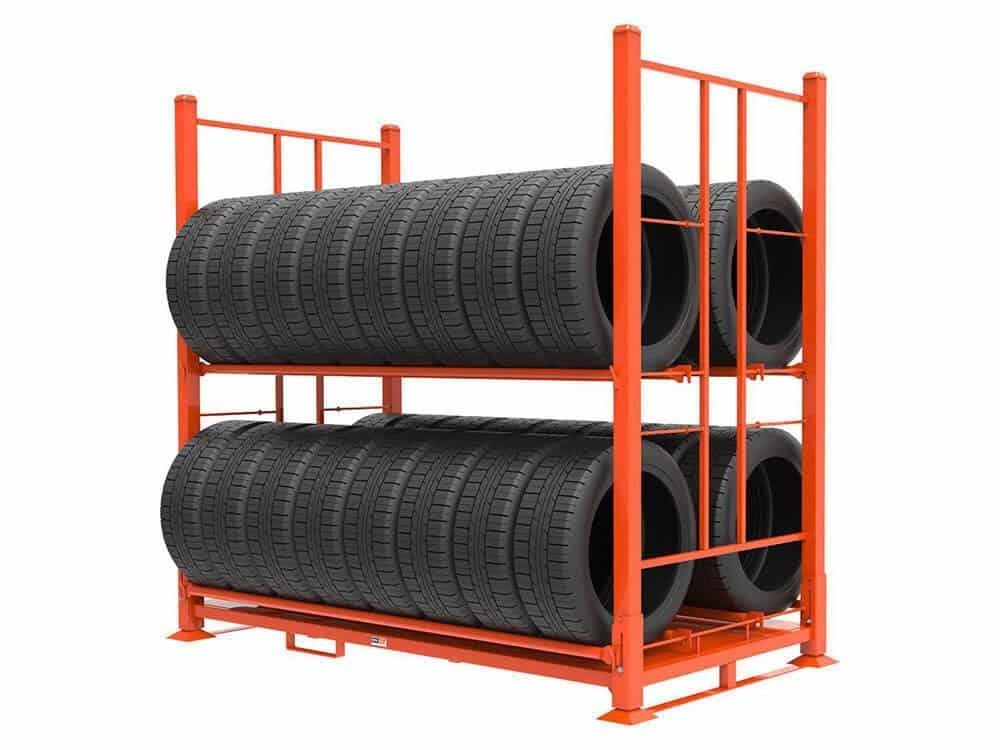
- Load orientation: Tires always stored on the tread, never stacked flat — prevents sidewall flex and ozone cracking.
- Density per level: Standard tire racks hold 4–5 PCR tires per beam pair; 2–3 TBR; 1 OTR.
- Rail finish: PE-coated or HDG rails protect tire sidewalls from rust contact and friction marks.
- UV / Ozone protection: Indoor storage at <35°C, <60% RH, away from electric motors (ozone source) and direct sunlight.
- FIFO for DOT codes: Pallet flow + radio shuttle enforce FIFO so the oldest DOT batch ships first.
- Heights supported: Tire racks 4 levels · Selective 8m for OTR pallets · VNA 12m+ for high-bay PCR.
- Seasonal swap: Modular stack racks add +30% capacity during winter / summer changeover season.
- Compliance: EN 15512 · AS 4084 · RMI MH16 · FEM 10.2.02 + tire-industry stacking guidelines.
- AME Rack lead time: Standard 20 days FOB Shenzhen; PE-coated rail option adds 5 days.
If You Run a Tire DC, You've Lived These 6 Failures
We've designed racking for tire manufacturers, OEM service depots and retail tire chains across 65 countries. Six failure patterns come up in nearly every kick-off — each is a direct hit to inventory value.
"Bottom layer of stacked tires becomes scrap"
Stacking tires 8+ high crushes the sidewall geometry of the lower units. After 3–4 weeks the bottom 2 layers become unsellable — $80–$200 lost per tire.
"Tires cracked after 6 months indoor"
Direct sunlight, fluorescent UV light and ozone leaking from forklift motors / welding stations all accelerate rubber aging. Cracks appear in 6–12 months instead of 5+ years.
"3-year-old DOT batch shipped to dealer — return + lawsuit"
Without enforced FIFO, the newest tires ship first; old DOT-coded inventory accumulates at the back. Retailers reject > 2-year-old tires and brand reputation suffers.
"OTR mining tires sit on the floor — crane can't reach"
Off-the-road (OTR) tires weigh 200–1,500 kg each. Standard pallet racks can't hold them; floor storage wastes 60% of warehouse cube.
"Winter / summer changeover triples inbound for 6 weeks"
Northern markets see winter / summer tire swap-outs compressing 40% of annual volume into 6–8 weeks. Renting overflow at $25/sqft destroys margin.
"15,000 tire SKUs by size, brand, pattern, season — picker chaos"
Tire SKU complexity (size × brand × tread pattern × season) creates 10,000+ active SKUs in a regional DC. Wide-aisle layouts force 12+ miles of picker walking per shift.
9 Racking Systems Built for Tire Warehouses
A tire warehouse rarely uses one rack type. Below are the nine configurations we deploy across PCR (passenger), TBR (truck/bus), OTR (off-the-road) and racing tire facilities — combined to maximise density, protect sidewalls and enforce DOT-batch FIFO.
Dedicated Tire Racking
Purpose-built racks with PE-coated or HDG rails — tires stored on the tread, 4–5 PCR per level. Zero sidewall stress, easy roll-on / roll-off, ideal for retail tire chains and service depots.
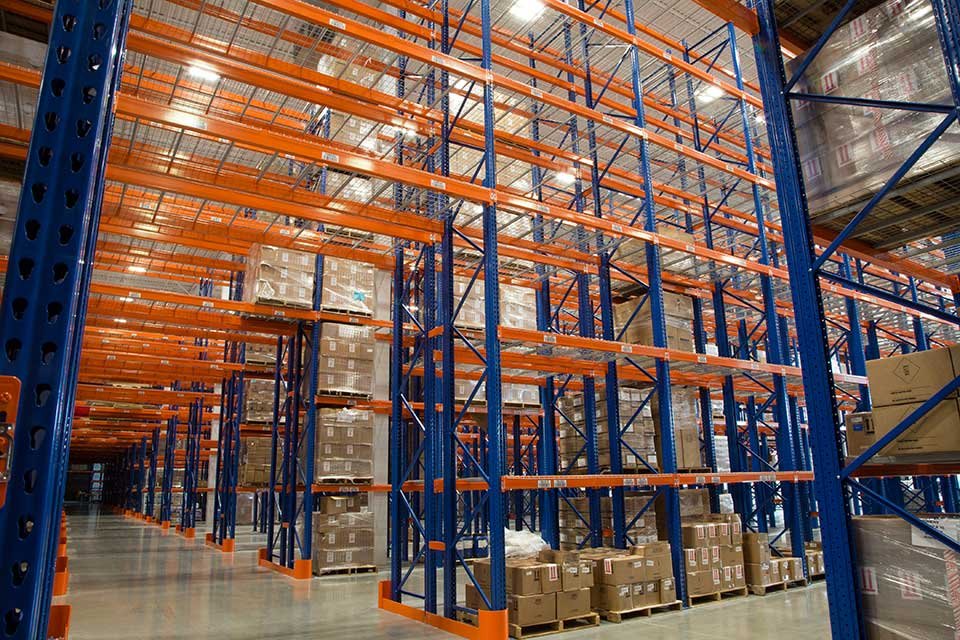
Selective Pallet Racking (Heavy-Duty)
Heavy-duty selective with reinforced 2.5–3.0mm uprights and 4,000kg beams — for pallet-mounted TBR truck tires and OTR mining tires that exceed standard rack capacity.
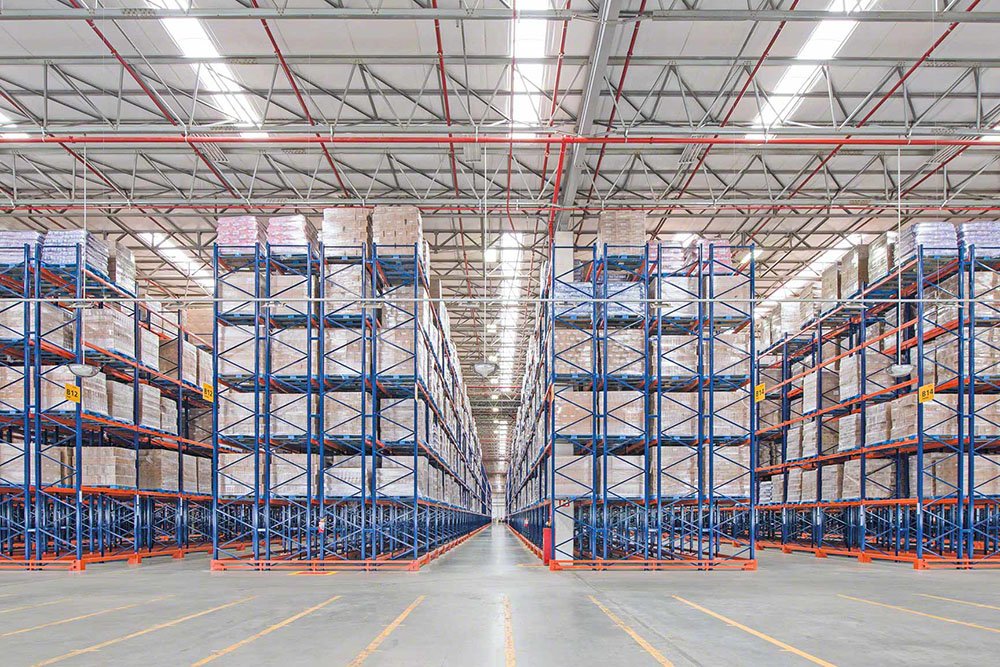
Double-Deep Racking
Two pallets deep with reach-truck access — 35% denser than selective while keeping fast access. Pragmatic for tire DCs handling paired pallets of the same size SKU.
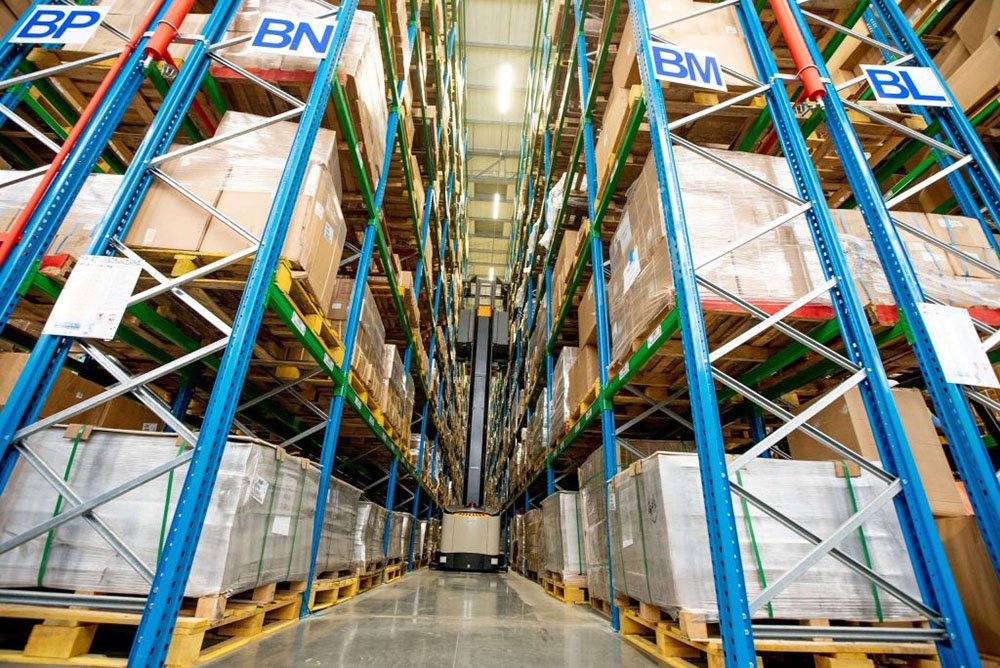
VNA Racking
Very-narrow-aisle racking with 1.6m aisles + swing-mast trucks — unlocks 12m+ heights for high-bay tire DCs. Best ROI when ceiling height is paid for but unused.
Multi-Layer Mezzanine
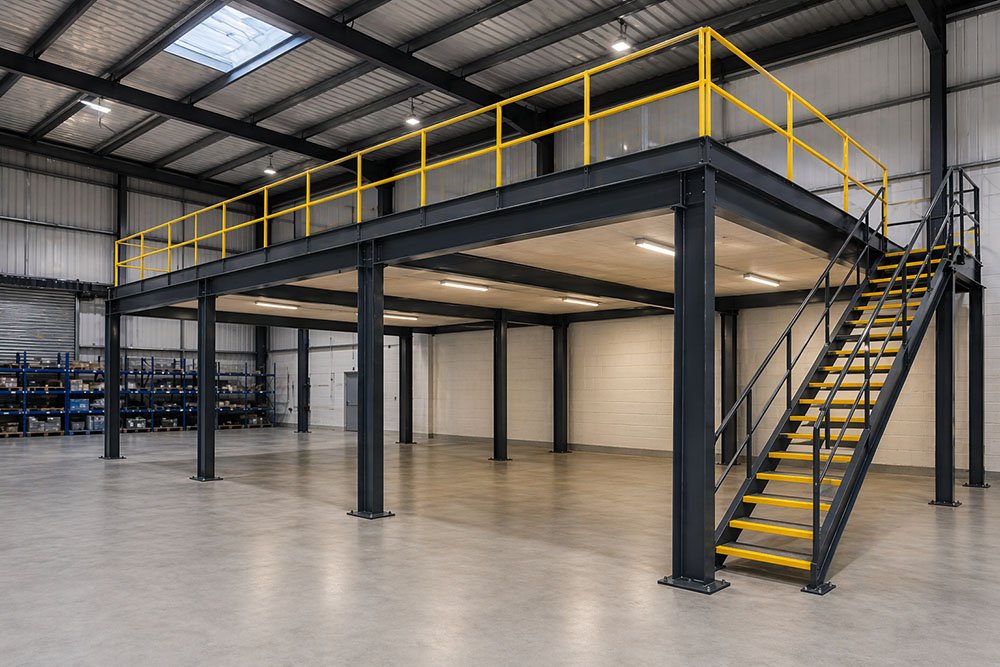
2- to 4-tier bolted mezzanines for piece-pick of high-SKU tire DCs (15,000+ size / brand / pattern combinations). Velocity-sorted slotting cuts picker walking by 60%.
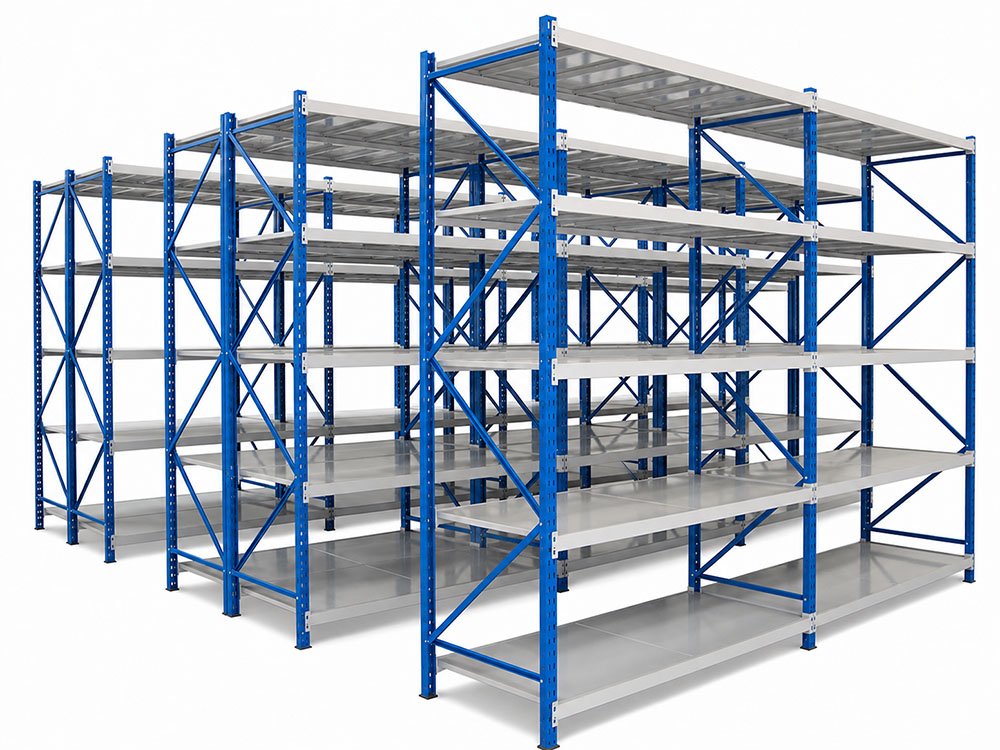
Light-Duty Boltless Racking
Quick-assembly boltless shelving for tire-related accessories — valves, sensors, balancing weights, lug nuts. Assembled without tools, perfect for service-depot pick faces.
Stack Racks (Stackable)
Free-standing collapsible pallet supports — perfect for winter / summer tire changeover overflow. Fold flat in the off-season, no floor anchoring required.
Pallet Flow Rack (FIFO)
Inclined gravity-roller lanes — load at back, pick at front. Pure FIFO so the oldest DOT-coded tire batch always ships first. Critical for OEM-grade tire warehousing.
Mobile Pallet Racking
Selective racks on motorised rail bases — only one aisle opens at a time. Best when warehouse rent is high and tire turnover is moderate (premium tire brands, racing tires).
Tire Warehouse Builds Protecting Inventory Across 65 Countries
Three recent tire-storage installations where AME Rack designed the full racking architecture. Names, scales and operating duration available with signed buyer feedback on request.
Dedicated Tire Racking for EU OE Service Depot
4-level dedicated tire racks with PE-coated rails for a European OEM tire service depot. Houses 12,000 PCR tire positions across 1,800㎡, supporting same-day fitment for 4 retail partner brands.
VNA + Mezzanine for US Tire Wholesale DC
12m VNA racking + 2-tier mezzanine for a Texas tire wholesale distributor handling 18,000 active SKUs. Swing-mast trucks unlocked 45% more storage on existing footprint, freed up offsite buffer rental.
Heavy-Duty Selective for OTR Mining Tire Depot
Heavy-duty selective racking with 4,000kg beams + crane clearance design for a Chilean mining-tire depot. Stores OTR tires up to 1.6m diameter / 800 kg each — replaced floor storage that wasted 60% of warehouse cube.
Tire Storage Racking Engineering Specs
The parameters tire-industry buyers, OE service depot engineers and warehouse procurement teams ask for first. Full datasheets and stamped FEA reports issued free with every project.
| Parameter | Tire Rack | Selective (HD) | Double-Deep | VNA | Mezzanine |
|---|---|---|---|---|---|
| Tire Format Match | PCR (4–5/level) | TBR / OTR pallets | TBR pallet pairs | PCR high-bay | PCR + accessories |
| Standard Height | 3–5 m (4 levels) | 4–8 m | 5–10 m | 10–14 m | 2–4 tiers |
| Pallet / Tier Capacity | 200–400 kg/level | 1,000–4,000 kg | 1,000–1,800 kg | 1,000–2,000 kg | 500–800 kg/㎡ |
| Aisle Width | 2.4–2.8 m | 2.8–3.5 m | 2.8–3.0 m | 1.5–1.8 m | n/a |
| Density Gain | +45% vs floor | Baseline | +35% vs selective | +45% vs selective | 2–4× floor |
| Rail Finish | PE-coated / HDG | Powder coat / HDG | Powder coat / HDG | Powder coat / HDG | Powder coat |
| Steel Grade | Q235B / Q345B | Q345B | Q345B | Q345B | Q345B + H-beam |
| Coating DFT | 60–80 μm | 60–100 μm | 60–80 μm | 60–100 μm | 80–120 μm |
| Compliance | EN 15512 · AS 4084 · RMI MH16 · FEM 10.2.02 · tire-industry stacking guidelines | ||||
| Seismic Zone Rated | Zone I–IV (FEA verified) | ||||
| Typical Lead Time | 20–25 days | 20 days | 20 days | 25–30 days | 25–35 days |
How to Choose: When A vs B for Your Tire Warehouse
Six trade-off decisions specific to tire warehousing. Use these as the first-pass filter before requesting a detailed layout from our tire-industry engineering desk.
A vs B — Tire Rack vs Stacking on Floor?
Always Tire Rack for any tire stored more than 30 days. Stacking 8+ high crushes the bottom 2 layers within 3–4 weeks; sidewall deformation makes the tires unsellable. Tire racks store tires on the tread with zero sidewall stress — pay back in saved inventory loss in under 6 months.
A vs B — Tire Rack vs Heavy-Duty Selective?
Tire Rack for PCR (passenger car) tires sold as individual units. Heavy-Duty Selective for TBR (truck/bus) and OTR (mining) tires that ship as pallet loads. The PCR / TBR / OTR distinction is the primary rack selection driver in any tire warehouse.
A vs B — VNA vs Standard Selective for High-Bay?
VNA when building height > 8m AND PCR SKU count > 5,000 — best cube utilisation, +45% density. Standard Selective when ceiling < 7m or you want to keep using existing reach trucks (avoids swing-mast capex).
A vs B — Mezzanine vs Sortation Conveyor?
Mezzanine for tire DCs with 15,000+ SKU sprawl and <15,000 daily picks — best capex efficiency. Sortation Conveyor only when picks exceed 30,000 lines/day — labour savings justify the higher capex.
How to design for winter / summer tire swap surge?
Three engineering tools: (1) stack racks add +30% overflow in 48 hours, fold flat post-season; (2) reserve 15–20% of footprint as flex zone in the original design; (3) cross-train pickers on multi-tier mezzanine so peak capacity scales with labour, not infrastructure.
How to enforce DOT-batch FIFO in a tire warehouse?
Two engineering tools: pallet flow racks (gravity FIFO, oldest DOT picks first) and radio shuttle racks (WMS-controlled FIFO). Both physically enforce FIFO so 3-year-old DOT batches never reach the dealer, eliminating returns and brand-damage lawsuits.
Side-by-Side: Which Rack Wins for Your Tire Format
Six rack types × eight tire-warehouse criteria — the shortcut most tire-industry procurement directors wish they had before issuing the RFP. Use to narrow rack mix per PCR / TBR / OTR mix.
| Selection Criteria | Tire Rack | Selective HD | Double-Deep | VNA | Mezzanine | Pallet Flow |
|---|---|---|---|---|---|---|
| PCR (Passenger) Suitability | ★★★★★ | ★★ | ★★ | ★★★★ | ★★★★★ | ★★★ |
| TBR (Truck) Suitability | ★★★ | ★★★★★ | ★★★★ | ★★★ | ★★ | ★★★★ |
| OTR (Mining) Suitability | ★ | ★★★★★ | ★★★ | ★★ | ★ | ★★ |
| Sidewall Protection | ★★★★★ | ★★★ | ★★★ | ★★★ | ★★★ | ★★★★ |
| DOT FIFO Capability | ★★★ | ★★★ | ★★ | ★★★ | ★★★ | ★★★★★ |
| Storage Density | ★★★★ | ★★ | ★★★ | ★★★★ | ★★★★★ | ★★★★ |
| Capex (per tire stored) | $ Low | $ Low | $$ Mid | $$ Mid | $$ Mid | $$$ High |
| Best Match Operation | PCR retail | TBR / OTR DC | Wholesale pallets | High-bay PCR | High-SKU retail | OEM DOT FIFO |
Tire Warehouse Racking Buyer's FAQ
The 15 questions tire-industry supply chain managers, OE service depot engineers and aftermarket tire distributors ask before issuing the first PO. Marked up with Schema.org for richer search visibility.
01What is the best racking system for a tire warehouse?
02How are tires stored to prevent sidewall deformation?
03How do you protect tires from UV and ozone aging?
04How many tires fit per level on a standard tire rack?
05How are OTR mining tires (200–1,500 kg each) stored?
06How do you enforce DOT-batch FIFO in a tire warehouse?
07Are AME Rack systems compliant with tire-industry stacking guidelines?
08How do you design for winter / summer tire swap surge?
09What height can tire racks safely reach in a high-bay warehouse?
10Can mezzanines handle 15,000+ tire SKU sprawl?
11What is the warranty on tire warehouse racking?
12What is the typical lead time for tire warehouse racking?
13Do you ship tire racking to North America, Europe and the Middle East?
14What payment terms work for tire wholesale and OE buyers?
15How does AME Rack pricing compare for tire racking projects?
Ready to Design the Right Rack Mix for Your Tire DC?
Send your tire format mix (PCR / TBR / OTR), SKU count, building dimensions and seasonal volume profile — receive 3D layout, FEA report, tire-industry compliance pack and FOB quotation within 4 working hours. Zero commitment.