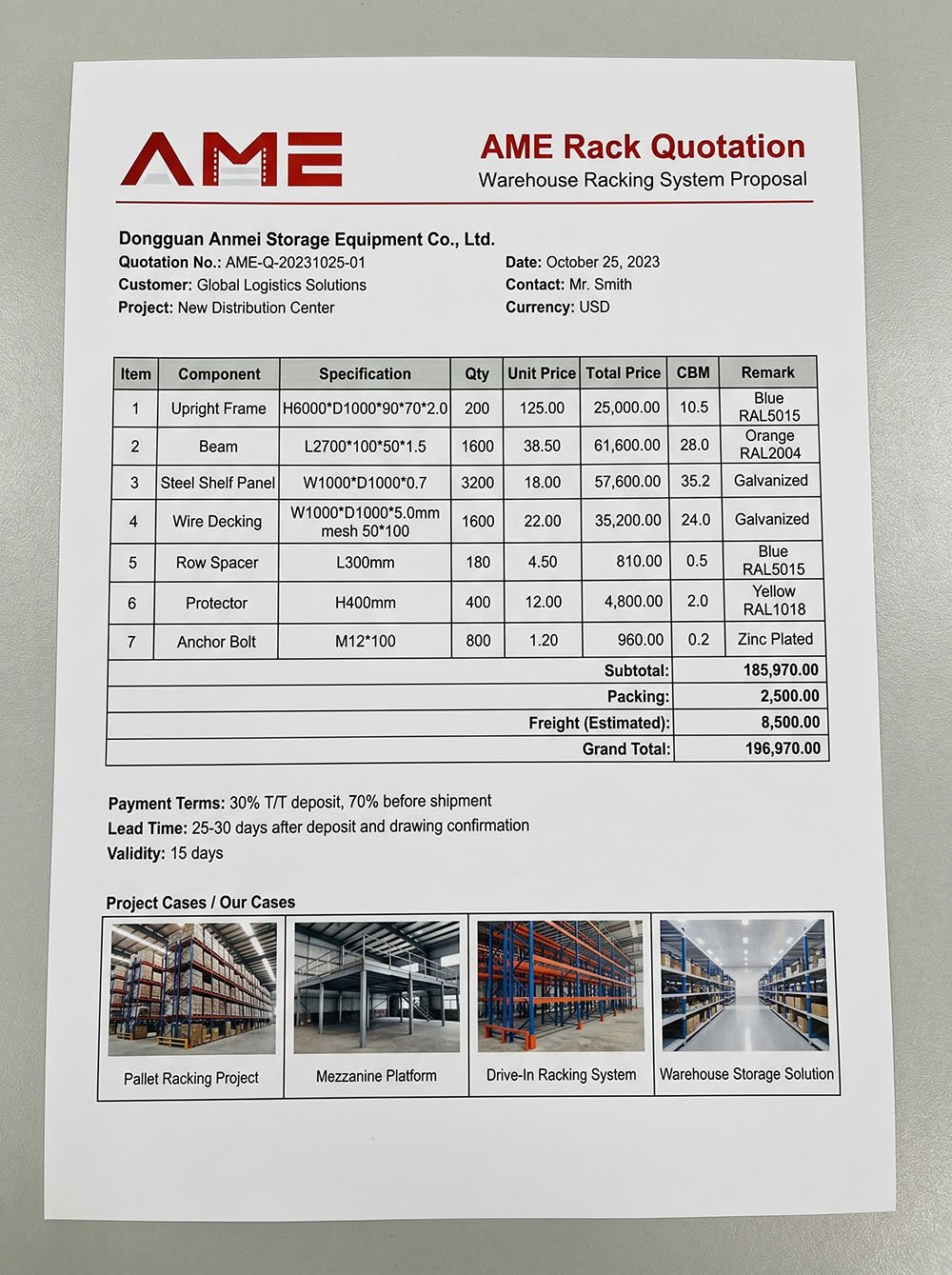
High density racking is a group of storage systems that fit more pallets into the same floor space than standard selective racking. They do this by removing most of the aisles. Fewer aisles mean more of the building holds product instead of empty walkways.
This guide explains how high density racking works, compares the main types, and shows what to check before choosing one. It is written for warehouse managers, buyers, and planners who need to store more without moving to a larger building.
What Is High Density Racking
High density racking is a pallet storage approach that raises the number of pallet positions per square meter by reducing aisle space and storing pallets in deep lanes. Instead of giving every pallet its own aisle access, pallets are stacked several positions deep behind each other.
The trade-off is access. In a selective rack, a forklift can reach any pallet directly. In a high density system, only the pallets at the lane entrance are easy to reach. Others must wait their turn. This is why high density racking suits warehouses with many pallets of the same product, not those with hundreds of different items.
How High Density Racking Saves Space
A standard selective warehouse often uses 40% to 60% of its floor area for aisles. High density systems cut this share sharply. The exact gain depends on the system, pallet size, and building layout.
Three ideas sit behind most of the gain:
- Deep lanes. Pallets are stored two to many positions deep in one lane.
- Fewer aisles. One access aisle can serve a whole block of lanes.
- Vertical use. Most systems allow tall rack, so the building height is used well.
Many buyers see 30% to 80% more pallet positions than with selective racking, depending on the system. These are general ranges, and a layout drawing for the actual building gives a firmer number.
Main Types of High Density Racking
Each type solves the same space problem in a different way. The right one depends on how product moves in and out.
Drive-In Racking
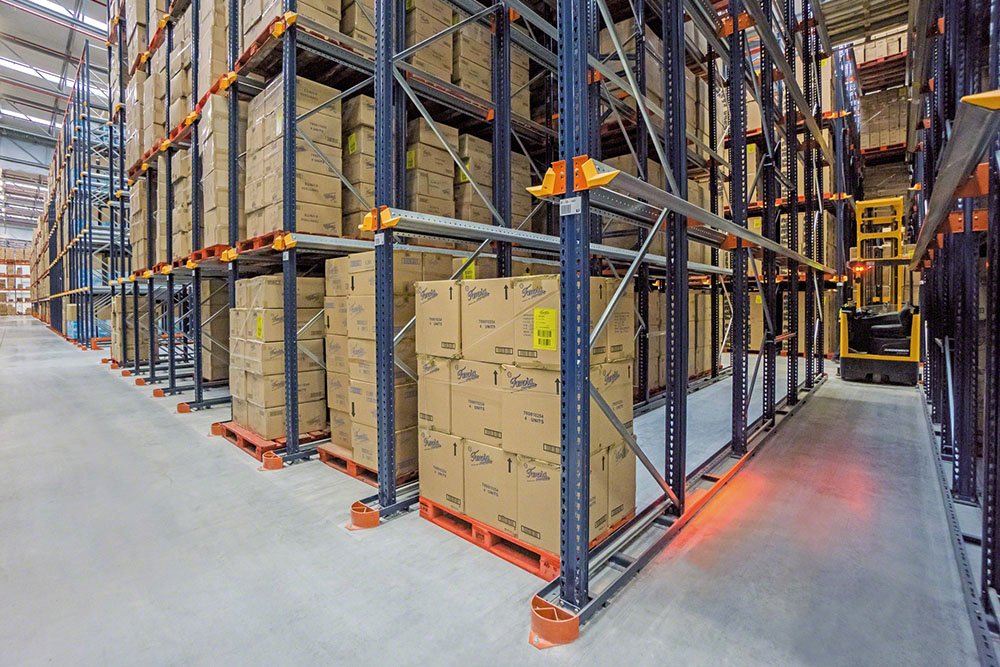
Drive-in racking lets forklifts drive into the rack structure to place and retrieve pallets. Pallets rest on rails along the lane walls. Because the forklift enters and exits through the same side, the system usually follows a last-in, first-out (LIFO) order. It suits large quantities of the same product. Related layouts are explained in the guide to single deep vs double deep pallet racking.
Drive-Through Racking
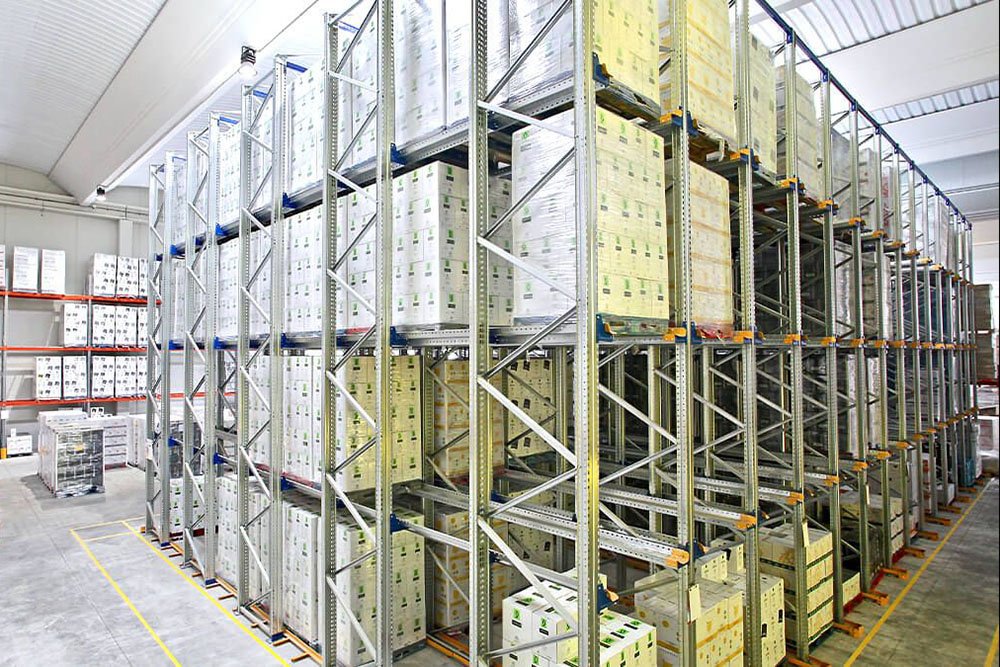
Drive-through racking is open at both ends of each lane. Pallets are loaded on one side and removed from the other. This supports first-in, first-out (FIFO) flow. It needs aisle access at both ends, so it uses somewhat more space than drive-in.
Push Back Racking
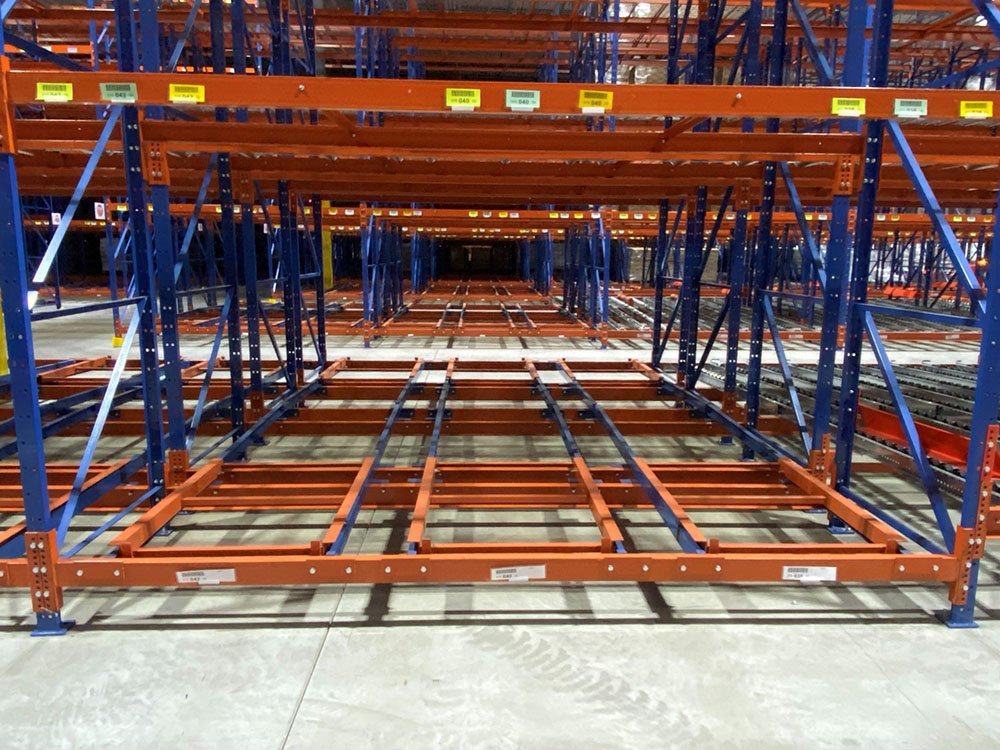
Push back racking stores pallets on nested carts that roll along inclined rails. A new pallet pushes the earlier ones back. When a pallet is removed, the ones behind roll forward. Access is from one side only, and the order is LIFO. Lanes are usually two to six pallets deep.
Pallet Flow Racking
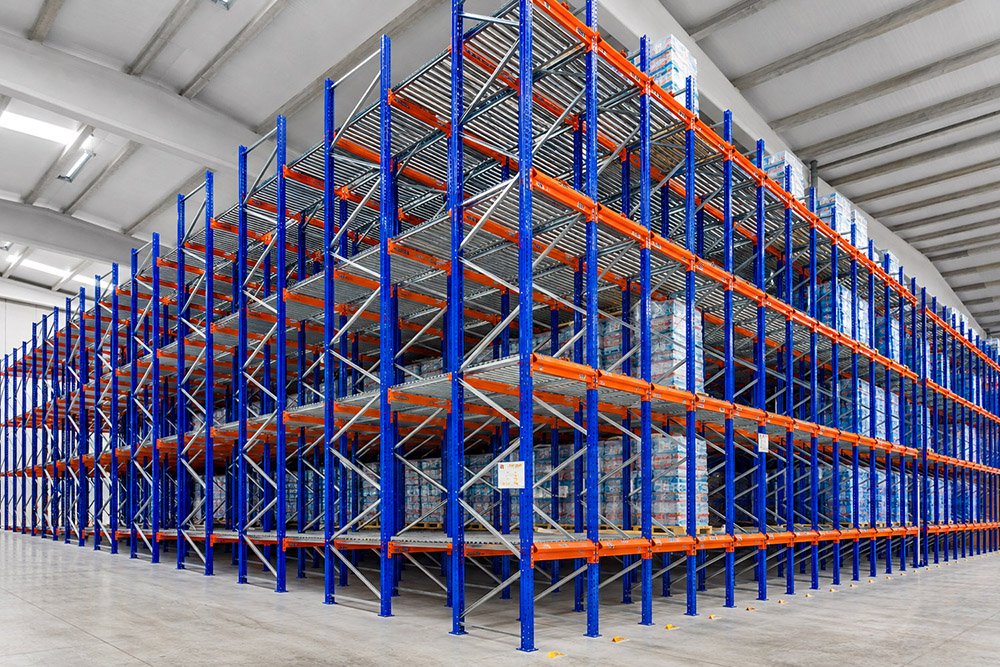
Pallet flow racking, also called gravity flow racking, uses rollers on a slight slope. Pallets are loaded at the high end and slide to the pick face at the low end. This gives true FIFO with separate loading and picking aisles. Speed controllers keep the pallets from moving too fast.
Pallet Shuttle Racking
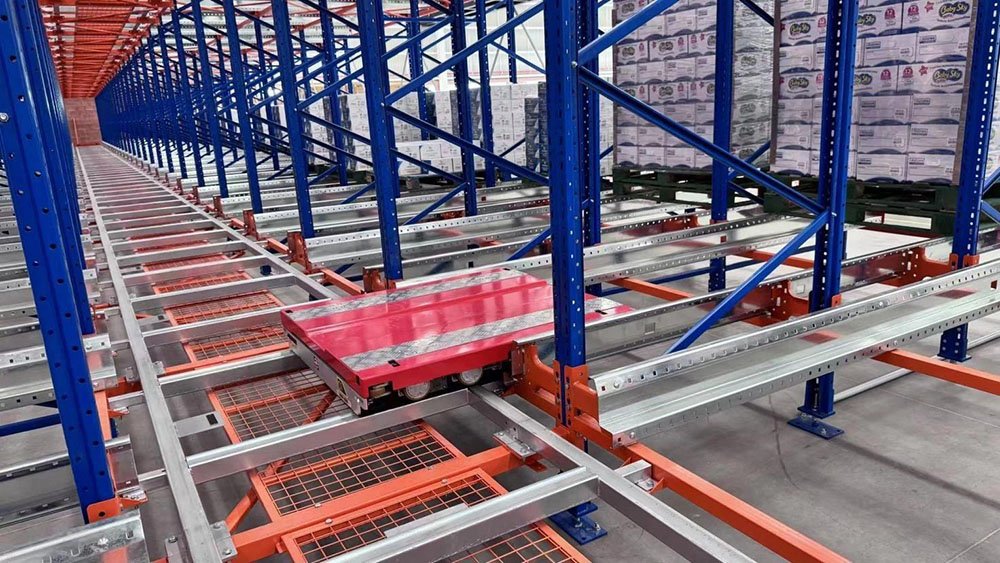
Pallet shuttle racking uses a battery-powered shuttle that travels inside the lane to move pallets. The forklift places a pallet at the lane entrance, and the shuttle carries it to the correct position. This cuts forklift travel inside the rack. It can run as FIFO or LIFO and works well in cold stores and high-volume operations.
Mobile Racking
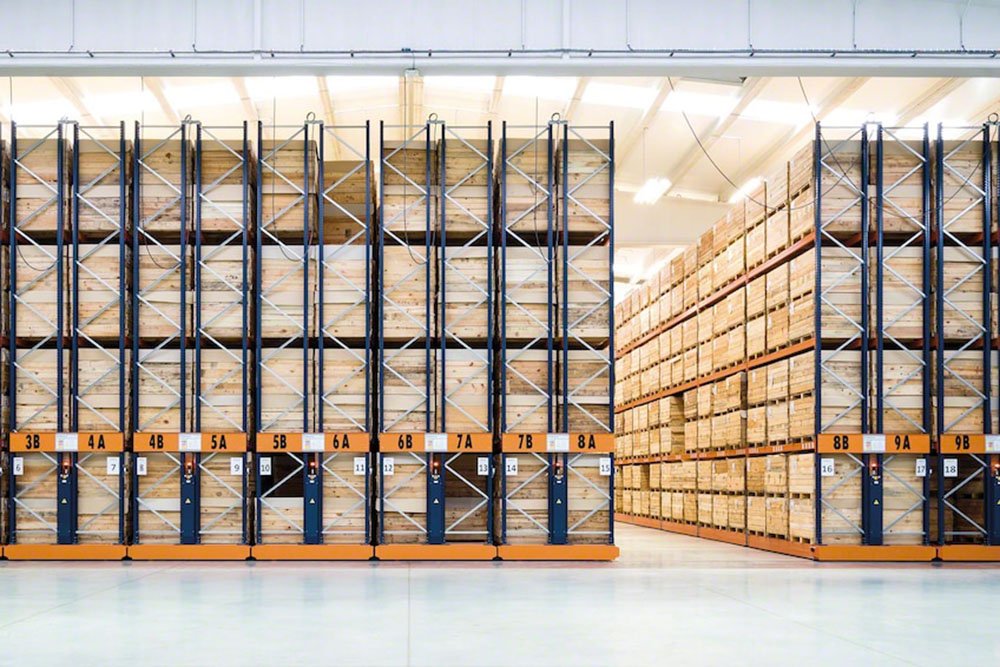
Mobile racking mounts rack bases on powered tracks. The racks slide sideways to open a single aisle where needed. It removes almost all aisles, so it gives very high density. It also gives direct access to every pallet. The cost is higher, and the floor must be flat and strong.
Comparing High Density Racking Systems
The table below compares the main types on the points that matter most in selection.
| System | Stock Rotation | Lane Depth | Access to Each Pallet | Suited For |
|---|---|---|---|---|
| Drive-in | LIFO | Deep | Entrance pallet only | Large batches of one item |
| Drive-through | FIFO | Deep | Entrance pallet on either side | Time-sensitive stock in batches |
| Push back | LIFO | 2–6 pallets | Front pallet only | Several items with moderate volume |
| Pallet flow | FIFO | Deep | Front pallet at pick face | High-turnover, date-controlled goods |
| Pallet shuttle | FIFO or LIFO | Very deep | Through the shuttle | Large volume, cold storage |
| Mobile racking | Any | Standard | Every pallet, one aisle at a time | Limited space, many items |
High Density vs Selective Racking
Selective racking is the common starting point. It gives direct access to every pallet and is flexible. The guide to selective pallet racking explains it in more detail. The comparison below shows where each approach fits.
| Factor | Selective Racking | High Density Racking |
|---|---|---|
| Pallet access | Every pallet | Limited by lane position |
| Space use | Lower | Higher |
| Number of SKUs supported | Many | Fewer, with larger batches |
| Handling speed | Simple, direct | Depends on system |
| Equipment needs | Standard forklift | Often specific trucks or shuttles |
| Upfront cost per position | Lower | Usually higher |
Many sites combine both. Fast-moving, varied items stay in selective racking, while bulk stock moves into high density lanes. This mixed layout often gives a better balance than using one type everywhere.
When High Density Racking Makes Sense
High density racking is a good fit when most of these statements are true:
- The warehouse stores many pallets of a small number of products.
- Storage space is limited or expensive, as in cold stores.
- Stock moves in full pallet batches.
- Order picking is not done at pallet level from every position.
- The building height supports tall racking.
It is a poor fit when the warehouse handles hundreds of items in small quantities. In that case, the time spent reaching the right pallet can outweigh the space gain.
Key Factors Before You Choose a System
Choosing the wrong system is costly to fix. These points deserve a check before placing an order.
Stock rotation. Decide whether the product needs FIFO or can follow LIFO. Food, medicine, and date-coded goods usually need FIFO.
SKU count and batch size. Compare how many lanes are needed with how many different items are stored. Each lane normally holds only one item.
Pallet quality. Deep lanes depend on strong, undamaged pallets. Weak or uneven pallets can jam or slip on rails and rollers.
Forklift type and driver skill. Drive-in systems demand careful driving. Narrow lanes leave little room for error, so training matters.
Floor condition. Mobile racking and shuttle systems need a flat, strong floor with tight tolerances.
Fire protection. Dense storage affects sprinkler design. Local fire rules and insurance requirements should be reviewed early.
Seismic and local standards. Rack design must meet the standards in the country of use. Industry bodies such as the Rack Manufacturers Institute (RMI) and the European Federation of Materials Handling (FEM) publish design guidance used worldwide.
Safety and Maintenance Points
Dense racking concentrates load and traffic into fewer places, so damage has a bigger effect. A few habits help prevent problems:
- Inspect uprights, rails, and guide rails regularly for impact damage.
- Fit column protectors and entry guards at lane entrances.
- Keep load capacity plates visible and never exceed the stated load.
- Repair or replace bent parts promptly instead of waiting.
- Train drivers on the specific entry rules of the system.
The guide to heavy duty racking covers load capacity and structure in more depth, and the overview of the warehouse racking system shows how high density racking fits alongside other storage options.
Frequently Asked Questions
What is high density racking?
High density racking is a storage system that holds more pallets in the same floor area than selective racking. It reduces aisle space and stores pallets in deep lanes. Examples include drive-in, push back, pallet flow, pallet shuttle, and mobile racking. The trade-off is limited direct access to each pallet.
How much more space does high density racking give?
The gain depends on the system and layout. Many warehouses see roughly 30% to 80% more pallet positions than with selective racking. Mobile and shuttle systems are often at the higher end. A drawing of the actual building gives a more reliable figure than a general range.
Is high density racking FIFO or LIFO?
It depends on the type. Drive-in and push back racking usually work as LIFO, because pallets enter and leave from the same side. Drive-through and pallet flow work as FIFO. Pallet shuttle systems can be set up either way, depending on how the lanes are loaded.
Which industries use high density racking?
Cold storage, food and beverage, and manufacturing sites use it often. These operations store large batches of the same product and pay a high price per square meter. Third-party logistics providers also use it for seasonal or bulk stock when they can group goods in full pallet loads.
Can high density racking work with many different products?
It works less well with many SKUs. Each lane normally holds one item, so many products need many lanes, and some lanes stay partly empty. Mobile racking or a mixed layout with selective racking is more suitable for varied stock.
What are the main drawbacks of high density racking?
The main drawbacks are limited pallet access, stricter handling rules, and higher upfront cost per position in some systems. Damage at lane entrances can also be more serious. Careful planning of stock flow and regular inspection reduce these risks.
Is high density racking safe?
It is safe when designed to the right standard and used within its rated load. Safety depends on good pallets, trained drivers, regular inspection, and protection at lane entrances. Poor handling and unrepaired damage are the most common causes of failures.
Conclusion
High density racking gives warehouses a way to store more pallets without adding floor area. The right system depends on stock rotation, the number of products, pallet quality, and how goods move in and out. No single type suits every operation, and many sites combine high density lanes with selective racking.
The most reliable approach is to start with the stock profile and work outward to the system. Count products, check batch sizes, confirm FIFO or LIFO needs, and review the floor and fire rules before comparing layouts. Manufacturers such as AME Rack, a Dongguan-based producer with a 15,500 m² facility, manufacture pallet racking and related storage equipment in-house, which can simplify matching rack parts to a chosen lane design.