Industrial storage solutions are systems of racks, platforms, and shelving used to store goods in factories, warehouses, and distribution centers. They turn floor space and building height into organized, safe storage. The right system depends on what is stored, how it moves, and how the building is laid out.
This guide is written for buyers and importers who need to compare options, understand what drives cost, and source equipment with fewer surprises. It explains the main types, shows how to match each to a type of goods, and covers the checks that matter when buying from overseas.
What Are Industrial Storage Solutions

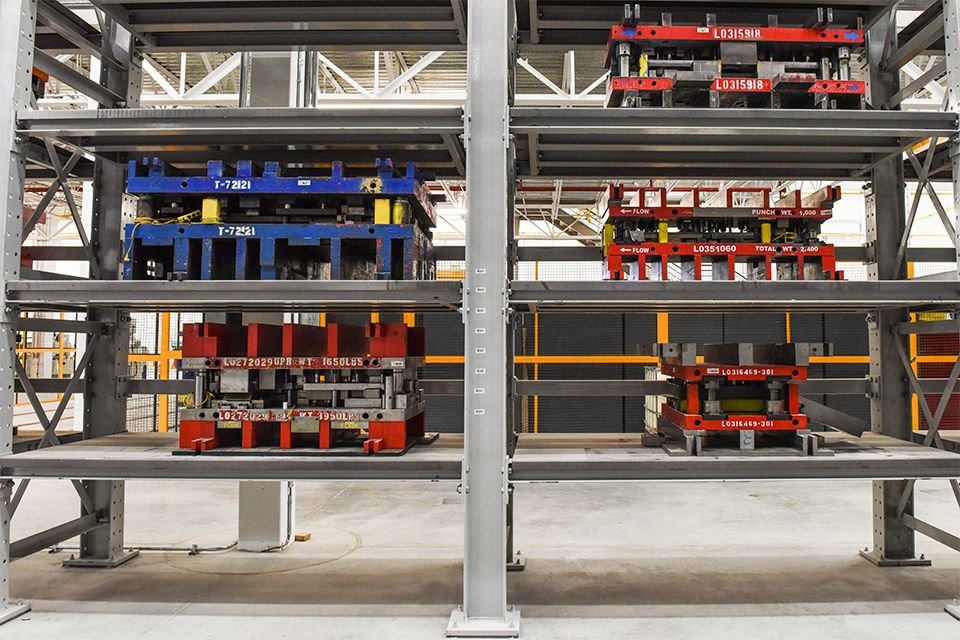
Industrial storage solutions cover the structures and equipment that hold goods in industrial settings. They include pallet racking, high density racking, cantilever racking, mezzanine floors, heavy-duty shelving, and specialized racks. Some systems are built for pallets, others for long steel bars, molds, or small parts.
A good solution does three jobs. It holds the load safely, it makes goods easy to reach, and it uses space efficiently. These goals often pull in different directions. High density systems save space but limit access. Selective systems give easy access but use more floor area. Buyers need to decide which goal matters most.
Main Types of Industrial Storage Solutions

The table below gives an overview of the common types. Each one links to a deeper guide.
| Solution | What It Is | Typical Goods | Main Strength |
|---|---|---|---|
| Selective pallet racking | Rows of racks with direct access to every pallet | Mixed pallets, many SKUs | Flexible and easy to access |
| High density racking | Deep lanes that remove most aisles | Large batches of the same item | High space use |
| Heavy-duty racking | Racks built for high loads per level | Heavy pallets, machinery parts | High load capacity |
| Cantilever racking | Arms extend from a central column | Pipes, bars, timber, sheets | Suited to long items |
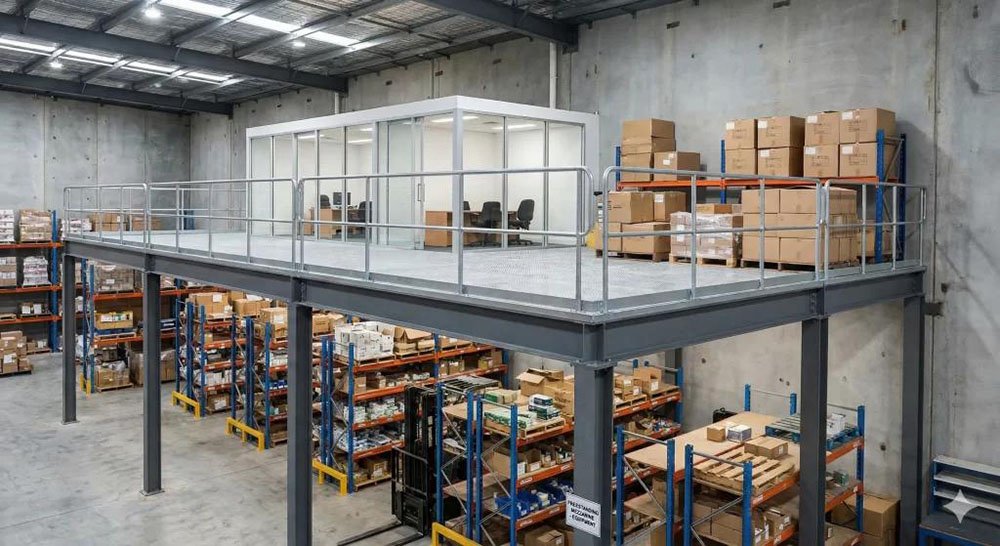
| Mezzanine floor | Raised platform inside the building | Storage, picking, offices | Adds floor area |
| Shelving | Open shelves for lighter goods | Cartons, small parts | Hand access |
| Mold and specialty racks | Racks for dies, tools, or odd shapes | Molds, tooling | Built around the item |
Detailed guides on each are available: the overview of the warehouse racking system, selective pallet racking, and heavy duty racking.
Match the Solution to What You Store

The goods themselves often decide the system. The table below links common goods to suitable options.
| Type of Goods | Suitable Solutions | Points to Check |
|---|---|---|
| Standard pallets, many SKUs | Selective pallet racking | Pallet size, load per level |
| Pallets in large single-item batches | High density racking | Stock rotation, lane depth |
| Very heavy pallets or components | Heavy-duty racking | Beam rating, floor strength |
| Long items such as pipes or timber | Cantilever racking | Arm length, arm load |
| Small parts and cartons | Shelving, mezzanine with shelving | Shelf load, picking method |
| Molds and tooling | Specialty racks | Item weight, crane or forklift access |
| Extra space inside a tall building | Mezzanine floor | Ceiling height, slab strength |
Many sites combine several systems. Fast-moving items sit in selective racking, bulk stock in high density lanes, and small parts on a mezzanine. A mixed layout often serves buyers better than a single system used everywhere.
Key Factors When Choosing Industrial Storage
Six questions help narrow the choice before any supplier is contacted.
What is the load? Each pallet position, shelf, or deck has a rated load. The rating must match the heaviest item stored, with a safety margin.
How many products are stored? Many SKUs need direct access. Few SKUs with large batches suit deeper systems.
How fast does stock move? High throughput needs easy access. Slow-moving stock can be stored more densely.
What are the building limits? Ceiling height, column positions, floor slab strength, and sprinkler layout all limit the design.
What handling equipment is used? Forklift type, aisle width, and lifting height determine rack layout.
Is stock rotation important? Food, medicine, and date-coded goods usually need first-in, first-out flow.
What Drives the Cost of Industrial Storage Solutions
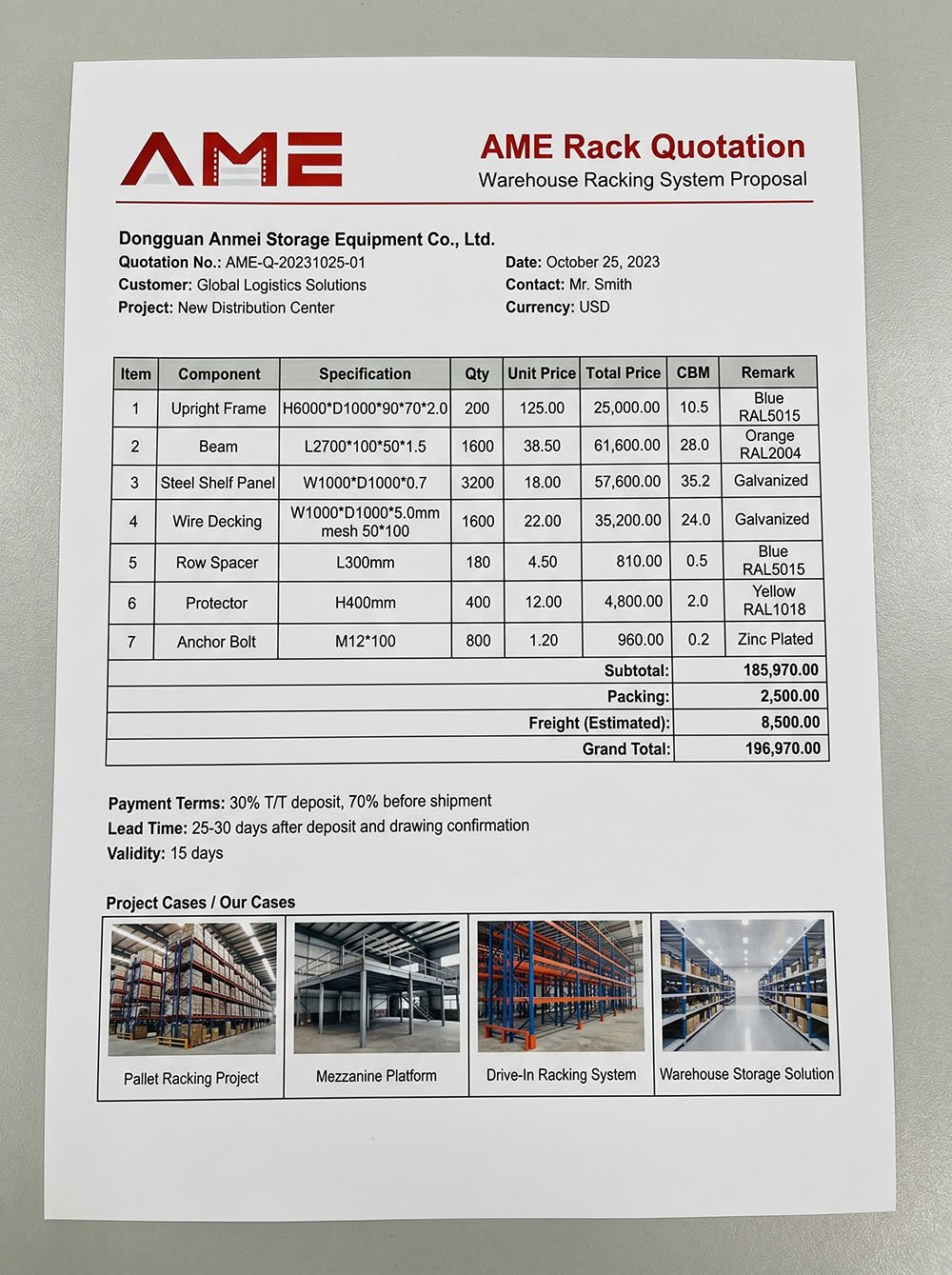
Price differences between quotations come from specification, not only from the supplier. Buyers can compare quotes more fairly by checking these points.
| Cost Factor | Why It Matters |
|---|---|
| Steel quantity and grade | Steel is the largest cost item, and heavier sections cost more |
| Load rating | Higher loads need thicker beams, stronger uprights, and more bracing |
| Rack height and depth | Taller and deeper systems use more steel and need stronger frames |
| Surface treatment | Powder coating, galvanizing, and special paint add different amounts of cost |
| Accessories | Wire decks, pallet supports, column guards, and safety pins add up |
| Customization | Non-standard sizes, special tools, or unusual layouts raise cost |
| System type | Shuttle, mobile, or automated systems cost more than basic racking |
| Quantity | Larger orders spread fixed costs and can fill containers efficiently |
| Packing and freight | Bulky steel parts make freight a major share of the delivered cost |
| Installation | Local labor rates and site conditions change the final cost |
| Certification and testing | Test reports, third-party inspection, and design reports carry a cost |
| Steel price and exchange rate | Both move over time and affect quotations |
Quotations should be compared on the same specification and the same delivered basis. A lower quote that uses thinner steel or leaves out accessories is not a true saving.
Buying Industrial Storage Solutions from China
Many importers source racking and storage equipment from Chinese factories because production capacity is large and options are wide. A structured approach reduces risk.
Define the Specification First
Prepare the load per level, pallet size, rack height, number of bays, and building drawings. A clear brief lets suppliers quote the same product and makes comparison easier.
Check the Supplier
Ask whether the supplier is a factory or a trading company. Request production photos, a factory video, and references. Confirm that the supplier works under a quality system such as ISO 9001, but treat it as a starting point, not proof of product quality.
Request Technical Documents
Ask for design drawings, a structural calculation report, steel mill certificates, and the coating specification. Check that the load capacity plates match the report.
Understand Trade Terms
Trade terms decide which costs the buyer pays. Compare quotes under FOB, CIF, and DDP on a delivered basis, so port charges, duty, and delivery are included.
Plan Packing and Container Loading
Racking parts are heavy and bulky. Ask how parts are bundled, labeled, and protected. A good loading plan reduces damage and freight cost.
Use Safer Payment Terms
A common arrangement is a deposit by bank transfer when the order is confirmed, with the balance paid against shipping documents. For new suppliers or larger orders, a letter of credit gives stronger protection. Avoid paying in full before production and inspection.
Arrange Inspection
A third-party inspection before shipment can check dimensions, weld quality, coating, and packing. This is worth considering for larger orders.
Check Import Rules
Import duty, taxes, and required certificates depend on the destination country. A customs broker can confirm the product code and duty rate before the order is placed.
Plan Installation
Decide who will install the equipment. Ask for installation drawings, a manual, and a parts list. Some buyers use local crews, while others ask the supplier for technical guidance.
Safety and Standards
Storage systems carry heavy loads, so design and use must follow recognized standards. Industry bodies such as the Rack Manufacturers Institute (RMI) and the European Federation of Materials Handling (FEM) publish design guidance. The OSHA walking-working surfaces guidance is a common reference for stairs and guardrails on platforms.
Basic habits protect both people and goods:
- Display load capacity plates and never exceed the stated load.
- Inspect uprights and beams regularly for impact damage.
- Fit column protectors and end-of-aisle guards.
- Train operators on safe loading and handling.
- Repair or replace damaged parts promptly.
Common Mistakes When Planning Industrial Storage
- Choosing a system by price alone, without checking load and access needs.
- Underestimating the weight of the heaviest item.
- Ignoring floor slab strength and building height.
- Leaving out fire protection and local code checks.
- Comparing quotes that do not share the same specification.
- Forgetting freight, duty, and installation in the budget.
- Buying a system that does not allow for future growth.
Frequently Asked Questions
What are industrial storage solutions?
Industrial storage solutions are systems used to store goods in factories, warehouses, and distribution centers. They include pallet racking, high density racking, cantilever racking, mezzanine floors, shelving, and specialty racks. Each is designed for a type of goods, load, and handling method.
How do I choose the right industrial storage solution?
Start with what is stored, how heavy it is, and how often it moves. Then check building height, floor strength, and forklift type. Many SKUs suit selective racking, large batches suit high density systems, and long items suit cantilever racking. A mixed layout often works best.
What affects the price of industrial storage equipment?
Steel quantity and grade, load rating, rack height, surface treatment, accessories, customization, and order quantity all affect price. Freight, import duty, and installation add to the delivered cost. Steel prices and exchange rates also change over time, so quotations are usually valid for 30 to 60 days.
Is it safe to buy racking from China?
Yes, when the buyer checks the supplier and the documents. Ask for drawings, a structural calculation report, mill certificates, and inspection reports. A third-party inspection before shipment adds a further check. Clear specifications and agreed trade terms reduce disputes.
Which trade terms are common for imported storage equipment?
FOB, CIF, and DDP are common. FOB covers loading at the origin port, CIF adds sea freight and insurance to the destination port, and DDP includes delivery and duty. Buyers should compare all quotes on the same delivered basis, because FOB figures exclude later costs.
Can different storage systems be combined in one warehouse?
Yes. Many warehouses use selective racking for fast-moving items, high density lanes for bulk stock, cantilever racking for long items, and a mezzanine for small parts or offices. The layout must keep aisles, fire protection, and handling equipment compatible.
How long does it take to receive imported storage equipment?
A typical project takes about 60 to 120 days, depending on size and season. This includes design approval, production, sea freight, customs clearance, and installation. Peak season, custom designs, and large orders can extend the schedule, so buyers should plan ahead.
Conclusion
Industrial storage solutions range from simple selective racking to mezzanine floors and high density systems. The right choice depends on the goods, the load, the building, and the way stock moves. Buyers who define the specification clearly, compare quotes on a delivered basis, and check documents before ordering avoid most common problems.
For importers sourcing across several storage types, working with a manufacturer that covers racking, mezzanines, and specialty racks can reduce coordination between suppliers. AME Rack, a Dongguan-based manufacturer, is one such producer, and its range of racking and mezzanine solutions gives buyers a reference point when comparing options.