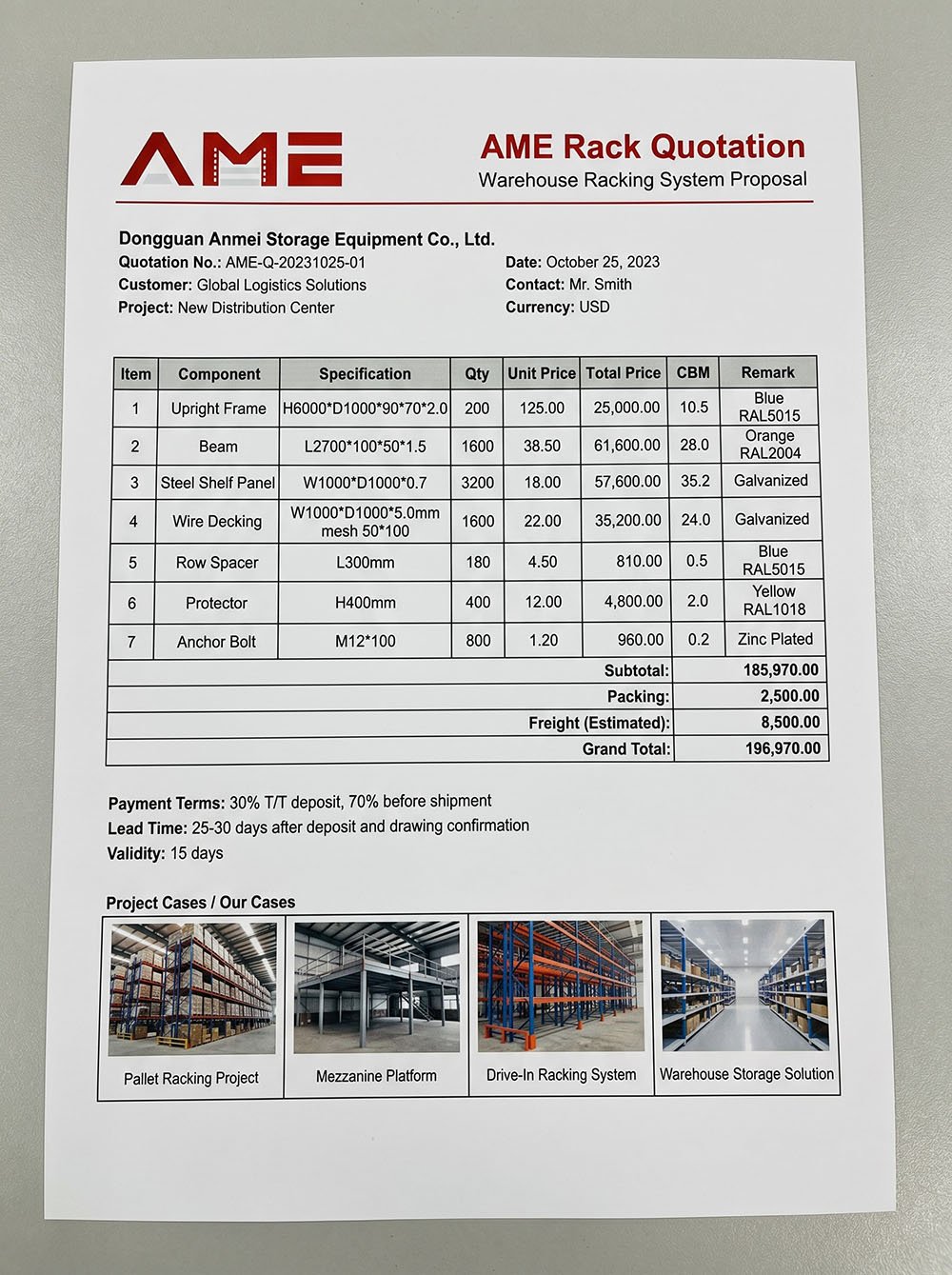
Warehouse operators, distribution center managers, and 3PL owners planning storage capacity expansion frequently ask the same question: how can I buy cheap warehouse racking without sacrificing structural safety, load capacity, or long-term reliability? The honest answer is that “cheap” is the wrong word for what most buyers actually need. What they need is cost-effective racking — systems that deliver the required load capacity, safety compliance, and service life at the lowest total cost of ownership.
Sourcing warehouse racking from China has become the default cost-optimization strategy for buyers worldwide, driven by vertically integrated production, mature export logistics, and price levels 40% to 70% below equivalent European and North American manufacturers. Getting the cost advantage without the quality risk, however, requires disciplined supplier evaluation, precise specification, and a structured procurement process. This guide explains how to buy warehouse racking cost-effectively from Chinese manufacturers while avoiding the common pitfalls that turn apparent savings into hidden losses.
Why Warehouse Racking Costs Vary So Widely
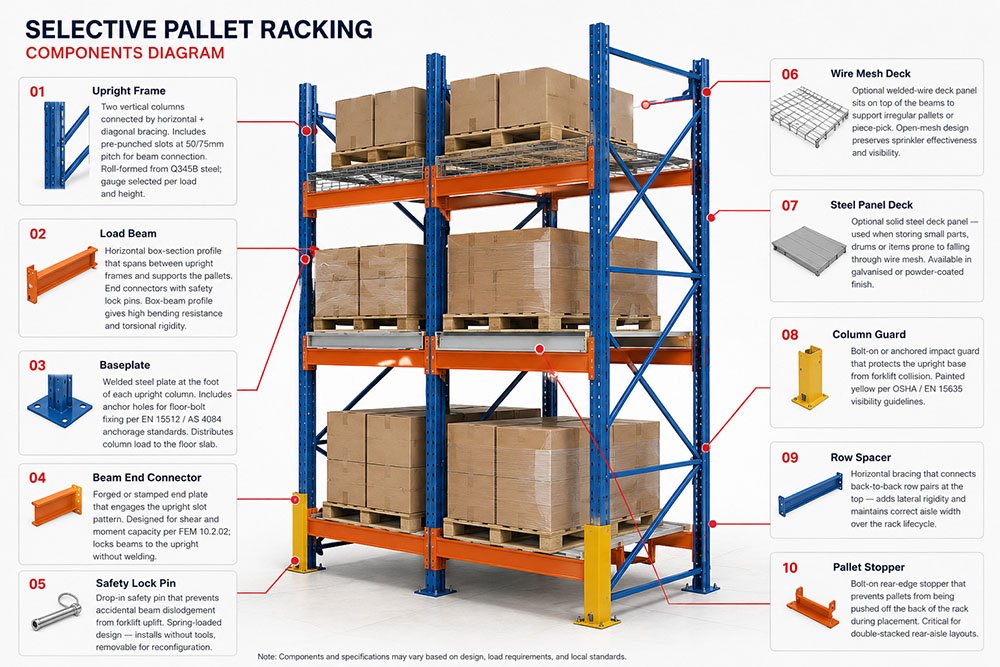
Two warehouse racking quotations for the same footprint and pallet count can differ by 300% or more, and understanding why is the first step to buying intelligently. Price differences reflect real underlying cost differences — steel grade, section thickness, weld quality, coating specification, engineering depth, and packing efficiency all contribute to the final delivered cost per pallet position.
Common cost drivers behind price variation include:
- Steel grade — Q235B (standard) versus Q345 (higher yield strength)
- Section thickness — cold-formed uprights at 1.8 mm, 2.0 mm, 2.3 mm, or 2.5 mm behave very differently under load
- Weld quality — robotic welding versus manual welding affects both cost and consistency
- Coating — powder coating (indoor) versus hot-dip galvanization (outdoor) versus basic paint
- Engineering — included structural calculation versus add-on engineering fee
- Packing — knock-down efficiency directly affects freight cost per bay
- Certifications — ISO, CE, AS 4084, FEM compliance requires audit and documentation investment
- After-sales support — installation drawings, torque specifications, spare parts availability
A quotation that appears 40% cheaper than the competition typically achieves that gap by reducing one or more of these categories — not by eliminating profit margin. Understanding which reductions are acceptable and which create long-term risk is what separates a cost-effective purchase from a costly mistake.
Why China Delivers Genuine Cost Advantage
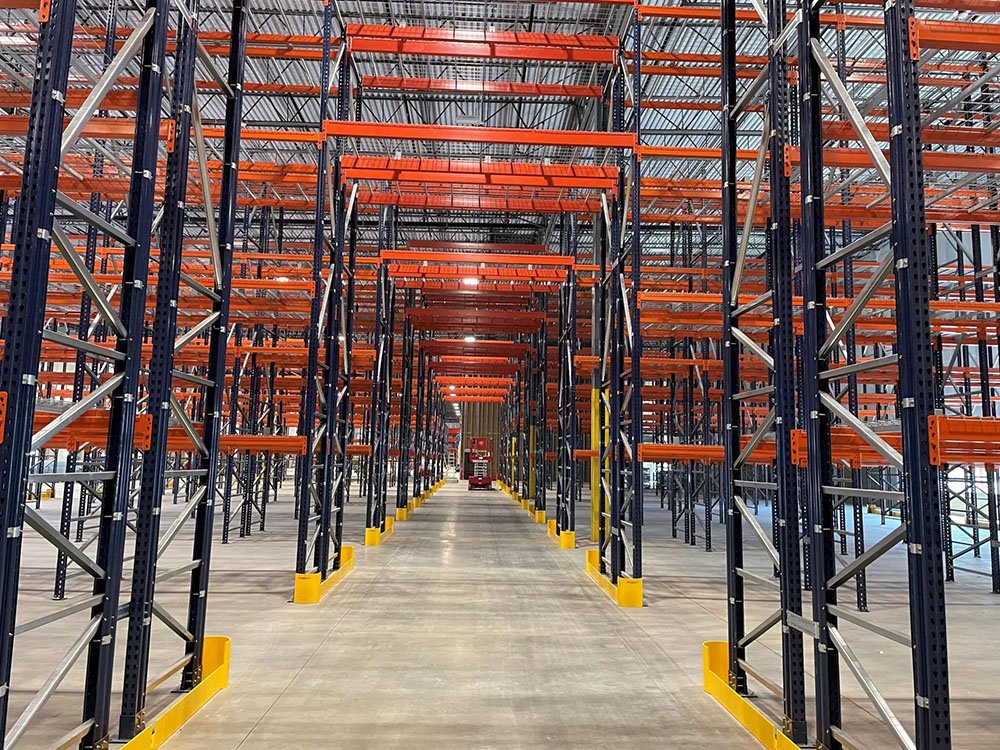
The Chinese warehouse racking sector offers structural cost advantages that cannot be replicated by simply pressuring domestic suppliers on price. Four factors combine to produce the delivered-cost gap.
Vertically integrated production. Established Chinese manufacturers operate in-house steel processing, CNC punching, roll forming, welding (frequently robotic), powder coating or galvanization, and final assembly. Vertical integration eliminates multiple middleman margins that accumulate in fragmented Western supply chains.
Scale of specialized tooling. Chinese roll-forming lines have amortized tooling investment across two decades of high-volume production. Standard upright and beam profiles carry marginal per-unit cost far below what is achievable in low-volume Western production runs.
Container-optimized packing. Standard racking configurations pack efficiently into 20 GP and 40 HQ containers in knock-down form, delivering freight cost per pallet bay significantly below assembled or partially assembled alternatives.
Engineering capacity at scale. Larger Chinese producers maintain in-house engineering teams providing CAD-based layout, FEA structural calculation, and 2D/3D drawings — services frequently included at no additional cost for standard project sizes.
The combined effect is delivered racking unit costs typically 40% to 70% below equivalent European and North American manufacturers, with lead times of 15 to 45 days for engineered projects and 7 to 15 days for stock configurations. Import duty, freight, and clearance costs reduce but do not eliminate the advantage — most buyers achieve net delivered savings of 30% to 55% after all landed costs are accounted for.
Where Cost-Cutting Is Safe — and Where It Isn’t
Buyers focused on lowest possible unit price sometimes accept quality reductions that appear acceptable at purchase but create significant long-term cost. The table below distinguishes cost reductions that are typically safe from those that are not.
| Cost Reduction | Typically Safe | Creates Long-Term Risk |
|---|---|---|
| Choosing Q235B over Q345 for medium-duty loads | ✓ | |
| Powder coating instead of galvanization for indoor use | ✓ | |
| Standard configurations over custom | ✓ | |
| Consolidated container over LCL shipping | ✓ | |
| Ordering during off-peak season (Jan–April) | ✓ | |
| Reducing upright section thickness below spec | ✗ | |
| Skipping structural calculation | ✗ | |
| Manual welding for heavy-duty applications | ✗ | |
| Omitting upright frame protectors | ✗ | |
| Skipping certifications required by destination market | ✗ | |
| Accepting inferior baseplate anchoring hardware | ✗ |
The rule of thumb: reductions that affect structural safety, load capacity, or code compliance are never true savings. Reductions that affect appearance, packaging, or customization scope can be safely absorbed if they match the operational profile.
Comparing Racking Cost by Type
Different racking configurations carry very different cost profiles per pallet position. Buyers seeking to reduce total project cost should first consider whether the specified racking type is optimal for the inventory profile — a mismatched selection often costs more than any supplier negotiation can recover.
| Racking Type | Relative Cost per Pallet Position | Density | Best For |
|---|---|---|---|
| Selective pallet racking | Baseline (lowest) | Standard | Mixed SKU, high selectivity |
| Double deep racking | +15–20% | +30–40% | Multi-pallet SKUs, moderate rotation |
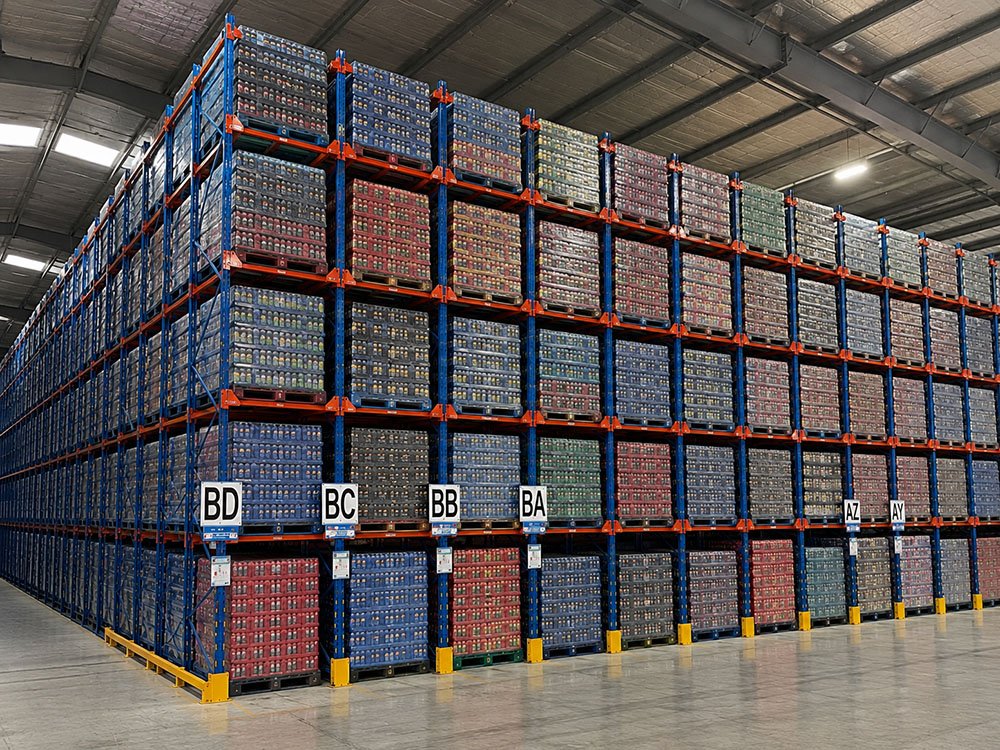
| Drive-in racking | +30–40% | +60–75% | High-volume single SKU, LIFO |
| Push-back racking | +50–70% | +50–60% | Multi-SKU LIFO with selectivity |
| Radio shuttle racking | +100–150% | +80–100% | Deep-lane, high-throughput |
| Pallet flow racking | +80–120% | +60–70% | FIFO-required perishables |
Reducing project cost by selecting the correct racking type — often a simpler and cheaper system than initially considered — typically delivers larger savings than any per-unit price negotiation on a mismatched system.
How to Structure a Cost-Effective RFQ
The single most effective cost-reduction tool available to warehouse buyers is a well-structured Request for Quotation. Vague RFQs generate padded quotations because suppliers protect themselves against undefined specifications by pricing in worst-case assumptions.
A cost-optimized RFQ should include:
Load specification. Kilograms per pallet, kilograms per beam level, kilograms per bay, kilograms per upright frame. Never use terms like “heavy duty” without numerical definition.
Dimensional specification. Pallet dimensions (LxWxH), pallet weight, beam length, upright height, aisle width, clear height available in the building.
Layout drawing. Even a rough hand-drawn layout with dimensions removes 80% of the specification ambiguity that drives padded quotations.
Certification requirement. Destination market determines required certifications — AS 4084 for Australia, CE and FEM for Europe, RMI for North America.
Quantity structure. Total bays, phased delivery schedule if applicable, plus expected annual volume for repeat orders.
Delivery terms. FOB port, CIF destination, DDP if door-to-door required. Different Incoterms shift cost responsibility and change the total delivered price.
Payment terms. T/T 30/70, L/C at sight, or other terms significantly influence supplier pricing.
Suppliers responding to complete RFQs consistently quote 10% to 20% lower than the same suppliers responding to vague RFQs, because they no longer need to price in specification risk.
Common Mistakes That Increase Cost
Buyers new to sourcing warehouse racking from China frequently make purchase decisions that increase rather than reduce total cost. The most common errors have consistent patterns.
- Focusing on unit price without total landed cost. A racking bay quoted at USD 45 FOB Shanghai may cost USD 78 delivered to a warehouse in Chicago after freight, duty, and inland transport. Compare quotes on the same delivered basis, not on FOB unit price alone.
- Ignoring packing efficiency. Two suppliers can quote identical unit prices but produce different freight costs per bay if their knock-down packing efficiency differs. Ask for container loading plans, not just unit prices.
- Skipping factory audit for large orders. Orders above one to two container loads justify a physical or verified video factory audit. Discovering quality problems after shipment costs orders of magnitude more than preventing them.
- Accepting unfamiliar payment terms without protection. 100% T/T advance carries substantial risk. T/T 30% deposit + 70% before shipment against BL copy provides better balance for both parties.
- Choosing trading companies unknowingly. Trading companies add 15% to 25% margin without providing manufacturing accountability. Verify direct manufacturer status through registered business scope, factory audit, or third-party inspection.
- Underspecifying certification. Discovering that shipped racking cannot obtain destination-market compliance approval after delivery is one of the most expensive procurement errors possible.
- Ordering during Chinese peak season. September through December often carries 30% to 50% lead time extension. Ordering in off-peak months (January to April, excluding Chinese New Year) frequently secures better pricing and faster delivery.
How to Verify Supplier Quality Without Site Visit
Physical factory visits deliver the best supplier evaluation but are not always practical for smaller orders or first-time buyers. Alternative verification methods can reduce risk substantially.
Registered business scope check. China’s National Enterprise Credit Information Publicity System publicly lists every registered company’s business scope. Verify that manufacturing (not just trading) is included.
Third-party inspection engagement. SGS, BV, TÜV, and Intertek offer factory audit and pre-shipment inspection services in China at reasonable cost. A pre-shipment inspection typically costs USD 300 to 500 per audit day and can prevent five- or six-figure quality losses.
Live video factory walkthrough. Legitimate manufacturers welcome video calls showing raw material storage, roll-forming lines, welding stations, powder coating booths, and finished goods staging. Refusal to conduct video walkthrough is a significant warning sign.
Certification document verification. Request original certificates and verify authenticity through the issuing body’s public database. ISO 9001, CE, AS 4084, and FEM certificates all have verification mechanisms.
Trade reference checks. Ask for two to three reference customers in similar markets or industries, then contact those references directly. Suppliers unable or unwilling to provide references warrant additional scrutiny.
Sample order. For first-time engagement with a promising supplier, a single-container sample order allows real-world quality assessment before committing to larger volumes.
Total Cost of Ownership Beyond Purchase Price
Purchase price is only one component of total racking cost over its service life. A complete cost comparison should account for the following categories.
Freight and duty. FOB unit price versus delivered price at the warehouse can differ by 40% to 80%. Compare on delivered basis.
Installation. Some suppliers include installation drawings and remote engineer support; others provide only components. Installation labor cost varies significantly by market.
Maintenance. Damaged uprights, replaced beams, and worn pallet supports over 10 to 15 years of service can total 15% to 25% of original purchase cost. Better initial quality reduces maintenance spend.
Safety incidents. Rack collapse or partial failure caused by under-specification carries direct cost (product damage, downtime, injury) plus indirect cost (insurance premiums, regulatory scrutiny).
Compliance and audit. Facilities operating under HACCP, GMP, ISO 9001, or customer audits require documented racking compliance. Non-compliant systems generate remediation cost that eliminates any purchase savings.
Replacement and expansion compatibility. Racking designed for future modular expansion avoids full system replacement when the operation grows. Standard-profile compatible systems retain resale value.
Warehouses evaluating total cost typically find that the lowest purchase price rarely delivers the lowest 10-year total cost. Mid-tier suppliers offering documented certifications, adequate engineering support, and reasonable warranty terms typically deliver the best long-term economics for professional operators.
Frequently Asked Questions
How can I buy cheap warehouse racking without compromising safety?
Focus on buying cost-effective racking rather than cheap racking. Specify exact load requirements, choose standard configurations over custom where possible, source directly from vertically integrated Chinese manufacturers rather than through intermediaries, and consolidate orders into full container loads. These four practices typically reduce delivered cost by 30% to 55% versus European or North American purchases without any reduction in structural safety.
What is the typical price range for warehouse racking from China?
Standard selective pallet racking from Chinese manufacturers typically ranges from USD 35 to USD 65 per pallet position FOB China, depending on load class, upright height, beam length, and coating specification. Delivered cost to overseas destinations adds 30% to 60% depending on distance and Incoterms. Heavy-duty and specialty configurations (drive-in, radio shuttle, mold rack) carry different pricing structures and require specific quotation.
How can I avoid trading companies when sourcing from China?
Verify the supplier’s registered business scope through the National Enterprise Credit Information Publicity System — direct manufacturers list production activities. Conduct a live video walkthrough of the factory including raw material storage, roll-forming lines, and welding stations. Request material certificates and quality documents that show consistent internal traceability. Trading companies typically resist detailed factory verification requests.
Is Chinese warehouse racking as durable as European or American racking?
Established Chinese manufacturers producing to AS 4084, FEM 10.2.02, or RMI standards deliver structural performance comparable to Western equivalents when correctly specified. Durability differences typically reflect specification choices (steel grade, section thickness, coating) rather than country of origin. Buyers specifying appropriate grades and requiring third-party inspection consistently achieve equivalent long-term performance at 30% to 55% lower total cost.
What is the minimum order quantity for cost-effective sourcing?
Full 20-foot container loads (approximately 200 to 400 pallet positions of selective racking, depending on configuration) deliver the most competitive per-bay pricing. Consolidated LCL shipments below one container remain viable but carry proportionally higher freight cost per bay. Some manufacturers accept trial orders below MOQ at adjusted unit pricing to establish new customer relationships.
How long does it take to receive racking from China?
Production lead times typically run 7 to 15 days for stock configurations and 25 to 45 days for custom-engineered projects. Ocean freight adds 20 to 45 days depending on destination — approximately 20 days to Southeast Asia, 25 to 35 days to Europe, 30 to 40 days to North America, and 35 to 45 days to South America and Africa. Peak season (September to December) can extend timelines by 30% to 50%.
What certifications should I require from a Chinese racking supplier?
Baseline requirements include ISO 9001 for quality management and material test certificates for structural steel. Destination-specific certifications include AS 4084 for Australia and New Zealand, CE marking and FEM 10.2.02 or EN 15512 for Europe, and RMI or ANSI MH16.1 for North America. Request original certificates with valid dates and confirm scope of coverage matches the ordered product category.
Conclusion
The question of how to buy cheap warehouse racking is best reframed as how to buy cost-effective racking — systems that deliver required structural performance, safety compliance, and service life at the lowest total cost of ownership. Chinese manufacturers deliver genuine 30% to 55% net cost advantage after all landed costs, achievable without any reduction in quality when procurement is structured correctly.
The path to cost-effective sourcing runs through disciplined specification, complete RFQs, verified supplier qualification, appropriate certification requirements, and total-landed-cost comparison rather than FOB unit price competition. Buyers focused only on the lowest quoted unit price frequently discover that the apparent savings evaporate under freight, duty, quality problems, or compliance failures. Buyers structuring purchases around total cost of ownership consistently secure the full cost advantage that the Chinese supply chain makes possible.
Producers active in the export-oriented segment of the Chinese warehouse racking sector typically combine vertically integrated manufacturing with engineering support tailored to overseas project specifications. Among such producers is AME Rack, a Dongguan-based storage equipment manufacturer whose product coverage spans selective pallet racking, heavy-duty racking, and the broader warehouse racking system portfolio commonly evaluated by international buyers seeking cost-effective sourcing. Further background on Chinese storage equipment supply base characteristics is available in the overview of China pallet racking manufacturers.