Warehouse operators planning a new storage system or expanding an existing facility frequently face a critical layout decision: whether to install single deep pallet racking or double deep pallet racking. Both configurations belong to the selective racking family, yet they differ significantly in storage density, accessibility, forklift requirements, and capital investment.
Choosing between single deep vs double deep pallet racking affects nearly every aspect of warehouse performance — from picking speed and SKU flexibility to floor utilization and long-term operating cost. Understanding the structural, operational, and financial differences between the two systems allows logistics managers to align racking selection with inventory profile, throughput requirements, and available floor area.
This guide examines both systems in technical detail, compares their performance across key warehouse metrics, and outlines the application scenarios where each configuration delivers the strongest return.
What Is Single Deep Pallet Racking
A single deep pallet racking system is a selective storage configuration in which pallets are stored one position deep on each side of an aisle, allowing direct access to every pallet without moving any other load. It is the most widely deployed pallet racking type in distribution centers, manufacturing warehouses, and 3PL facilities worldwide.
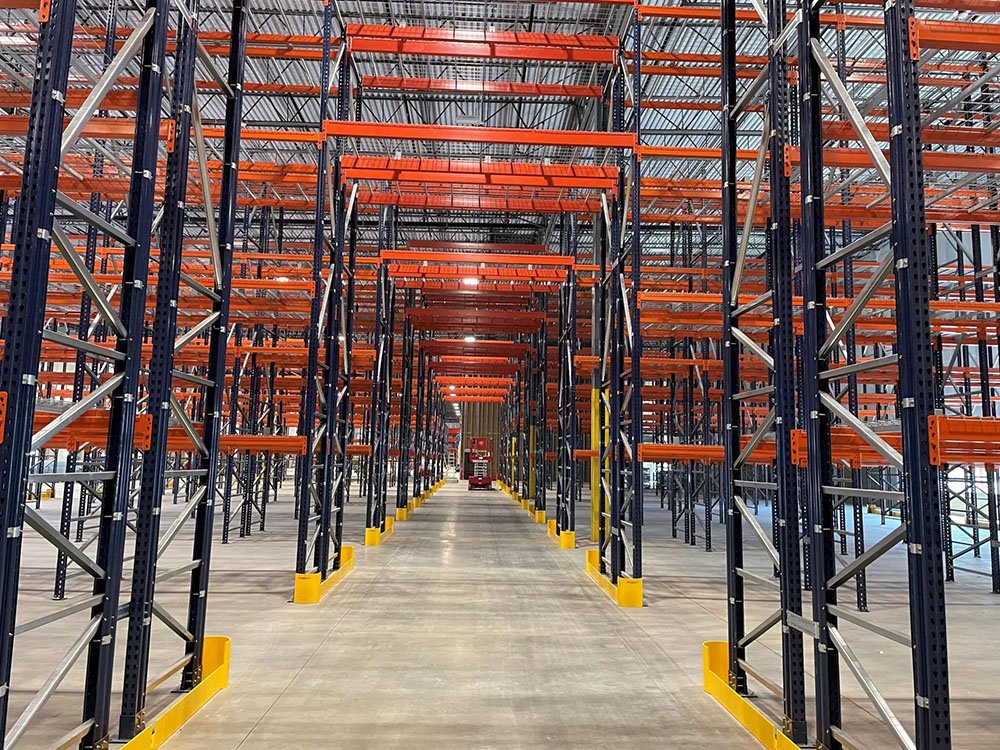
The system consists of upright frames, horizontal load beams, safety pins, and optional accessories such as wire mesh decks, pallet supports, row spacers, and column guards. Each pallet position is independently accessible, making this configuration ideal for operations with high SKU variety and frequent picking activity.
Key structural characteristics of single deep pallet racking include:
- One pallet stored per beam level per side
- 100% selectivity — every pallet directly accessible
- Compatible with standard counterbalance and reach trucks
- Aisle widths typically between 2.8 m and 3.5 m
- Beam levels adjustable in 50 mm or 75 mm increments
Because every pallet is reachable without disturbing adjacent loads, single deep racking supports both FIFO and LIFO inventory rotation strategies and integrates easily with warehouse management systems.
What Is Double Deep Pallet Racking
A double deep pallet racking system is a modified selective racking configuration in which two pallets are stored back-to-back on each side of an aisle, requiring a specialized reach truck with telescopic forks to access the rear pallet. It increases storage density by approximately 30% to 40% compared with single deep racking while retaining most of the structural simplicity of a selective system.
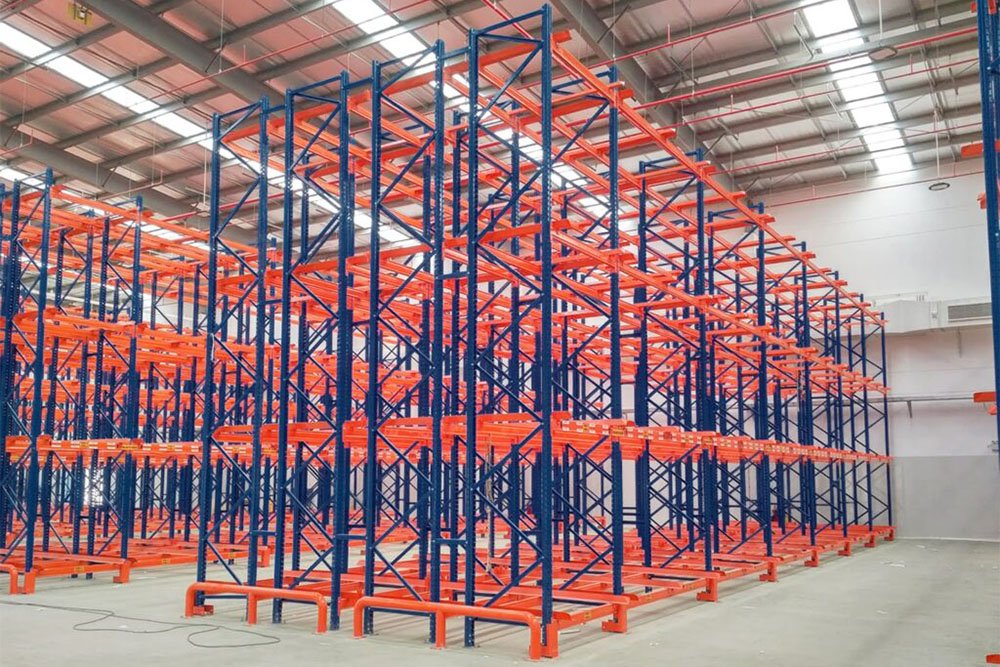
The system uses upright frames spaced to accommodate two pallet depths, paired load beams, and reinforced bracing to handle the dynamic loads created by deep-reach forklift operation. Aisles between racking rows are slightly wider than those used in single deep layouts to allow the reach truck to maneuver and extend its forks safely.
Key structural characteristics of double deep pallet racking include:
- Two pallets stored per position per side
- Approximately 50% reduction in aisle space versus single deep
- Requires deep-reach forklifts with extending fork carriages
- Aisle widths typically between 2.9 m and 3.2 m
- Selectivity reduced to approximately 50%
Double deep racking is commonly selected by operators handling moderate SKU counts with multiple pallets of the same product, where pure selectivity can be sacrificed for higher cube utilization.
Key Structural and Operational Differences
While both systems share the same basic component family — uprights, beams, footplates, and bracing — their geometry, load behavior, and equipment compatibility diverge significantly. The table below summarizes the principal differences between single deep vs double deep pallet racking.
| Feature | Single Deep Racking | Double Deep Racking |
|---|---|---|
| Pallet depth per row | 1 pallet | 2 pallets |
| Selectivity | 100% | ~50% |
| Storage density | Standard | 30–40% higher |
| Aisle width | 2.8–3.5 m | 2.9–3.2 m |
| Forklift type | Counterbalance / reach truck | Deep-reach truck with telescopic forks |
| Inventory rotation | FIFO and LIFO | Primarily LIFO |
| SKU flexibility | Very high | Moderate |
| Initial investment | Lower | Higher |
| Floor utilization | Standard | Improved |
Beyond these measurable parameters, the two systems also differ in how they respond to operational variation. Single deep racking remains efficient even when SKU mix fluctuates, while double deep racking performs best when inventory follows predictable, multi-pallet groupings per SKU.
Storage Density and Floor Utilization
Storage density is often the deciding factor in modern warehouse design, particularly in regions where industrial land and rental costs continue to rise. Double deep racking compresses the same pallet count into a smaller footprint by eliminating roughly half of the access aisles required by a single deep layout.
A simplified comparison illustrates the density gain:
| Layout Type | Aisles per 1,000 m² | Approximate Pallet Positions |
|---|---|---|
| Single Deep | 8–10 | 900–1,100 |
| Double Deep | 5–6 | 1,250–1,450 |
The exact density improvement depends on building dimensions, column spacing, fire code clearances, and the turning radius of the chosen material handling equipment. In high-bay warehouses with clear heights above 10 meters, the density advantage of double deep racking becomes even more pronounced because vertical stacking multiplies the savings created at floor level.
However, density gains carry a trade-off. Reduced selectivity means that accessing a rear pallet requires either moving the front pallet first or scheduling picks to consume front pallets before rear pallets. Warehouses with high pick frequency per SKU may find this trade-off impractical, while operations with bulk pallet movements typically absorb it without measurable productivity loss.
Forklift Requirements and Aisle Design
Equipment compatibility is one of the most frequently overlooked aspects of the single deep vs double deep pallet racking decision. The two systems require different forklift classes, and miscalculating this requirement can render an otherwise well-designed racking layout unusable.
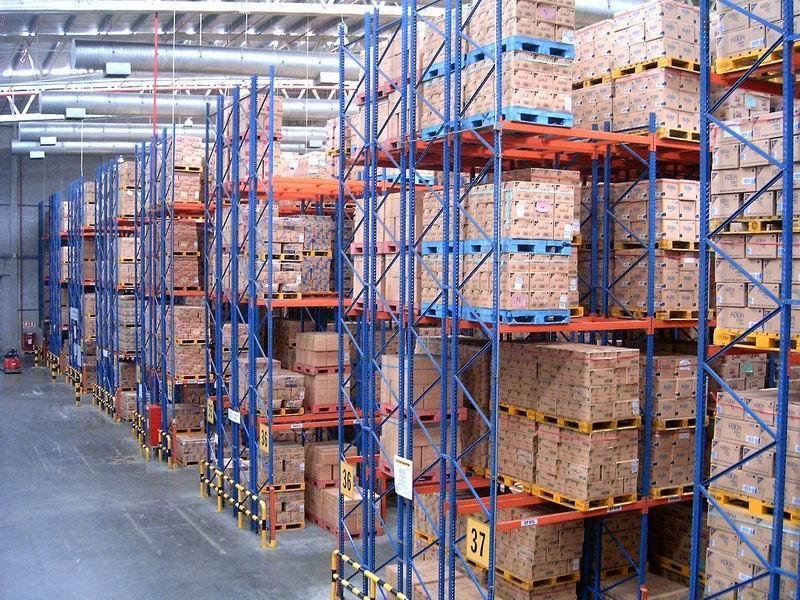
Single deep racking accommodates a wide range of material handling equipment:
- Counterbalance forklifts
- Standard reach trucks
- Pallet stackers
- Order pickers (for lower levels)
Double deep racking requires deep-reach trucks equipped with telescopic or pantograph fork carriages capable of extending an additional pallet depth into the rack. These trucks are more specialized, carry a higher purchase price, and demand more skilled operators. Maintenance intervals tend to be shorter due to the additional hydraulic and mechanical components involved.
Aisle design must also account for the reach truck’s extension cycle, mast tilt, and load stability. According to guidance published by the Material Handling Institute, aisle dimensions should always be validated against the specific truck manufacturer’s turning and reach specifications rather than estimated from generic tables. (See MHI.org —)
Cost, ROI, and Long-Term Considerations
Capital investment differs substantially between the two systems, and the total cost of ownership extends well beyond the racking itself. A complete comparison must account for racking hardware, forklift fleet, training, building footprint, and long-term operational efficiency.
| Cost Category | Single Deep | Double Deep |
|---|---|---|
| Racking hardware (per pallet position) | Lower | Slightly higher |
| Forklift investment | Lower | Higher (deep-reach truck) |
| Operator training | Standard | Specialized |
| Building footprint required | Larger | Smaller |
| Maintenance complexity | Low | Moderate |
| Productivity per pick | Higher | Lower (rear pallet access) |
For warehouses where land or rent represents the dominant cost, the footprint reduction delivered by double deep racking often offsets the higher equipment investment within 2 to 4 years. For operations where labor cost and pick speed dominate, single deep racking typically delivers a faster payback because every pallet is immediately accessible.
Engineering teams generally recommend modeling both scenarios using actual SKU velocity data, pallet turnover frequency, and projected throughput growth before finalizing the configuration. Racking selection made on density alone — without verifying forklift compatibility and labor implications — frequently leads to retrofit costs that exceed the initial savings.
Application Scenarios for Each System
Both systems remain widely deployed across global warehouse operations, but each excels in distinct environments.
Single deep pallet racking is preferred for:
- Distribution centers with high SKU variety
- 3PL operations handling multiple clients with mixed inventory
- E-commerce fulfillment centers with frequent picking
- Cold storage facilities where labor minutes carry premium cost
- Manufacturing plants requiring just-in-time component access
Double deep pallet racking is preferred for:
- Beverage, food, and FMCG warehouses with multi-pallet SKUs
- Manufacturing operations with predictable production batches
- Regional distribution hubs holding buffer stock
- Facilities where building expansion is constrained
- Operations with stable, slow-to-medium turnover inventory
In hybrid warehouses, the two systems are often combined — single deep racking for fast-moving SKUs near shipping zones, and double deep racking for bulk reserve inventory toward the rear of the facility. This layered approach preserves picking efficiency for high-velocity items while capturing density gains where they matter most.
Design Considerations and Safety Standards
Both single deep and double deep racking systems must comply with regional structural design codes. In Europe, this typically means conformance with FEM 10.2.02 and EN 15512. In North America, the Rack Manufacturers Institute publishes ANSI MH16.1, which addresses design, testing, and utilization. (See RMI.org —)
Critical design parameters include:
- Seismic load classification of the installation site
- Floor flatness and slab thickness verification
- Beam deflection limits (typically L/180)
- Upright impact protection at aisle ends
- Clear aisle width verification against forklift turning radius
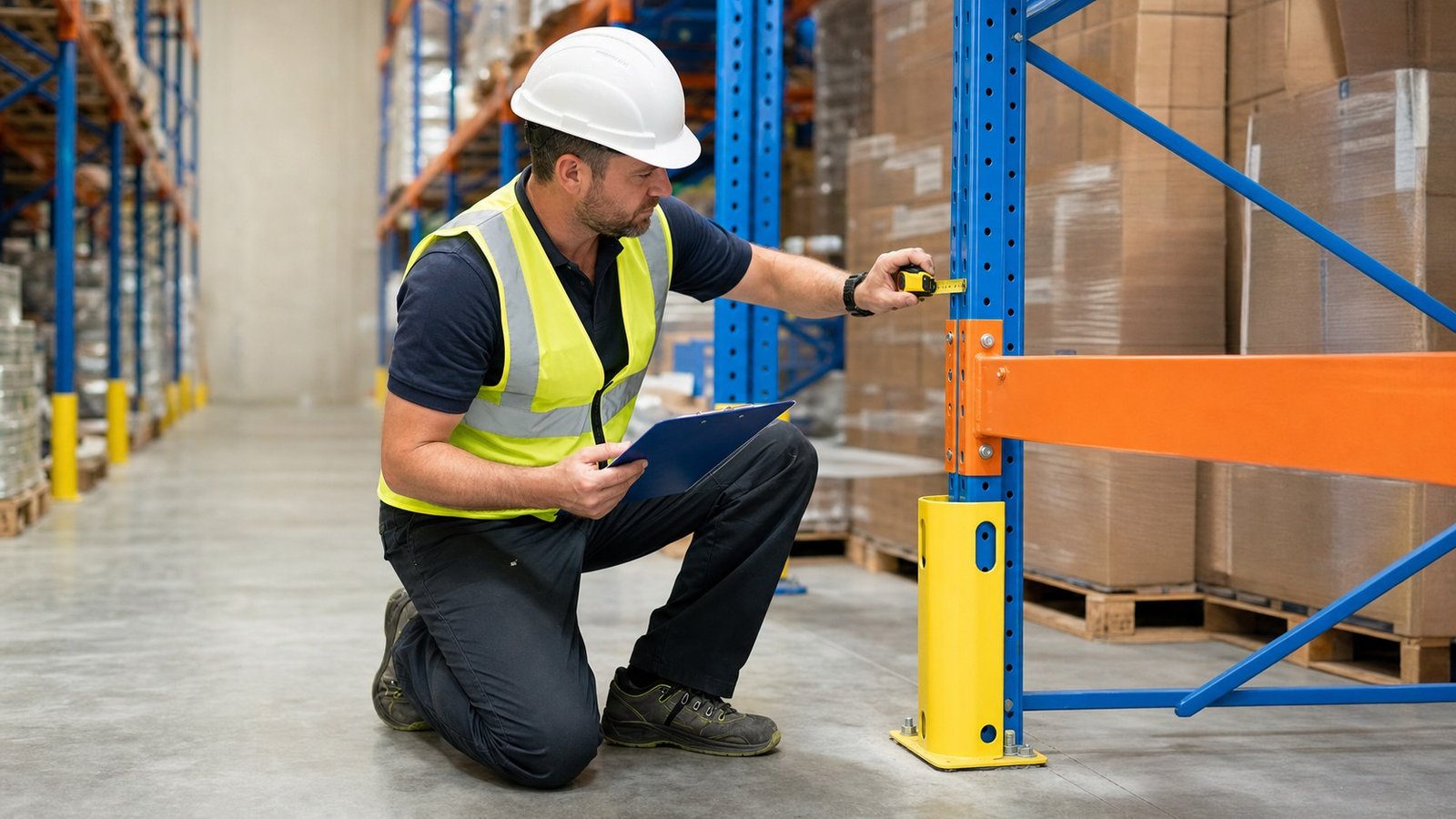
Double deep racking carries additional considerations due to the deeper reach cycle and higher torque applied to upright frames. Reinforced base plates, increased frame depth, and pallet stops at rear positions are commonly specified. Periodic rack inspection — recommended quarterly by most regulatory bodies — is essential for both configurations to maintain structural integrity over the rack’s service life.
Conclusion
Choosing between single deep vs double deep pallet racking is fundamentally a trade-off between selectivity and density. Single deep racking offers full access to every pallet at lower equipment cost, while double deep racking compresses the same pallet count into a smaller footprint at the cost of reduced selectivity and specialized forklift requirements.
Warehouse operators evaluating these two configurations should begin with a detailed analysis of SKU velocity, pallet turnover frequency, building dimensions, and forklift fleet compatibility before committing to a layout. In many modern facilities, the optimal solution combines both systems — single deep for high-velocity zones and double deep for bulk reserve storage — delivering balanced performance across the full inventory profile.
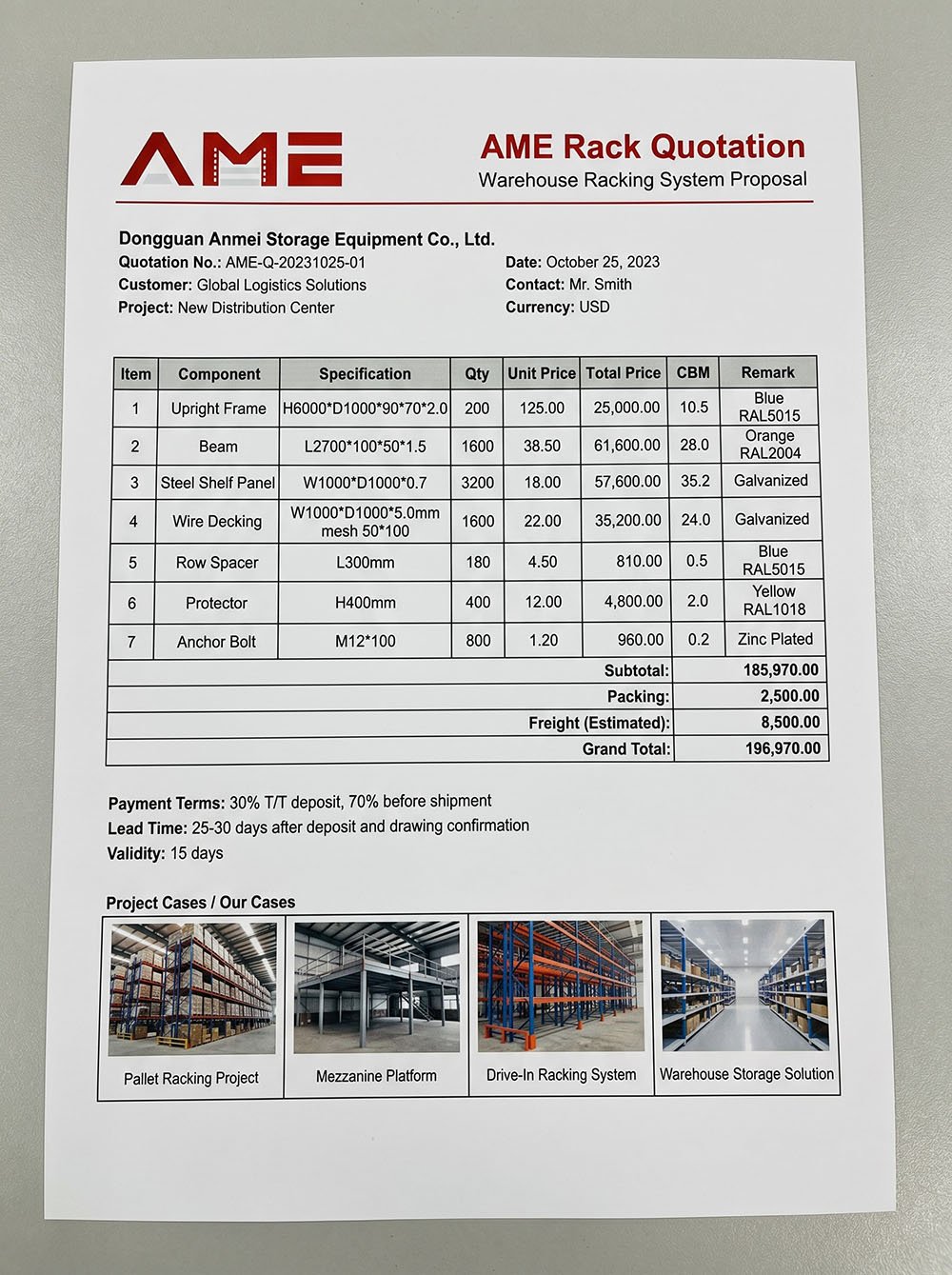
Manufacturers such as AME Rack, a Dongguan-based producer of industrial storage systems, represent the type of supplier commonly evaluated by warehouse operators seeking engineered selective racking and double deep racking solutions tailored to specific building dimensions and load requirements.