AME Rack

🏭 Raw Material & Finished Goods

Raw Material & Finished Goods Racking — Designed for Inbound, WIP & Outbound on the Same Floor

A unified racking architecture for manufacturers, processors and CPG plants that must store raw material, work-in-progress and finished goods under one roof: heavy-duty selective, drive-in, push-back, pallet flow, radio shuttle and multi-tier mezzanine systems engineered for FIFO batch traceability, heavy stacked loads and continuous production-to-dispatch flow.

300+ manufacturing plants designed Batch-traceable layouts 10-year structural warranty
2,500 kgPER-PALLET CAPACITY
+60%DENSITY VS SELECTIVE
100%FIFO TRACEABILITY
48hLAYOUT + QUOTE TURNAROUND
⭐ At-a-Glance — Raw Material & FG Quick Facts

Raw Material & Finished Goods Racking, Summed Up in 10 Quick Facts

  • Best rack mix: Selective (inbound) + Drive-in (raw bulk) + Pallet Flow (FG FIFO) + Mezzanine — the four-zone manufacturing layout.
  • FIFO traceability: Pallet flow + radio shuttle deliver 100% FIFO for batch-coded raw material and dated finished goods.
  • Heavy-load support: Selective beams rated up to 4,000 kg/pair for steel coils, IBC totes and stacked drums.
  • Density gain: Drive-in compacts +60% vs selective for single-SKU raw bulk; radio shuttle adds +80%.
  • Plant-floor flexibility: 100% bolted construction lets you reconfigure inbound / WIP / outbound zones when product mix changes.
  • WIP buffer zones: Stack racks at line-side provide 2-hour production buffer with zero floor anchoring.
  • Heights supported: Selective 8m · Drive-in 10m · VNA 14m · Radio shuttle 14m · Mezzanine 2–4 tiers.
  • Coil & IBC storage: Reinforced base plates + cradle attachments handle steel coils, oil IBCs, polymer drums.
  • Compliance: EN 15512 · AS 4084 · RMI MH16 · FEM 10.2.02 — auditor-ready FEA reports issued free.
  • AME Rack lead time: Standard 20 days FOB Shenzhen; phased shipping for multi-zone plant rollouts.
🩹 Plant Storage Pain Points

If You Run a Manufacturing Plant, You've Lived These 6 Headaches

We've designed racking for manufacturers across 65 countries — from polymer plants to steel mills to CPG factories. Six failure patterns come up in nearly every kick-off — each with a proven storage-engineering fix.

📦 Batch Mix-Up

"Used Lot B before Lot A — recall triggered"

Without enforced FIFO, the freshest raw material gets picked first because it's at the front. Old batches expire on the racks — and if a contamination recall hits, you can't prove which batch went into which product.

AME Rack FixPallet flow + radio shuttle physically enforce FIFO; oldest pallet always picks first.
🏗️ Heavy Load Failure

"Beams sagged under steel coils"

Standard 1,000 kg pallet beams collapse under 2,500 kg steel coils, polymer drums and IBC totes — leaving raw material on the floor and shutting down production.

AME Rack FixHeavy-duty Q345B beams rated up to 4,000 kg/pair with reinforced connectors.
🚧 Cross-Flow Chaos

"Inbound forklifts block outbound shipments"

One mixed-traffic aisle for inbound material AND outbound finished goods causes 30-minute delays per shift, and the safety incidents that come with shared forklift paths.

AME Rack FixZoned layout: inbound selective at receiving dock; FG pallet flow flows to shipping dock.
🏭 WIP Sprawl

"WIP pallets sitting on floor between operations"

Work-in-progress overflow from line 1 spreads across the production floor, blocking forklift paths to line 2 and creating quality-control nightmares.

AME Rack FixStack racks at line-side give 2-hour WIP buffer; fold flat when production rebalances.
📈 Seasonal Surge

"Holiday production doubles, racks don't"

Q4 finished goods inventory triples for 6 weeks. Renting overflow at $25/sqft destroys the margin gained from running extra production shifts.

AME Rack FixModular mezzanine adds +50% floor in 21 days; stack racks add overflow in 48 hours.
📋 Audit Pressure

"ISO 9001 auditor wants racks structurally certified"

ISO 9001, IATF 16949, FDA and HACCP audits all want stamped FEA reports, MTR mill certs and load capacity signage on every rack bay.

AME Rack FixFree FEA report + MTR + EN 15512 / AS 4084 / RMI signage pack with every project.
📦 Recommended Rack Types

9 Racking Systems for Raw Material, WIP & Finished Goods

A manufacturing plant rarely uses one rack type — successful plants combine 4–6 systems across inbound, WIP and outbound zones. Below are the nine configurations we deploy in plants from polymer processors to CPG manufacturers worldwide.
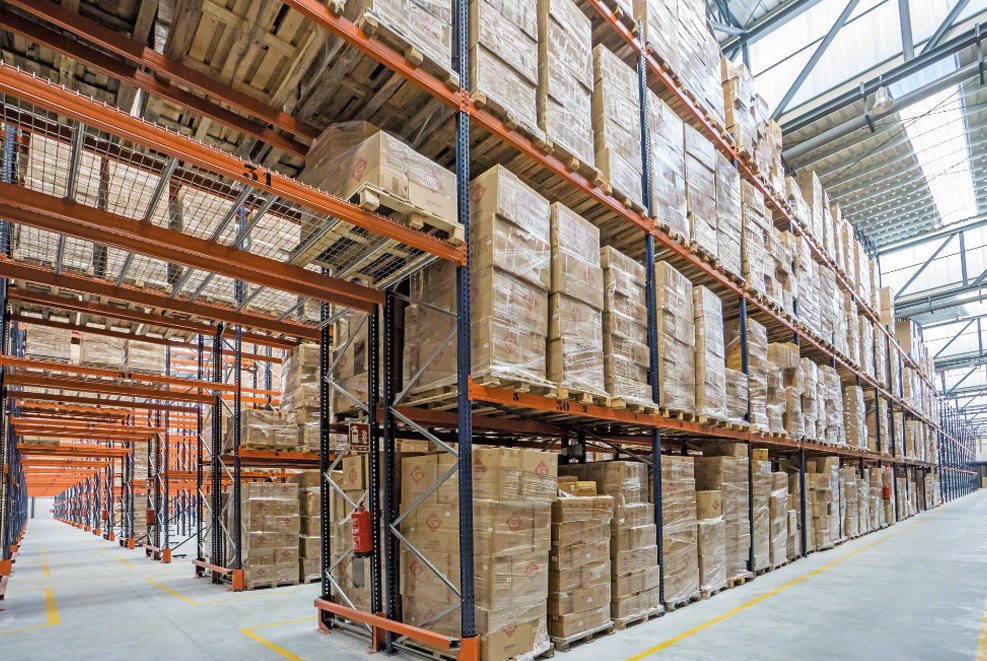
01 Inbound Backbone Selective Pallet Racking for raw material and finished goods storage by AME Rack

Selective Pallet Racking

The default at the receiving dock — 100% direct access for inbound raw material and mixed-SKU staging. Heavy-duty configurations rated to 2,500 kg per pallet.
DENSITYBaseline
ACCESS100% direct
BEST FORInbound staging, mixed SKU
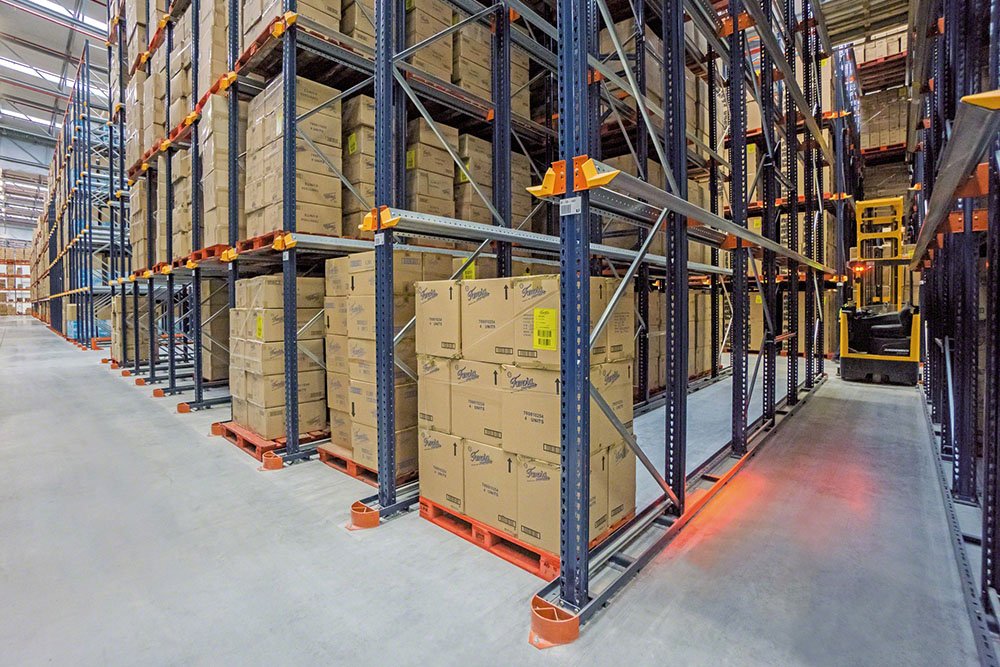
02 Raw Bulk Density Drive-In Racking for raw material and finished goods storage by AME Rack

Drive-In Racking

High-density LIFO for slow-moving raw material — single-SKU bulk storage of steel coils, polymer pellets, packaging stock. Saves up to 60% floor space vs selective.
DENSITY+60% vs selective
ACCESSLIFO single SKU
BEST FORRaw bulk, packaging stock
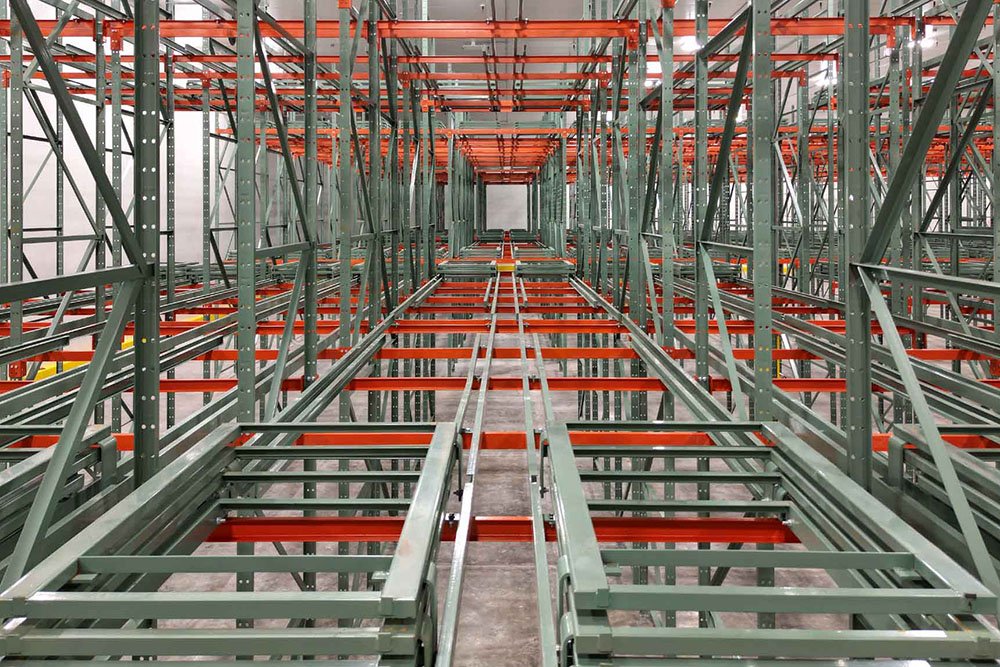
03 LIFO Mid-Density Push-Back Racking for raw material and finished goods storage by AME Rack

Push-Back Racking

Cart-on-rail system, 2–5 pallets deep, single-aisle LIFO access. The right choice when raw material is non-date-sensitive and you need density without forklifts entering the rack.
DENSITY+50% LIFO
ACCESSSingle-aisle LIFO
BEST FORNon-date raw material
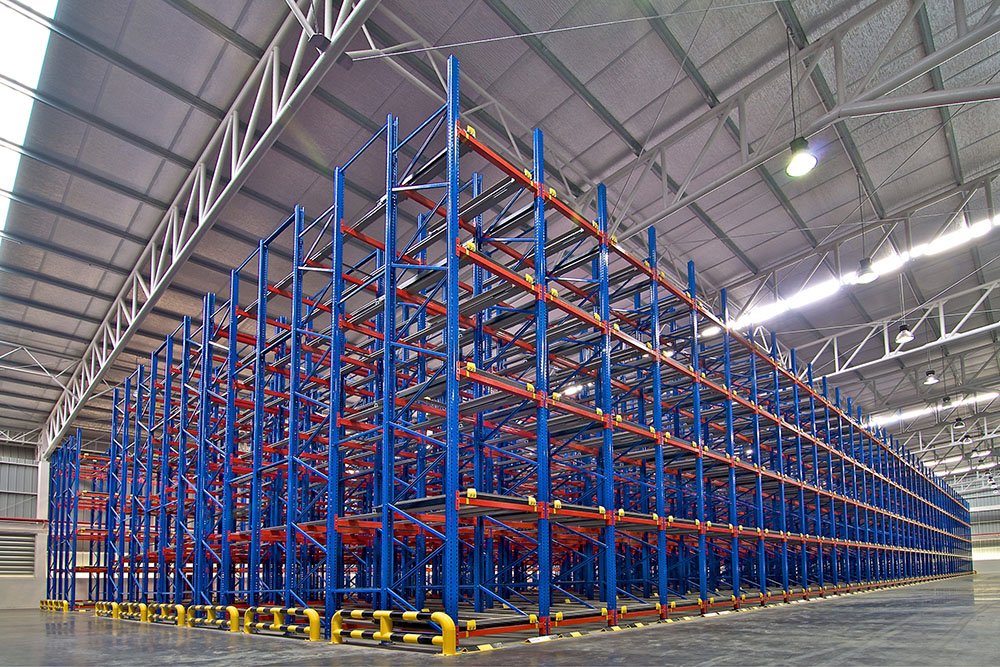
04 Finished Goods FIFO Pallet Flow Racking for raw material and finished goods storage by AME Rack

Pallet Flow Racking

Gravity-roller inclined lanes — load at back, pick at front. Pure FIFO for date-sensitive finished goods (food, beverage, pharma) — eliminates expired-stock losses and recalls.
DENSITY+50% & FIFO
ACCESSGravity FIFO
BEST FORDated finished goods, batch FIFO
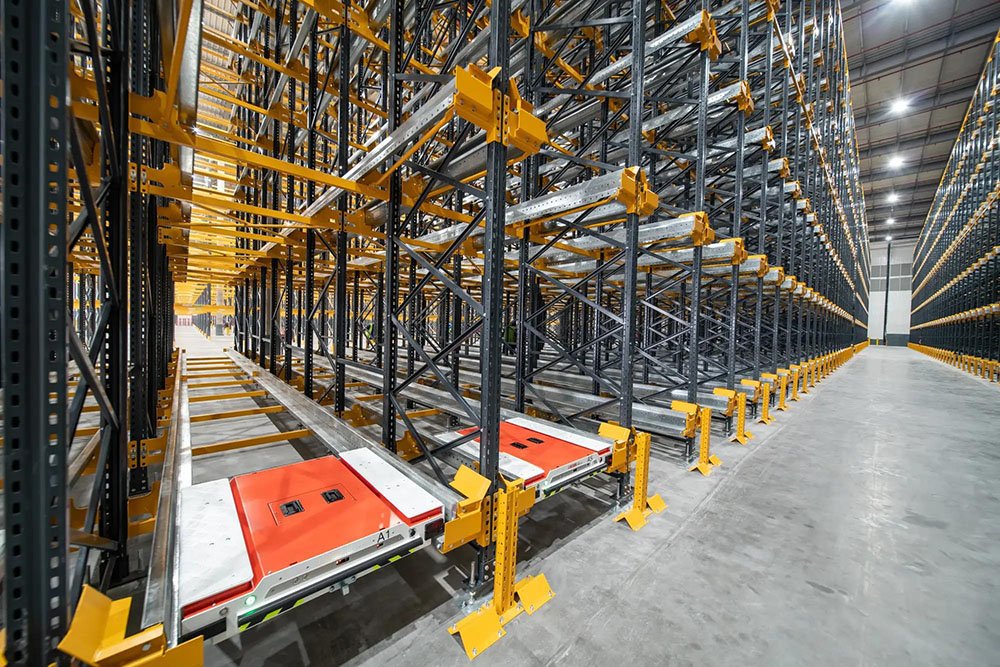
05 Automated FIFO/LIFO Radio Shuttle Racking for raw material and finished goods storage by AME Rack

Radio Shuttle Racking

Battery-powered shuttle cars on deep lanes — combines drive-in density with automated FIFO/LIFO flexibility. Best for high-throughput finished goods dispatch with batch traceability.
DENSITY+80% vs selective
ACCESSAuto FIFO/LIFO
BEST FORHigh-throughput FG dispatch
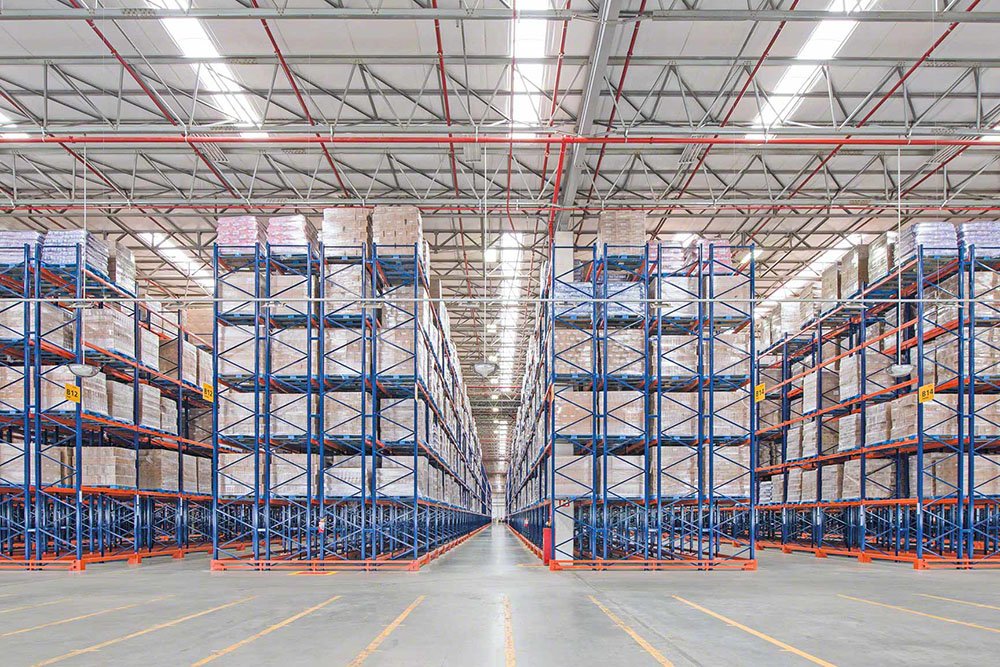
06 Smart Density Double-Deep Racking for raw material and finished goods storage by AME Rack

Double-Deep Racking

Two pallets deep with reach-truck access — 35% denser than selective while keeping fast access. The pragmatic middle ground for mixed raw material + FG warehouses.
DENSITY+35% vs selective
ACCESSReach-truck FILO
BEST FORMid-velocity SKUs, FG pairs
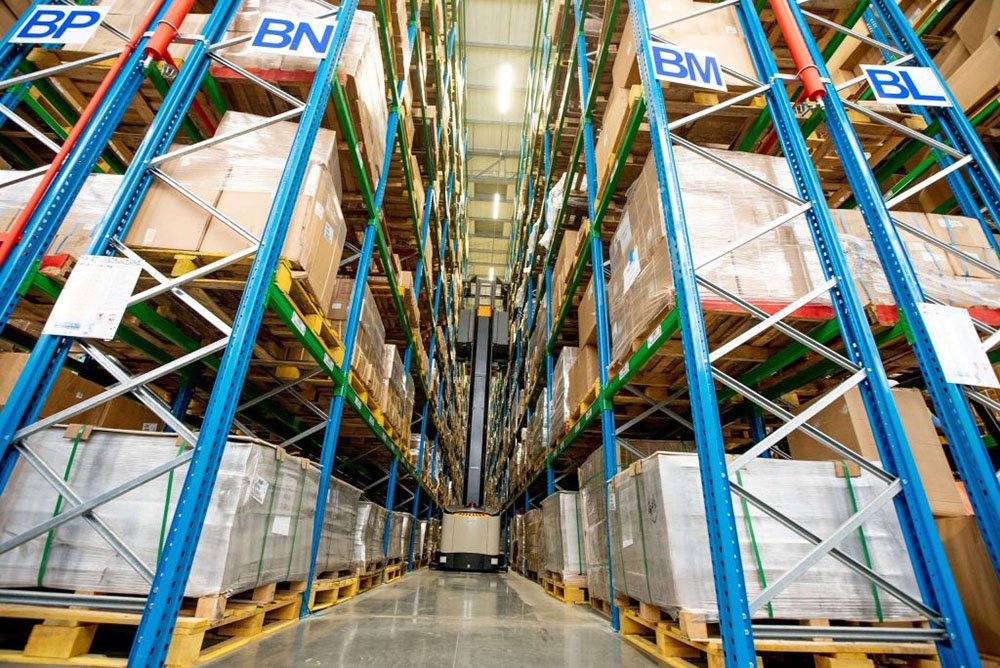
07 Cube Maximiser VNA Racking for raw material and finished goods storage by AME Rack

VNA Racking

Very-narrow-aisle racking with 1.6m aisles + swing-mast trucks — unlocks 12m+ heights in high-bay plant warehouses. Best ROI when ceiling height is paid for but unused.
DENSITY+45% storage
ACCESSSwing-mast direct
BEST FORHigh-bay plant DCs
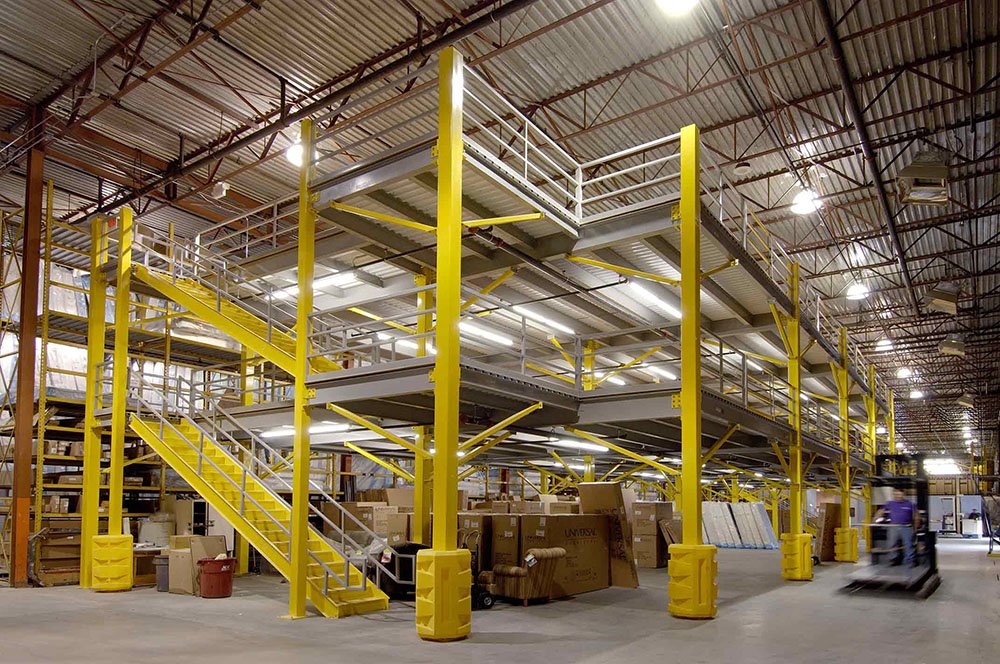
08 Floor Multiplier Multi-Layer Mezzanine for raw material and finished goods storage by AME Rack

Multi-Layer Mezzanine

2- to 4-tier bolted mezzanines double or triple usable area — pack stations, QC labs, returns processing, value-added services. Integrated conveyors and gravity flow lanes.
DENSITY2–4× floor
ACCESSManual + conveyor
BEST FORPack stations, QC zones
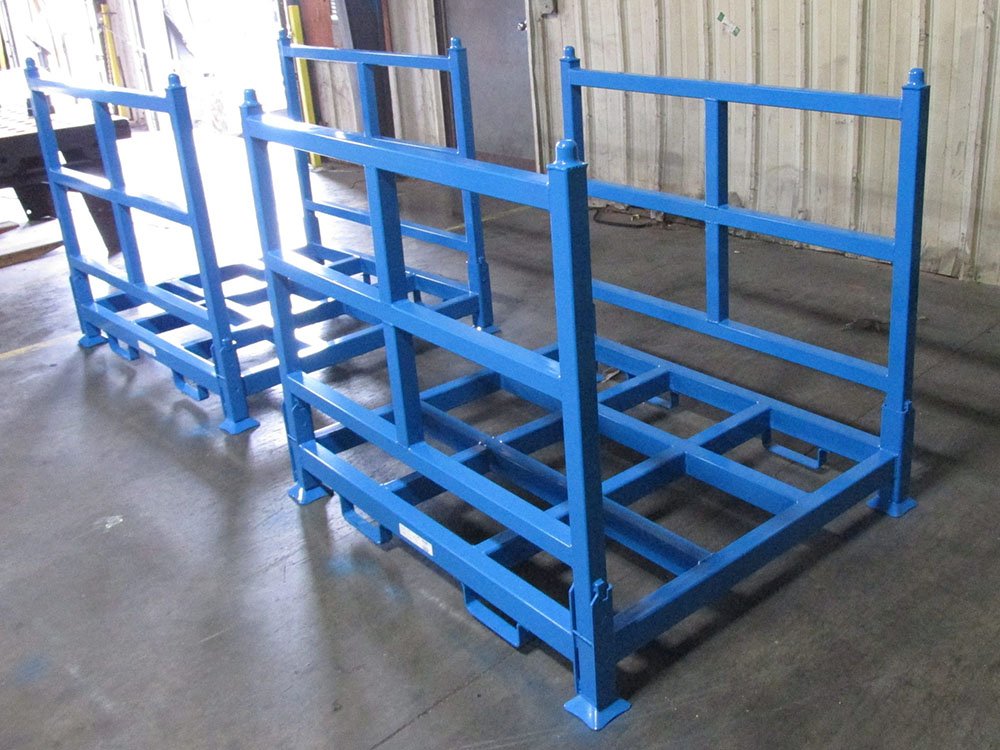
09 WIP Buffer Flex Stack Racks (Stackable) for raw material and finished goods storage by AME Rack

Stack Racks (Stackable)

Free-standing collapsible pallet supports — perfect for line-side WIP buffer or seasonal FG overflow. No floor anchoring, fold flat when production rebalances.

DENSITYFlex/seasonal
ACCESSPallet jack
BEST FORLine-side WIP buffer, surge
🏆 Real Project Cases

Plant Storage Builds Running Inbound, WIP & Outbound on the Same Floor

Three recent installations where AME Rack designed the full plant racking architecture — covering raw material, WIP and finished goods zones. Names, scales and operating duration available on request.
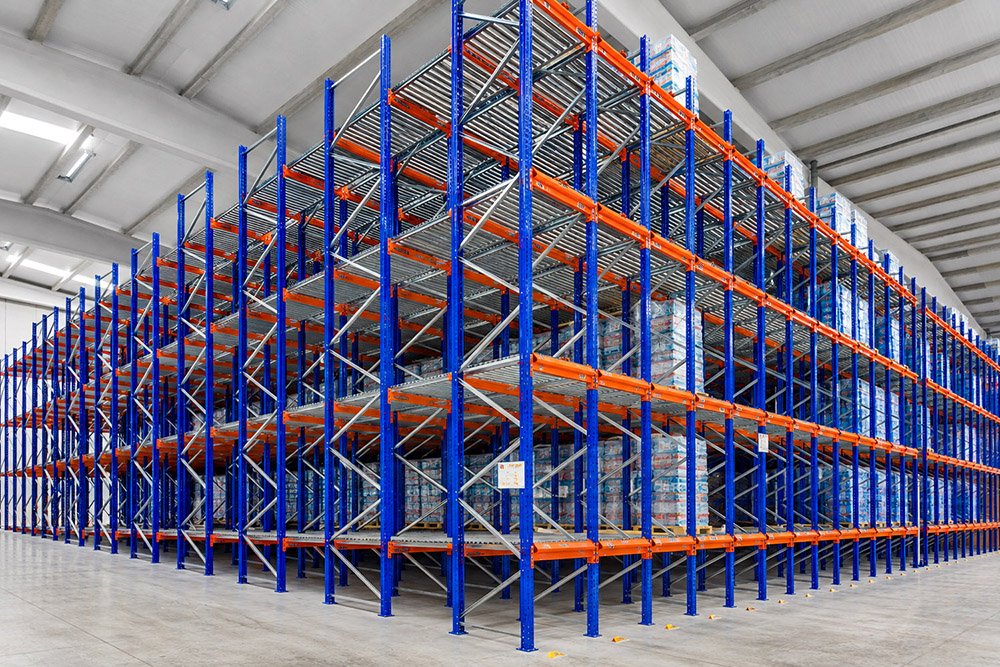
2019Unilever Unilever raw material drive-in racking plant project by AME Rack

Drive-In + Pallet Flow Plant Build for Unilever

16,000㎡ drive-in racking for raw material bulk storage paired with pallet flow lanes for FIFO finished goods dispatch. Engineered for batch traceability across CPG product lines. Running zero structural defects since 2019.
16,000㎡TOTAL FOOTPRINT
FIFO+LIFODUAL-ZONE FLOW
6 yrsUPTIME 24/7
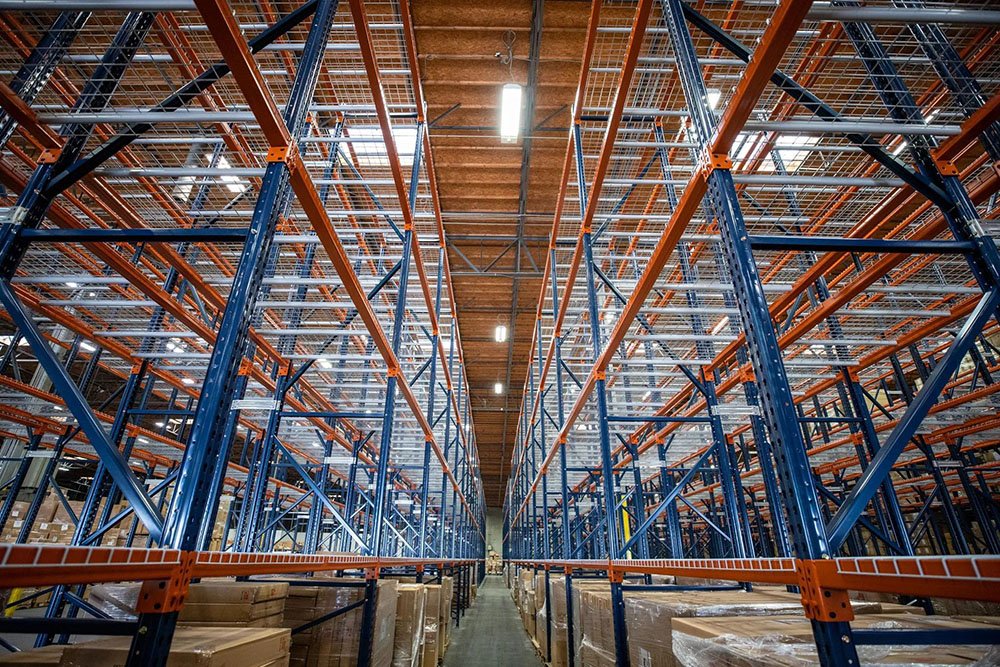
2022Polymer Plant Polymer manufacturing VNA pallet racking plant by AME Rack

VNA Pallet Racking for Polymer Manufacturing Plant

8m-high VNA racking for a Thai polymer plant — 1,200 pallet positions of raw pellets and finished compound. Swing-mast trucks unlocked 45% more storage on the existing footprint, eliminating the need for offsite buffer.

8mHIGH-BAY VNA
+45%DENSITY GAIN
1,200PALLET POSITIONS
2024Beverage CPG Beverage CPG radio shuttle finished goods racking by AME Rack

Radio Shuttle FG System for Beverage CPG Plant

10-level radio shuttle racking for a Brazilian beverage CPG plant — finished goods dispatched FIFO with WMS integration. Cut order-to-truck cycle from 90 minutes to 38 minutes during peak dispatch windows.
10 LevelsHIGH-BAY SHUTTLE
-58%DISPATCH CYCLE
FIFOBATCH TRACED
⚙️ Technical Specifications

Plant Storage Racking Engineering Specs

The parameters plant engineers, ISO 9001 / IATF 16949 auditors and procurement directors ask for first. Full datasheets and stamped FEA reports issued free with every project.

← Swipe table horizontally →
ParameterSelectiveDrive-InPush-BackPallet FlowRadio Shuttle
Standard Height3–8 m6–10 m5–10 m4–10 m8–14 m
Pallet Capacity1,000–4,000 kg1,000–1,500 kg800–1,500 kg800–1,500 kg1,000–1,500 kg
Aisle Width2.8–3.5 mShared2.8–3.0 m2.5–3.0 mShared
Density vs SelectiveBaseline+60%+50% LIFO+50% FIFO+80%
FIFO/LIFO BehaviourRandomLIFO onlyLIFOFIFO onlyFIFO & LIFO
Best for ZoneInbound, mixedRaw bulkNon-date C-SKUDated FGHigh-throughput FG
Steel GradeQ235B / Q345BQ345BQ345BQ345BQ345B
Upright Gauge1.8–3.0 mm2.0–3.0 mm2.0–2.5 mm2.0–2.5 mm2.0–3.0 mm
Coating DFT60–100 μm60–100 μm60–80 μm60–80 μm80–100 μm
ComplianceEN 15512 · AS 4084 · RMI MH16 · FEM 10.2.02
Seismic Zone RatedZone I–IV (FEA verified)
Typical Lead Time20 days20–25 days25 days25 days30–35 days
📋 Tender-ready packs: all parameters above issued as PDF datasheet, Excel BOM, CAD/STEP files, MTR mill certs and stamped FEA report by our chartered engineer. Compatible with ISO 9001 / IATF 16949 / FDA audit packs. Email Lily@amerack.com.
🧭 Decision Guide

How to Choose: When A vs B for Your Plant Storage

Six trade-off decisions specific to raw material and finished goods storage in a manufacturing plant. Use these as the first-pass filter before requesting a detailed layout from our plant engineering desk.

FIFO Discipline

Drive-In vs Pallet Flow for Raw Material?

Drive-In wins for non-date-sensitive single-SKU bulk (steel coils, packaging, polymer). Pallet Flow mandatory for date-sensitive raw material (food ingredients, dated chemicals, batch-coded compounds) — FIFO is enforced by gravity, not by picker discipline.

Load Selection

Selective vs Heavy-Duty Selective?

Standard Selective for pallets ≤ 1,500 kg (typical cartoned goods). Heavy-Duty Selective (3.0mm uprights, reinforced beams) mandatory for steel coils, polymer drums, IBC totes, stacked engine blocks rated 2,500–4,000 kg per pallet position.

WIP Flexibility

Stack Racks vs Built-In Buffer?

Stack Racks when production line rebalances 2+ times per year — fold flat in 2 hours, redeploy elsewhere. Built-In Buffer (welded line-side selective) when production layout has been stable for 5+ years and you need maximum density.

Density vs Throughput

Radio Shuttle vs Drive-In for Finished Goods?

Radio Shuttle wins for FG when throughput > 8 pallets/h per lane OR FIFO is mandatory — pays back in 24–36 months from labour + dispatch cycle reduction. Drive-In only if FG turnover < 1 pallet/day per lane and LIFO is acceptable.

Capex vs Speed

Mezzanine vs Building Expansion?

Mezzanine when you need +50% to +200% floor area within existing lease — installed in 21–35 days at 5–10× lower capex than expansion. Building Expansion only when ceiling < 5m or floor load requirement > 800kg/㎡ on upper levels.

Plant Flow Strategy

How to design inbound / WIP / outbound zones?

Three engineering rules: (1) inbound dock → selective racks → production line on one flow path; (2) line-side stack racks for 2-hour WIP buffer; (3) production → pallet flow / radio shuttle → shipping dock on a separate FIFO path. Never let inbound and outbound forklifts share an aisle.

📊 Comparison Table

Side-by-Side: Which Rack Wins for Your Plant Zone

Six rack types × eight plant-storage criteria — the shortcut most plant engineers wish they had before issuing the RFP. Use to narrow rack mix per zone (inbound / raw bulk / WIP / FG dispatch).

← Swipe table horizontally →
Selection CriteriaSelectiveDrive-InPush-BackPallet FlowRadio ShuttleMezzanine
Storage Density★★★★★★★★★★★★★★★★★★★★★★★★
FIFO for Raw / FG★★★★★★★★★★★★★★★★★★
Heavy-Load (2T+)★★★★★★★★★★★★★★★★★★★★★
Plant-Floor Flexibility★★★★★★★★★★★★★★★★★★★★
Capex (per pallet)$ Low$$ Mid$$$ High$$$ High$$$$ Very High$$ Mid
Inbound Dock Match★★★★★★★★★★★★★★★★
FG Dispatch Speed★★★★★★★★★★★★★★★★★★★★★★★
Best Zone MatchInbound stagingRaw bulkNon-date C-SKUDated FGFG dispatch hubPack / QC zones
💡 Reading the table: ★★★★★ = excellent, ★ = poor. No single rack wins all zones — successful plants combine 4–6 systems mapped to inbound / raw / WIP / FG flow. Email Lily with your plant flow map and we'll model the optimal mix at zero cost.
❓ FAQ — 15 Questions

Plant Storage Racking Buyer's FAQ

The 15 questions plant engineers, manufacturing operations directors and procurement teams ask before issuing the first PO.

01What is the best racking system for raw material and finished goods storage?
Most manufacturing plants combine heavy-duty selective racking (inbound dock + mixed raw material), drive-in or push-back (raw bulk single-SKU), pallet flow or radio shuttle (finished goods FIFO dispatch), and a multi-tier mezzanine (pack stations, QC, value-added services). The right mix depends on raw material profile, batch traceability requirements and FG dispatch volume.
02How do you enforce FIFO for batch-traceable raw materials?
Two engineering tools: pallet flow racks (inclined gravity rollers — load at back, pick at front, oldest pallet always picks first) and radio shuttle racks (battery shuttle cars with WMS-controlled FIFO/LIFO selection). Both physically enforce FIFO regardless of picker discipline — critical for ISO 9001, IATF 16949 and FDA traceability audits.
03What is the maximum pallet weight capacity for raw material racking?
Standard heavy-duty selective beams carry up to 4,000 kg per pallet pair. Reinforced configurations with 3.0–4.0mm uprights and additional bracing handle steel coils, IBC totes, polymer drums and stacked engine blocks. We supply MTR mill certificates verifying steel grade and yield.
04How much density gain when switching from selective to drive-in for raw bulk?
Typical density gain is +60% for drive-in vs selective on single-SKU raw material. Radio shuttle adds even more — up to +80% — with the benefit of automated FIFO/LIFO. For manufacturers paying expensive lease per sqft, these gains often pay back the rack capex in 12–24 months from rent savings alone.
05Can racking handle steel coils, polymer drums and IBC totes?
Yes. We supply cradle attachments for steel coils (preventing roll-off), reinforced base plates for IBC totes, and containment trays for liquid drums. All configurations engineered to EN 15512 and supplied with FEA report verifying the specific load case.
06How are work-in-progress (WIP) pallets buffered between production lines?
Two options: (1) stack racks at line-side — free-standing collapsible pallet supports, fold flat when production rebalances, no floor anchoring; (2) built-in line-side selective racks for stable production layouts requiring maximum density. Most plants use stack racks because product mix changes frequently.
07Do you provide FEA structural reports for ISO 9001 and IATF audits?
Yes — free with every project. Reports cover deflection, seismic load (Zone I–IV), wind load for outdoor cantilever, and base-plate anchorage. Format: EN 15512 / AS 4084 / RMI MH16. Stamped by our chartered engineer or rebadged for your local engineer of record. Compatible with ISO 9001, IATF 16949, FDA and HACCP audit document packs.
08How do you design inbound, WIP and outbound zones to avoid forklift conflicts?
The three-zone principle: inbound dock → selective racks → production line on one flow path; line-side stack racks for 2-hour WIP buffer; production → pallet flow / radio shuttle → shipping dock on a separate FIFO path. Never let inbound and outbound forklifts share an aisle — costs 30+ minutes per shift in conflicts.
09Can mezzanines support pack stations, QC labs and returns processing?
Yes. A typical 2- to 4-tier mezzanine houses pack benches with conveyor drops, QC laboratories with utilities, returns processing zones and value-added service stations. Floor load capacity 500–800 kg/㎡; integrated conveyor cut-outs, ESD flooring and sprinkler-clearance design all standard.
10What is the warranty on raw material and FG racking?
10-year structural warranty on all components under rated load. 15-year corrosion warranty on hot-dip galvanised parts. 5-year coating warranty on powder coat. Free spare parts replacement for any defects in manufacturing. Spare parts availability minimum 10 years from invoice — critical for long-life plant operations.
11How does AME Rack support phased multi-zone plant rollouts?
For manufacturers rolling out racking across multiple zones (inbound dock → production → FG dispatch), we assign a dedicated project manager, lock the design template across all zones, and ship phase-by-phase to your plant construction schedule. Recent rollouts include a 4-zone polymer plant in Thailand and a 5-zone CPG plant in Brazil.
12What is the typical lead time for plant storage racking?
Standard selective and drive-in: 20 days FOB Shenzhen. Heavy-duty selective with reinforced beams: 20–25 days. Pallet flow and radio shuttle: 25–35 days (includes roller lanes, shuttle car commissioning). Multi-tier mezzanine: 25–35 days including H-beam fabrication. Phased shipping for multi-zone projects.
13Do you ship plant racking to North America, Europe and Asia-Pacific?
Yes — AME Rack exports to 65+ countries including manufacturing hubs in USA, Mexico, Canada, Germany, Italy, UK, France, Spain, Turkey, India, Thailand, Vietnam, Indonesia and Brazil. FOB, CIF and DDP Incoterms all supported. Departure from Shenzhen Yantian / Shekou / Hong Kong.
14What payment terms work for large plant storage projects?
30% T/T deposit + 70% balance against B/L copy standard. For multi-zone plant rollouts above USD 200,000: 20%/30%/50% staged payments aligned with each zone delivery. L/C at sight for orders ≥ USD 50,000. Alibaba Trade Assurance for added buyer protection on first-time orders.
15How does AME Rack pricing compare for plant storage projects?
Direct factory pricing is typically 30–45% below European brand-name suppliers for equivalent EN 15512 spec — verifiable by RFQ benchmarking. We own the 15,500㎡ Dongguan plant outright (no trader margin), run 15 roll-forming lines in parallel (low fixed-cost absorption), and procure steel via annual mill contracts (buffered from spot prices).

Ready to Design the Right Rack Mix for Your Plant?

Send your plant flow map (inbound dock → production → FG dispatch), pallet specs and throughput targets — receive a full 3D layout, FEA report, BOM and FOB quotation within 4 working hours. Zero commitment.

🏭 300+ plants designed across 65 countries📐 Free 3D + FEA design🛡️ 10-year structural warranty

Get a free quote quickly

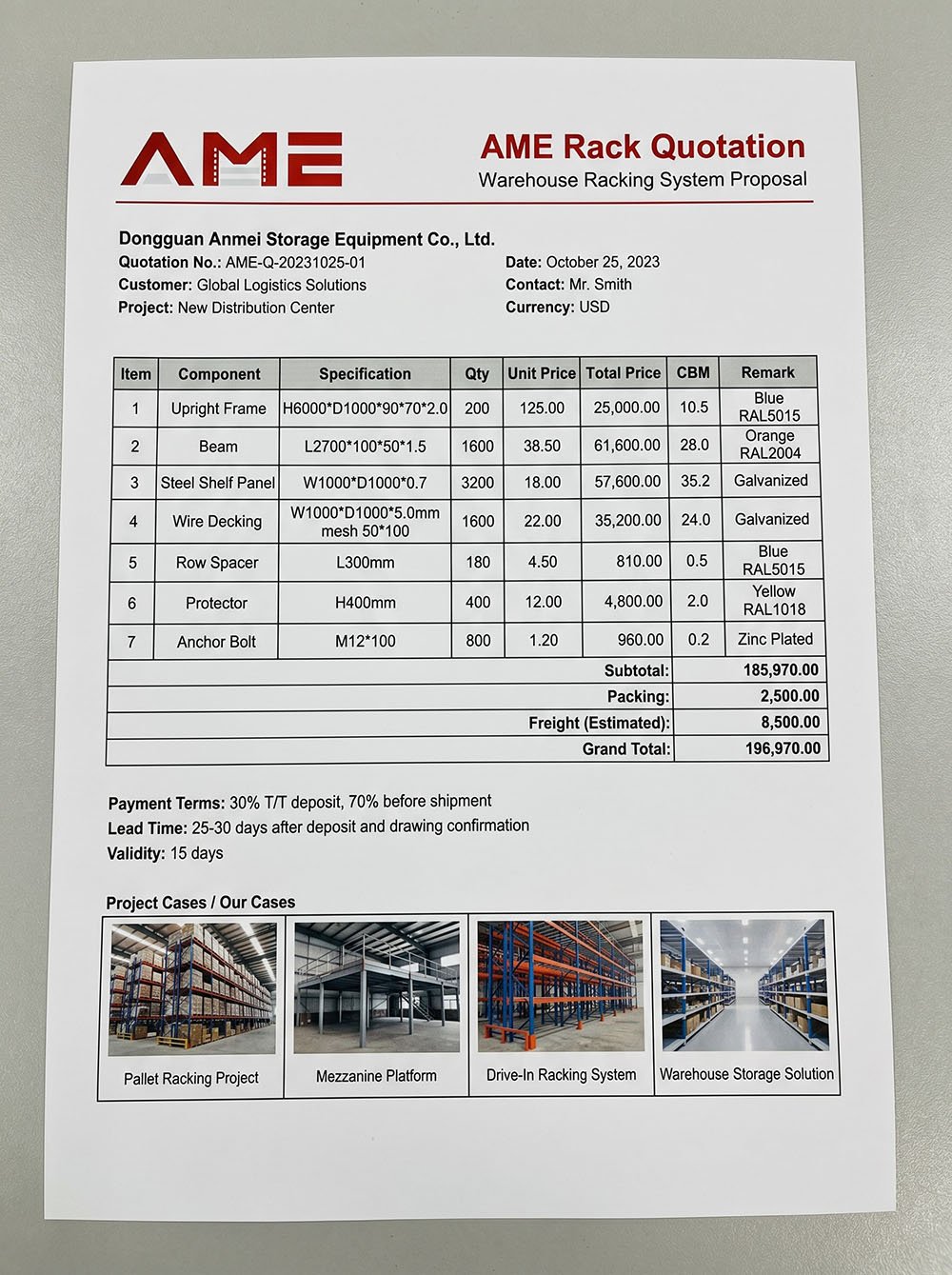
AME Rack quotation