AME Rack

🧵 Textile Fabric Roll Storage

Fabric Roll Racking — Built to Eliminate Compression Marks, Core Crush & Dye-Lot Mix-Ups

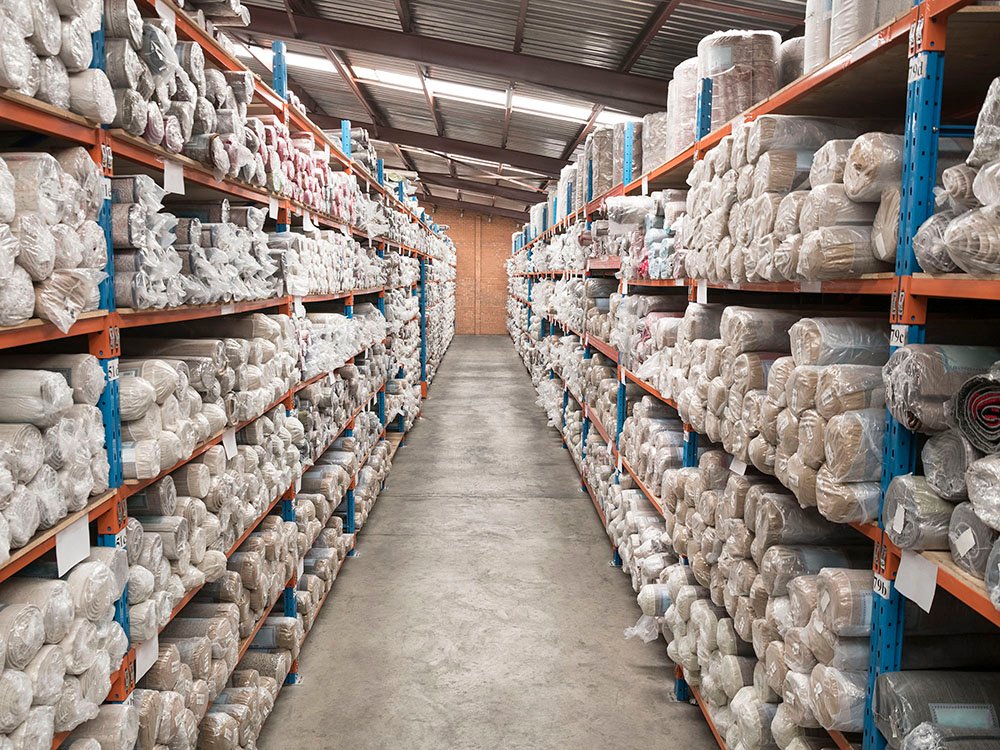
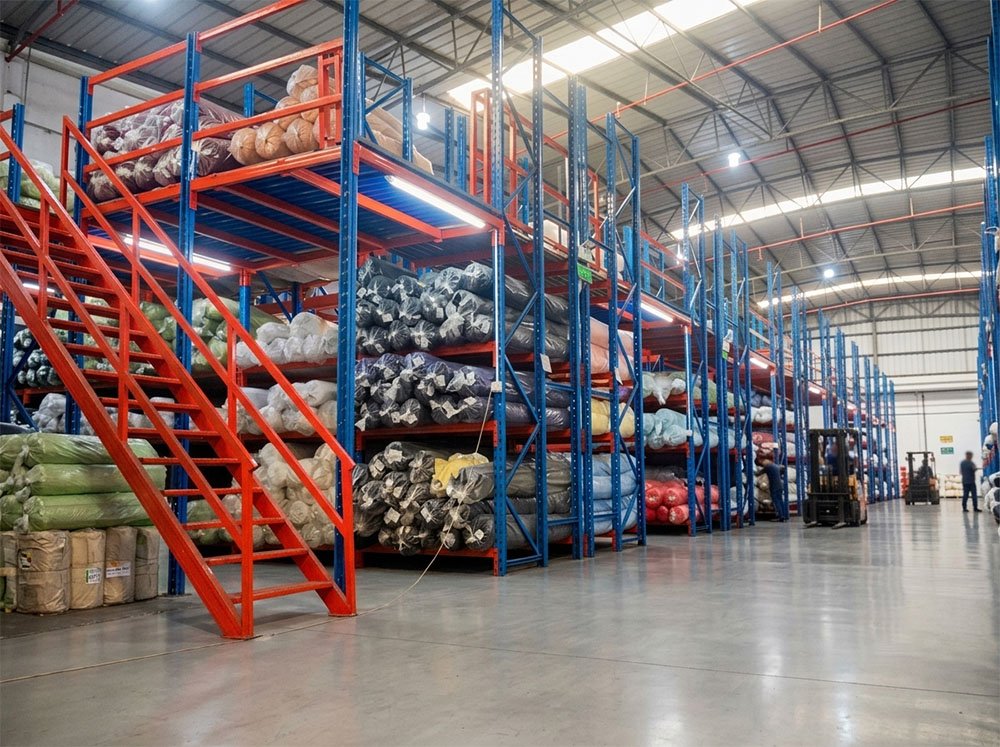
A purpose-built racking architecture for textile mills, dyeing & finishing plants, garment makers and home-textile distributors: vertical fabric roll racks, A-frame racks, heavy-duty selective for pallet-mounted rolls and multi-tier mezzanines — engineered to protect roll integrity, separate dye-lots, control humidity exposure and stop the inventory waste that destroys textile margins.

Used by global garment & home-textile hubs Protects woven / knit / coated rolls 10-year structural warranty
0%COMPRESSION MARKS
+50%DENSITY VS FLOOR STACKING
3.2mMAX ROLL LENGTH SUPPORTED
48hLAYOUT + QUOTE TURNAROUND
⭐ At-a-Glance — Fabric Roll Quick Facts

Fabric Roll Racking, Summed Up in 10 Quick Facts

  • Best rack mix: Vertical fabric roll rack + A-frame rack + Heavy-duty selective + Mezzanine — the four-pillar textile layout.
  • Roll orientation: Vertical storage (rolls standing) prevents core crush; horizontal cradle storage prevents compression marks for delicate fabrics.
  • Max roll length: Standard racks handle rolls up to 3.2m long (industrial textiles); 1.5–1.6m for fashion fabrics.
  • Density per bay: Vertical roll racks hold 20–40 rolls per bay depending on width and gauge.
  • Environment: Indoor storage at 15–25°C, 45–65% RH — prevents mould, mildew and fibre shrinkage.
  • Dye-lot FIFO: Multi-tier mezzanine + zone slotting keeps batches separated and rotates oldest lot first.
  • Heights supported: Vertical roll racks 3–5m · Heavy-duty selective 8m · Mezzanine 2–4 tiers.
  • Dust & contamination control: Optional plastic film covers, sealed mesh cages and HEPA-friendly layouts for premium fabrics.
  • Compliance: EN 15512 · AS 4084 · RMI MH16 · FEM 10.2.02 — fire-safe design for textile risk class.
  • AME Rack lead time: Standard 20 days FOB Shenzhen; vertical roll rack option adds 5–7 days.
🩹 Textile Storage Pain Points

If You Run a Fabric Warehouse, You've Lived These 6 Headaches

We've designed racking for textile mills, dyeing & finishing plants and garment fabric distributors across 65 countries. Six failure patterns come up in nearly every kick-off — each is a direct hit to fabric quality and margin.

📏 Compression Marks

"Stacked rolls show pressure lines that show through to garments"

Horizontally stacked fabric rolls compress at contact points. The mark is invisible on the bolt but shows through after cutting and sewing — entire production runs rejected.

AME Rack FixVertical fabric roll racks eliminate roll-on-roll contact; each roll stands free.
🧻 Core Crush

"Cardboard cores collapsed under stacking weight"

Standard fabric cores (3-inch cardboard) deform under 6+ rolls stacked vertically — the core crushes, the roll loses centre alignment and re-rolling becomes impossible.

AME Rack FixHorizontal cradle storage on padded saddles, max 2 rolls per cradle.
💧 Humidity & Mould

"Cotton bolts grew mildew during the rainy season"

Natural fibres (cotton, wool, linen) absorb humidity above 65% RH. After 2–3 weeks of monsoon exposure the mildew spots are permanent — fabric is unsellable.

AME Rack FixEnclosed mezzanine zones + dehumidifier-friendly layouts maintain 45–65% RH.
🎨 Dye-Lot Mix-Up

"Two dye lots shipped together — customer rejected the whole order"

Even small dye-lot variation is visible side-by-side in finished garments. Mixing lots from different batches in the same shipment triggers full returns.

AME Rack FixZoned slotting by dye lot + colour-coded beam markers + RFID lot tags.
🧹 Dust Contamination

"Premium silk picked up factory dust in 4 weeks"

Open racks expose premium fabrics to airborne textile lint, dust, and contamination from adjacent operations — premium garment makers reject any visible contamination.

AME Rack FixSealed mesh enclosures + plastic film covers + HEPA-friendly mezzanine zoning.
📦 SKU Sprawl

"6,000 colour-pattern combinations, pickers can't find anything"

Fashion fabric warehouses handle 5,000–10,000 SKU variants by colour, pattern, season and base fabric. Wide-aisle floor storage creates 14-mile picker walks per shift.

AME Rack FixMulti-tier mezzanine + velocity-sorted slotting; A-SKUs golden zone, C-SKUs upper.
📦 Recommended Rack Types

8 Racking Systems Built for Textile Fabric Roll Storage

A fabric warehouse rarely uses one rack type. Below are the eight configurations we deploy in textile mills, dyeing & finishing plants, garment fabric DCs and home-textile distribution centres — combined to protect roll integrity, separate dye lots and maximise density per square metre.

01 Roll-Specialist Vertical Fabric Roll Rack for textile fabric roll storage by AME Rack

Vertical Fabric Roll Rack

Purpose-built A-frame or vertical-column racks — rolls stand on their cores, each roll free-standing. Eliminates compression marks and core crush. The default for premium fashion fabric warehouses.

DENSITY20–40 rolls/bay
ACCESSManual stand-up
BEST FORFashion fabric, premium silk
02 Easy Pick A-Frame Fabric Roll Rack for textile fabric roll storage by AME Rack

A-Frame Fabric Roll Rack

Inclined A-shaped frame stores rolls horizontally on padded saddles — visible end-labels, fast manual pick-out. Best for medium-volume textile mills and fabric retailers.

DENSITY15–30 rolls/bay
ACCESSHorizontal pick
BEST FORMills, retailers, fabric houses
03 Pallet-Mount Rolls Heavy-Duty Selective Racking for textile fabric roll storage by AME Rack

Heavy-Duty Selective Racking

Heavy-duty selective for fabric rolls shipped on pallets (industrial textiles, geotextiles, automotive fabrics). Standard beam configuration with reinforced uprights for high-density storage.

DENSITYBaseline
ACCESS100% direct
BEST FORPallet-mounted industrial rolls
04 Long Rolls Cantilever Racking for textile fabric roll storage by AME Rack

Cantilever Racking

Single-sided cantilever arms up to 3.2m for extra-long industrial textile rolls (carpets, geotextiles, technical fabrics). Nylon arm caps protect roll surface during forklift handling.

DENSITYLong-load optimal
ACCESSSide-load
BEST FORCarpets, geotextiles, long rolls
05 SKU Sprawl Solver Multi-Layer Mezzanine for textile fabric roll storage by AME Rack

Multi-Layer Mezzanine

2- to 4-tier bolted mezzanines for high-SKU fashion fabric warehouses (5,000+ colour / pattern / base combinations). Velocity-sorted slotting cuts picker walking by 60%.

DENSITY2–4× floor
ACCESSManual + conveyor
BEST FORHigh-SKU fashion fabric DC
06 Seasonal Flex Stack Racks (Stackable) for textile fabric roll storage by AME Rack

Stack Racks (Stackable)

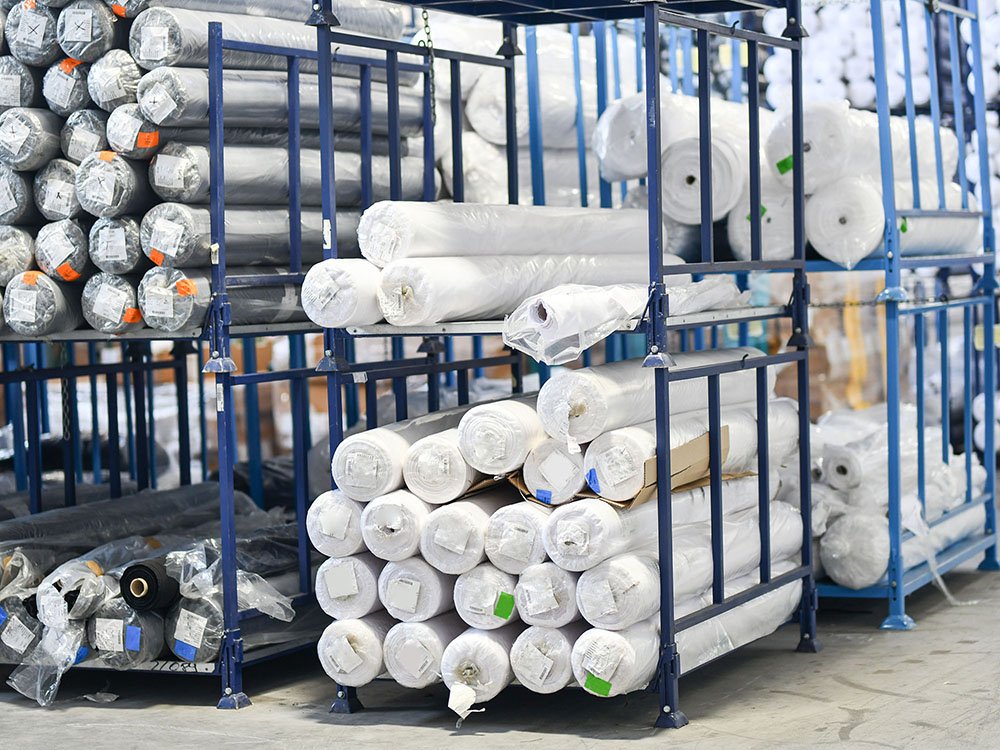
Free-standing collapsible pallet supports for seasonal fabric overflow (Spring/Summer + Autumn/Winter collection swap). Fold flat in the off-season, no floor anchoring required.

DENSITYFlex/seasonal
ACCESSPallet jack
BEST FORSeasonal collection overflow
07 Sample & Trim Light-Duty Boltless Shelving for textile fabric roll storage by AME Rack

Light-Duty Boltless Shelving

Quick-assembly boltless shelving for fabric samples, trim, lace and accessory storage. Assembled without tools, perfect for design studio and sample-room pick faces.

DENSITYCase-pick
ACCESSDirect hand pick
BEST FORSamples, trims, accessories
08 Cube Maximiser VNA Racking for textile fabric roll storage by AME Rack

VNA Racking

Very-narrow-aisle racking with 1.6m aisles + swing-mast trucks — unlocks 10m+ heights in high-bay fabric DCs. Best ROI when ceiling height is paid for but unused.

DENSITY+45% storage
ACCESSSwing-mast direct
BEST FORHigh-bay fabric DC
🏆 Real Project Cases

Fabric Warehouse Builds Protecting Roll Integrity Globally

Three recent textile-storage installations where AME Rack designed the full racking architecture. Names, scales and operating duration available with signed buyer feedback on request.

2020Garment HK Hong Kong garment vertical fabric roll racking project by AME Rack

Vertical Roll Racks for HK Garment Fabric DC

4-tier vertical fabric roll racks for a Hong Kong garment manufacturer's fashion fabric DC. Houses 8,500 rolls of fashion-grade woven and knit fabrics. Zero compression-mark complaints since installation; 60% picker walking reduction.

8,500FABRIC ROLLS
0%COMPRESSION MARKS
-60%WALK DISTANCE
2022TR Textile Turkish textile mill A-frame fabric racking project by AME Rack

A-Frame Racks + Mezzanine for Turkish Textile Mill

A-frame fabric racks paired with a 3-tier mezzanine for a Turkish textile mill processing 12,000 SKUs of dyed cotton, polyester and blends. Dye-lot zone slotting eliminated mix-up returns within 6 months.

12,000SKU VARIANTS
3 TiersMEZZANINE
0DYE-LOT RETURNS
2024Home Textile Home textile cantilever racking project by AME Rack

Cantilever Racks for Home-Textile Roll Distributor

3m cantilever racks for a US home-textile distributor storing wide-format curtain, upholstery and carpet rolls. Forklift side-loading eliminated the previous forklift-in-rack damage that destroyed 4% of inventory annually.

3.0mCANTILEVER ARMS
-4%DAMAGE LOSS
2,200WIDE-FORMAT ROLLS
⚙️ Technical Specifications

Fabric Roll Racking Engineering Specs

The parameters textile-industry buyers, dyeing & finishing plant engineers and garment fabric procurement teams ask for first. Full datasheets and stamped FEA reports issued free with every project.

← Swipe table horizontally →
ParameterVertical RollA-FrameSelective HDCantileverMezzanine
Roll Format MatchFashion fabricMill / retailerPallet-mounted rollsCarpet / geotextileHigh-SKU mix
Roll Length Range0.8–1.6 m0.8–1.8 m0.8–2.0 m1.5–3.2 m0.8–1.6 m
Rolls per Bay20–40 rolls15–30 rolls8–12 pallets4–10 rolls/armvaries
Standard Height3–5 m2–4 m4–8 m3–5 m2–4 tiers
Load per Level50–80 kg/slot40–60 kg/saddle1,000–2,500 kg200–500 kg/arm500–800 kg/㎡
Surface ProtectionPE-coated tubesPadded saddlesPowder coatNylon arm capsPowder coat
Steel GradeQ235B / Q345BQ235B / Q345BQ345BQ345BQ345B + H-beam
Coating DFT60–80 μm60–80 μm60–100 μm60–100 μm80–120 μm
Environment Spec15–25°C · 45–65% RH · prevents mould, mildew, fibre shrinkage
ComplianceEN 15512 · AS 4084 · RMI MH16 · FEM 10.2.02 · textile-industry fire safety
Typical Lead Time20–25 days20 days20 days20–25 days25–35 days
📋 Tender-ready packs: all parameters above issued as PDF datasheet, Excel BOM and CAD/STEP files. FEA report stamped by our chartered engineer included free. For dyeing & finishing plants we provide humidity-controlled mezzanine layout recommendations. Email Lily@amerack.com.
🧭 Decision Guide

How to Choose: When A vs B for Your Fabric Warehouse

Six trade-off decisions specific to textile fabric roll storage. Use these as the first-pass filter before requesting a detailed layout from our textile-industry engineering desk.

Premium vs Volume

A vs B — Vertical Roll Rack vs A-Frame?

Vertical Roll Rack for premium fashion fabrics where every roll must remain free-standing — zero roll-on-roll contact, zero compression marks. A-Frame Rack for mid-range mill / retailer stock where padded horizontal cradle storage is acceptable and visible end-labels speed up manual picking.

Long-Roll Storage

A vs B — Cantilever vs Selective for Wide-Format?

Cantilever mandatory for rolls longer than 2.0m (carpets, geotextiles, technical fabrics, upholstery rolls) — single-sided arm access eliminates rack column interference. Selective only for standard 0.8–1.8m rolls that fit cleanly on a pallet.

SKU Complexity

A vs B — Mezzanine vs Single-Floor Selective?

Mezzanine for fashion fabric DCs with 5,000+ SKU variants — multi-tier slotting cuts picker walking by 60%. Single-Floor Selective when SKU count < 1,500 or ceiling is < 5m (mezzanine ROI breaks down at low SKU complexity).

Humidity Control

How to control humidity in a fabric warehouse?

Three engineering tools: (1) enclosed mezzanine zones for premium fabrics with dedicated dehumidifiers; (2) raised floor design to prevent ground-moisture wicking; (3) perforated mesh decking on selective shelves for airflow. Target 45–65% RH for natural fibres, 50–60% for synthetics.

Dye-Lot Discipline

How to enforce dye-lot separation?

Three engineering tools: (1) zoned slotting by dye lot — each lot gets its own colour-coded bay; (2) RFID lot tags on every roll for WMS verification; (3) physical separation (mesh dividers) for high-risk colour-sensitive contracts. Eliminates the "two-tone" garment-rejection scenario.

Seasonal Strategy

How to design for seasonal collection swap (S/S vs A/W)?

Two engineering tools: (1) stack racks add +30% overflow during collection-swap weeks, fold flat post-season; (2) reserve 15–20% of footprint as flex zone in the original design. Best practice for fashion fabric DCs that handle Spring/Summer and Autumn/Winter collections.

📊 Comparison Table

Side-by-Side: Which Rack Wins for Your Fabric Profile

Six rack types × eight textile-warehouse criteria — the shortcut most fabric-industry procurement directors wish they had before issuing the RFP. Use to narrow rack mix per fabric grade, roll format and SKU count.

← Swipe table horizontally →
Selection CriteriaVertical RollA-FrameSelective HDCantileverMezzanineStack Rack
Premium Fashion Fabric★★★★★★★★★★★★★★★★★★★
Mill / Retailer Stock★★★★★★★★★★★★★★★★★★★★★★
Wide-Format / Carpet★★★★★★★★★★★★★★
Compression-Mark Risk★★★★★★★★★★★★★★★★★★★★
Storage Density★★★★★★★★★★★★★★★★★★★★★
High-SKU Pick Speed★★★★★★★★★★★★★★★★★★★★
Capex (per roll stored)$$ Mid$ Low$ Low$$ Mid$$ Mid$ Low
Best Match OperationFashion DCMill / retailerIndustrial textileCarpet / curtainHigh-SKU DCSeasonal flex
💡 Reading the table: ★★★★★ = excellent, ★ = poor. No single rack wins all categories — successful fabric warehouses combine 2–4 systems mapped to fabric grade, roll format and SKU count. Email Lily with your fabric mix and we'll model the optimal layout at zero cost.
❓ FAQ — 15 Questions

Fabric Roll Racking Buyer's FAQ

The 15 questions textile-industry supply chain managers, garment manufacturer procurement and home-textile distributors ask before issuing the first PO. Marked up with Schema.org for richer search visibility.

01What is the best racking system for a fabric warehouse?
Most successful fabric warehouses combine vertical fabric roll racks (premium fashion fabrics — free-standing, zero compression), A-frame racks (mill / retailer stock — horizontal cradle storage), heavy-duty selective (pallet-mounted industrial rolls), plus a multi-tier mezzanine (high-SKU fashion DCs with 5,000+ variants). The right mix depends on fabric grade, roll length and SKU complexity.
02How are fabric rolls stored to prevent compression marks?
Two methods work: (1) vertical storage — rolls stand on their cores, no roll-on-roll contact, eliminates compression marks entirely (premium fashion fabric default); (2) horizontal cradle storage with padded saddles, max 2 rolls per cradle, no stacking pressure (mid-range mill / retailer stock).
03How do you prevent fabric core crush in storage?
Standard 3-inch cardboard cores collapse under 6+ vertically stacked rolls. Two engineering solutions: (1) vertical storage — each roll free-standing, no weight on cores; (2) horizontal cradle storage with padded saddles, max 2 rolls per cradle. We supply PE-coated tubes and padded saddles as standard accessories.
04What is the ideal environment for storing fabric rolls?
15–25°C ambient temperature, 45–65% relative humidity. Natural fibres (cotton, wool, linen, silk) need 50–60% RH to prevent mould and mildew. Synthetics (polyester, nylon) tolerate 45–55%. We design enclosed mezzanine zones with dedicated dehumidifiers for premium fabric storage.
05How do you handle wide-format fabric rolls (carpets, curtains, geotextiles)?
Cantilever racking with arms up to 3.2m for rolls longer than 2.0m. Single-sided cantilever arms eliminate column interference; nylon arm caps protect roll surface from forklift handling. Standard pallet racks cannot accommodate wide-format rolls — cantilever is the only correct solution.
06How do you enforce dye-lot separation to prevent customer returns?
Three engineering tools: (1) zoned slotting by dye lot — each lot gets its own colour-coded bay with beam-end markers; (2) RFID lot tags on every roll for WMS verification; (3) physical mesh dividers for high-risk colour-sensitive contracts. Eliminates the "two-tone garment" return scenario.
07How do you protect premium fabrics from dust and contamination?
Three engineering tools: (1) sealed mesh enclosures around premium fabric zones; (2) plastic film covers on individual roll bays; (3) HEPA-friendly mezzanine zoning to separate fabric from adjacent operations (cutting, dyeing, sewing). Critical for silk, premium wool and technical textiles.
08Are AME Rack systems compliant with textile-industry fire safety codes?
Yes. Fabric rolls are a Class IV commodity per NFPA fire-protection codes — racks designed with appropriate sprinkler clearance, in-rack sprinkler accommodation and aisle widths for fire-brigade access. We supply structural FEA reports formatted to EN 15512 / AS 4084 / RMI MH16 and friendly to FM Global and NFPA 13 audits.
09Can mezzanines handle high-SKU fashion fabric warehouses?
Yes. A typical 2- to 4-tier mezzanine houses 5,000–15,000 active SKU variants with velocity-sorted slotting — A-SKUs (current season fast movers) in the golden zone, C-SKUs (carry-over and discontinued) on upper levels. Cuts picker walking by 60% versus single-floor wide-aisle layouts.
10How are seasonal collection swaps (Spring/Summer vs Autumn/Winter) managed?
Two engineering tools: (1) stack racks add +30% overflow during collection-swap weeks, fold flat post-season; (2) reserve 15–20% of footprint as flex zone in the original design. Best practice for fashion-fabric DCs handling 4-season collections (typical for European and US brands).
11What is the warranty on fabric warehouse racking?
10-year structural warranty on all components under rated load. 15-year corrosion warranty on hot-dip galvanised parts (important for humidity-controlled fabric zones). 5-year coating warranty on powder coat. Spare parts availability minimum 10 years from invoice — important for long-life textile DC operations.
12What is the typical lead time for fabric warehouse racking?
Standard heavy-duty selective and A-frame: 20 days FOB Shenzhen. Vertical fabric roll racks with PE-coated tubes: 20–25 days. Cantilever with nylon arm caps: 20–25 days. Multi-tier mezzanine: 25–35 days. Phased shipping available for multi-zone textile DC rollouts.
13Do you ship fabric racking to North America, Europe and Asia-Pacific?
Yes — AME Rack exports to 65+ countries including major textile hubs in USA, UK, Germany, Italy, France, Spain, Turkey, India, Bangladesh, Vietnam, Cambodia, Indonesia and Mexico. FOB, CIF and DDP Incoterms all supported. Departure from Shenzhen Yantian / Shekou.
14What payment terms work for textile and garment buyers?
30% T/T deposit + 70% balance against B/L copy standard. L/C at sight for orders ≥ USD 50,000. For multi-zone fabric DC rollouts above USD 200,000: 20%/30%/50% staged payments aligned with each zone delivery. Alibaba Trade Assurance available for added buyer protection on first-time orders.
15How does AME Rack pricing compare for textile racking projects?
Direct factory pricing is typically 30–45% below European brand-name suppliers for equivalent EN 15512 spec — verifiable by RFQ benchmarking. We own the 15,500㎡ Dongguan plant outright, run 15 roll-forming lines in parallel, and procure steel via annual mill contracts. Vertical fabric roll rack and PE-coated tube options carry small premium worth the saved fabric inventory loss.

Ready to Design the Right Rack Mix for Your Fabric Warehouse?

Send your fabric mix (fashion / mill / industrial / wide-format), SKU count, roll dimensions and building layout — receive a full 3D design, FEA report, humidity-control recommendations and FOB quotation within 4 working hours. Zero commitment.

🏭 80+ fabric warehouses designed📐 Free 3D + FEA design🛡️ Compression-mark-safe systems

Get a free quote quickly

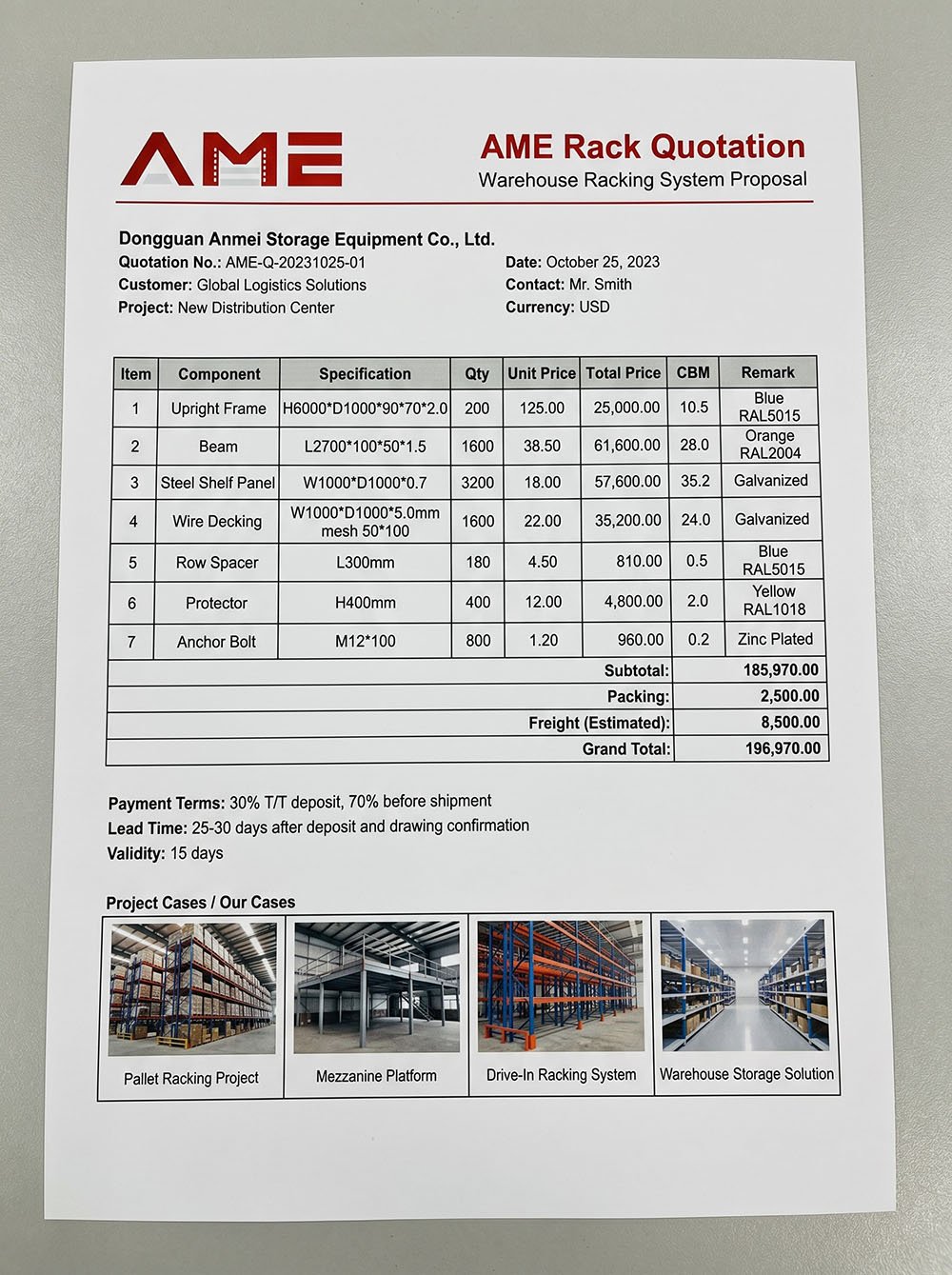
AME Rack quotation